Kwakye Ofosu Rejects Claims That Government Machinery Is Bloated With Political Appointees
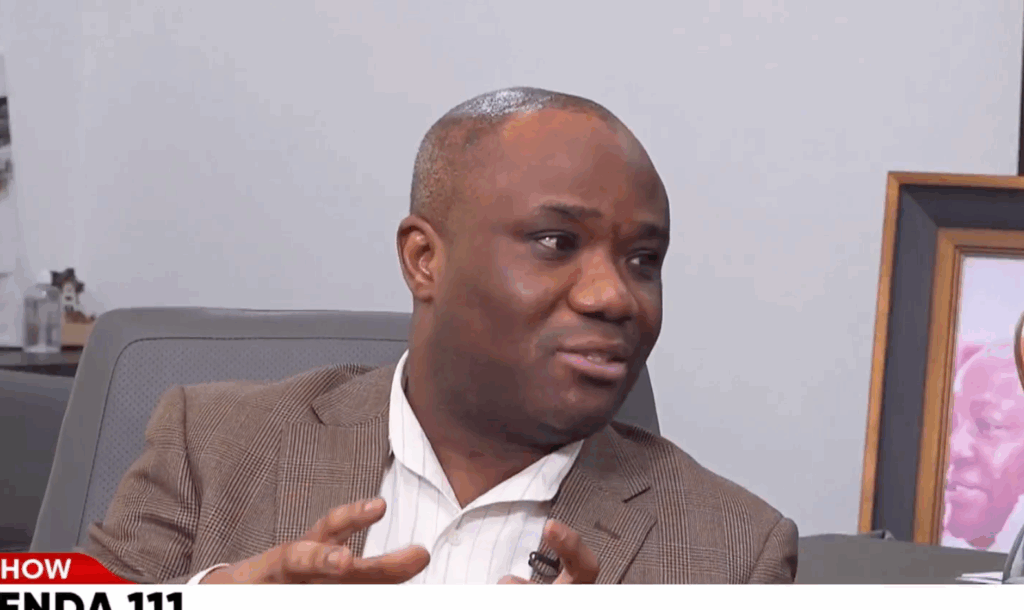
Minister of State for Government Communications Felix Kwakye Ofosu has mounted a firm defence of the Mahama administration’s staffing of the Office of Government Machinery, insisting that claims of a bloated payroll packed with political appointees are factually wrong.
Speaking on Joy FM’s Top Story programme on Sunday, Kwakye Ofosu directly rebutted allegations by Damongo Member of Parliament Samuel Abu Jinapor, who had accused the government of inflating the presidency’s compensation bill with partisan hires. The minister presented data suggesting the opposite is true.
“It is not true that we have burdened or loaded the Office of the President,” Kwakye Ofosu said. “All the political appointees appointed under the Office of the President amount to 233. In 2024, when he was in government as Lands Minister, the total number of political appointees under the Office of the President was 355.”
The figures, if accurate, indicate that the current administration is operating with roughly a third fewer political appointees at the presidency than the previous government did in its final year. The comparison is particularly pointed because it uses the same institutional benchmark—the Office of the President—across both administrations.
A significant portion of the debate, however, centres on the broader Office of Government Machinery, which now incorporates approximately 3,000 staff from the Ghana Broadcasting Corporation and the Information Services Department. Kwakye Ofosu was emphatic that these additions do not represent new hires. The workers are civil servants who were already drawing salaries from the public purse before their reassignment.
“These are civil servants, not political appointees,” he stressed. “They were already on the government payroll before the transfer. Their inclusion does not increase the compensation burden as has been suggested.”
The distinction matters. The Office of Government Machinery has historically been a lightning rod for criticism from opposition figures, who frequently characterise it as a vehicle for rewarding political loyalists with public funds. By folding GBC and ISD staff into the office’s headcount, the government appears to be arguing that the raw numbers are misleading unless the composition of the workforce is examined.
The exchange is part of a wider, ongoing national conversation about the size and cost of government. The Damongo MP had previously called on civil society organisations to scrutinise the full financial burden of the Mahama government, framing the issue as one of fiscal responsibility and transparency.
Kwakye Ofosu’s rebuttal also comes against the backdrop of broader procurement controversies. The government recently defended its record on Big Push infrastructure contracts, pushing back against allegations of irregularities in how billions of cedis in project awards were handled.
Whether the data presented by the minister will satisfy critics remains to be seen. Political staffing levels at the presidency are inherently difficult to audit from the outside, and opposition figures are likely to press for more granular disclosure. What is clear, however, is that the debate over the cost of governance is far from settled—and both sides are arming themselves with competing sets of numbers.
Image Source: MYJOYONLINE