Ghana’s World Cup Stars Inspire Local Youth Through Be Active Campaign in Rhode Island
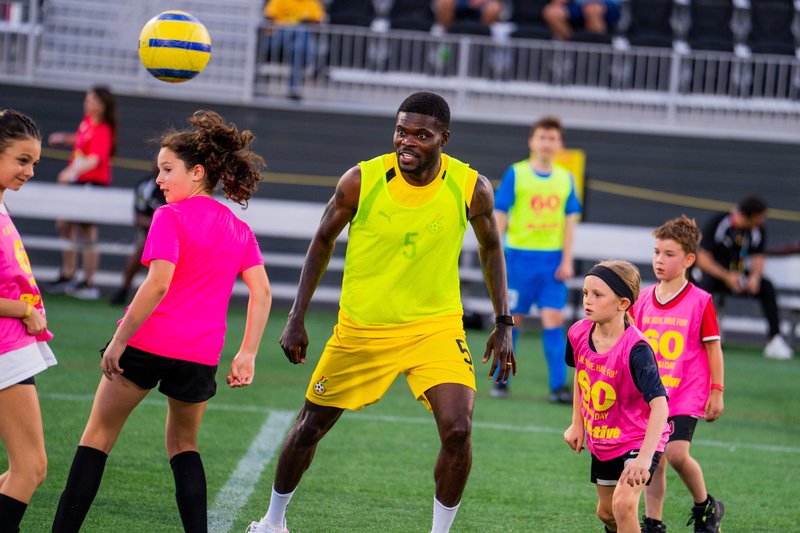
On the training grounds of Bryant University in Rhode Island, something quietly powerful happened this week. Members of Ghana’s national football team stepped off the pitch from their World Cup preparations and onto a field filled with local children, part of the joint FIFA-World Health Organisation “Be Active” campaign designed to promote physical fitness among young people.
It was not the kind of moment that generates front-page headlines or viral social media clips. There were no dramatic goals, no controversial refereeing decisions, no post-match press conferences full of carefully managed soundbites. Instead, there were children — some barely tall enough to control a ball at their feet — running alongside professional footballers, laughing, competing, and, for a few extraordinary hours, feeling like they belonged on the same pitch as their heroes.
A Campaign Rooted in Purpose
The FIFA-WHO Be Active initiative is one of the tournament’s legacy programmes, aimed at using the global visibility of the World Cup to encourage children and adolescents to engage in regular physical activity. The campaign recognises what public health researchers have long documented: that childhood inactivity is a growing crisis, contributing to rising rates of obesity, diabetes, and mental health challenges across both developed and developing nations.
Ghana’s decision to participate actively in the Rhode Island event reflects a broader commitment by the Black Stars camp to use their platform for more than competitive football. The squad’s public practice session at Bryant University was open to the public, giving families from across the state an opportunity to watch international players train in an accessible, informal setting — a far cry from the often exclusionary atmosphere of elite sport.
World Cup Preparations Amid Broader Purpose
The Be Active event comes at a significant moment for Ghana’s World Cup campaign. The Black Stars are finalising their preparations for the tournament, which is being held across the United States, Canada and Mexico. The 2026 FIFA Men’s World Cup, which features a record 104 matches, kicked off on June 11 with co-host Mexico facing South Africa in Mexico City.
Ghana’s build-up has not been without turbulence. The squad has had to contend with the denial of a Canadian visa to key midfielder Thomas Partey, ruling him out of the Black Stars’ opening match against Panama in Toronto. The Ghanaian government has since sought a diplomatic review of the decision, while the broader squad has continued training with characteristic focus.
Against that backdrop, the Rhode Island community engagement offered a welcome change of pace — a reminder that football’s influence extends well beyond match results and qualification scenarios. For the children who participated, the day was less about geopolitics and visa disputes and more about the simple joy of playing alongside people they had only ever seen on television screens.
The Wider Impact
Rhode Island’s Ghanaian diaspora, one of the larger West African communities in New England, played a central role in organising and promoting the event. Community leaders noted that moments like these serve a dual purpose: they promote healthy living among young people while also strengthening the cultural connections between diaspora communities and the national teams they support from afar.
For the Ghana Football Association, the Be Active campaign represents an investment in goodwill that transcends the tournament itself. In a sport increasingly dominated by commercial interests and broadcast revenues, grassroots engagement of this nature offers something that money cannot easily manufacture: genuine connection between players and the communities that follow them.
As the World Cup progresses and the stakes grow higher, the Rhode Island event may fade from memory for many. But for the children who spent an afternoon on the field with Ghana’s finest, the experience is likely to linger — a formative encounter that could shape their relationship with sport, fitness, and their own sense of possibility for years to come.
Image Source: GHANAMMA