Youth Advocate Ghana Hails Government Plan to Elect MMDCEs as Milestone for Local Democracy
Youth Advocate Ghana, a youth-led non-governmental organisation, has thrown its weight behind the government’s decision to introduce the election of Metropolitan, Municipal and District Chief Executives, describing the reform as a critical step toward deepening local democracy and opening the door for greater youth participation in governance.
The endorsement follows Cabinet’s approval of key decentralisation reforms that will end the long-standing practice of presidential appointment of MMDCEs and replace it with direct, non-partisan public elections. A new local governance law to give the reforms legal effect is expected to be laid before Parliament by the end of 2026.
The move addresses one of the most persistent criticisms of Ghana’s local government system: that the appointment of MMDCEs by the president concentrates power at the top and limits citizens’ ability to hold their district leaders directly accountable. Under the proposed system, residents of each metropolitan, municipal, and district assembly will vote to choose their chief executive, a change advocates say will bring governance closer to the people.
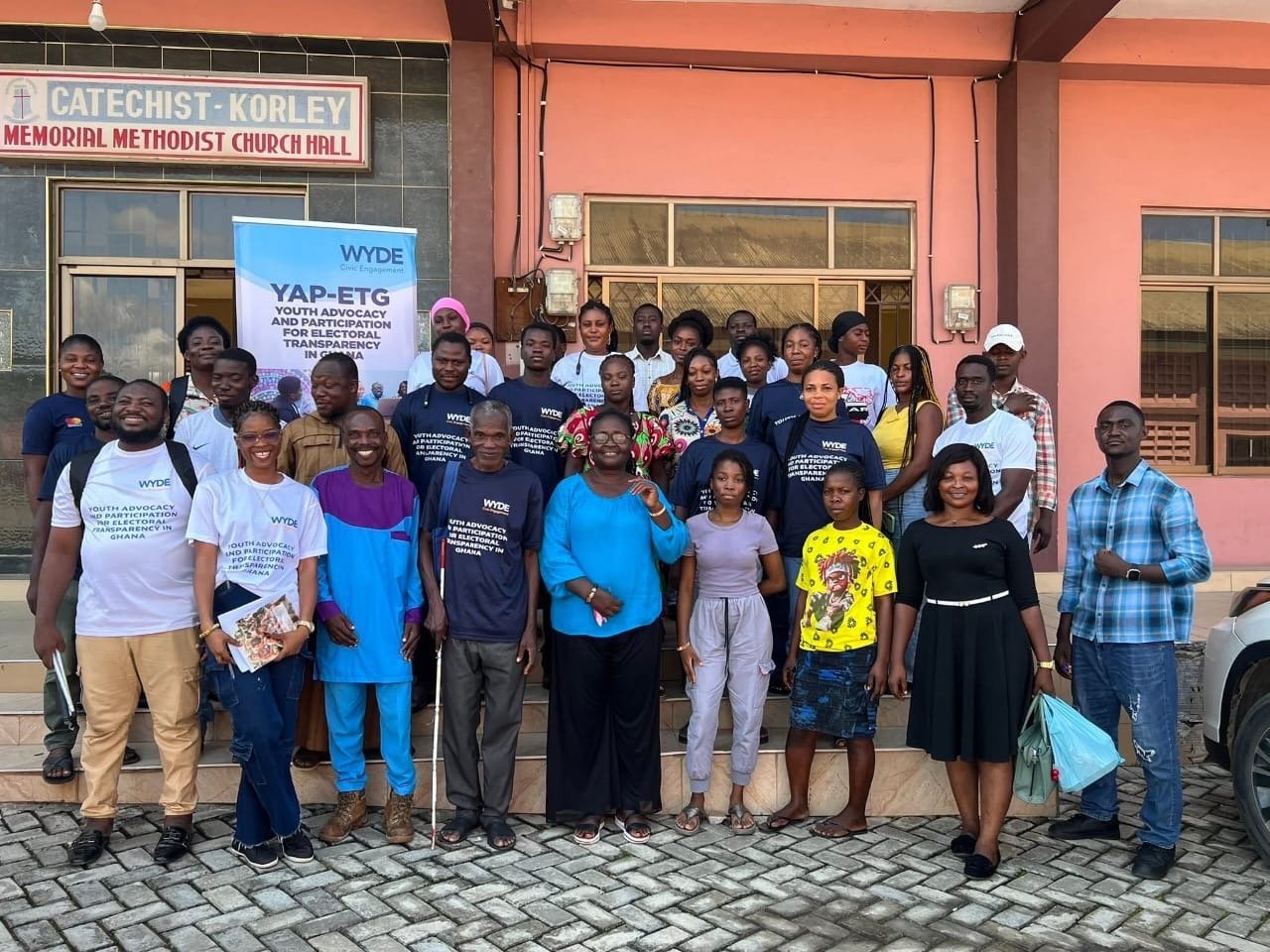
Youth Advocate Ghana’s support was articulated during a two-day workshop in the Eastern Region, organised in partnership with Democracy Reporting International under the YAP-ETG project, with funding from the European Commission and the European Partnership for Democracy. The workshop, held in the Ayensuano and Nsawam-Adoagyiri districts, brought together women and young participants for training in election observation, advocacy, and digital civic engagement.
Godfred Obeng Kwakye, Monitoring and Valuation Officer at Youth Advocate Ghana, pointed to low youth representation in district-level elections as a key motivation for the programme. “We realised that there’s low representation and participation from the youth when it comes to issues pertaining to elections in our various districts,” he said. “This workshop seeks to equip them with skills in election observation and give them the advocacy skills needed to fully engage.”
Dr. Nana Kwasi Boateng, Ayensuano District Director of the National Commission for Civic Education, reinforced the message, urging young people to move beyond passive civic engagement and take an active role in governance. “The youth are many as compared to the adults and there’s a saying that children are the future leaders,” he said. “They have to take part in any decision-making.”
The proposed shift to elected MMDCEs has been a recurring demand in Ghanaian political discourse for decades, with successive governments acknowledging the principle but failing to implement it. The current administration’s decision to push the reform through legislation represents the most concrete step yet toward making elected district leadership a reality.
Workshop participants highlighted that the current appointment system effectively requires aspiring district leaders to maintain partisan political affiliations, a barrier that discourages many young people from contesting. An elected system, they argued, would lower that barrier and encourage a broader pool of candidates to seek office at the local level.
The reform also aligns with broader government efforts to strengthen decentralisation, including the recent announcement that more than 80 per cent of the District Assemblies Common Fund will be transferred directly to assemblies. Together, these measures signal a significant shift toward empowering local government structures with both democratic legitimacy and fiscal autonomy.
Image Source: STARR FM