Ghana Mining Capital Constraints Exposed: 5 Bold Truths Dr Boateng Reveals at JoyBusiness Roundtable
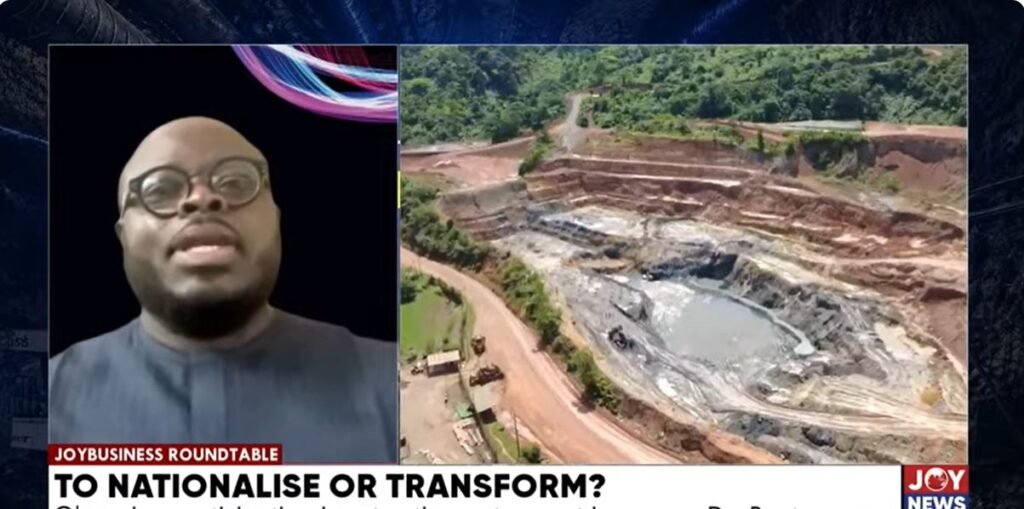
Ghana mining capital constraints remain the single most significant barrier to unlocking the country’s vast mineral potential, despite decades of accumulated technical expertise and operational experience that place Ghana among Africa’s most accomplished gold-producing nations, a leading mining expert has revealed at a high-level industry roundtable.
Dr Frank Boateng, the Acting Director of the Institute of Mining Research and Governance at the University of Mines and Technology, delivered the assessment during a JoyBusiness Roundtable discussion on rethinking Ghana’s approach to gold mining, oil and critical minerals. His testimony provided a rare insider perspective on the financing challenges that have constrained Ghana’s extractive sector, drawing on his direct experience raising capital on international markets. Read the original report on MyJoyOnline.
Dr Boateng Reveals Ghana Mining Capital Constraints Despite World-Class Expertise
The core of Dr Boateng’s argument is that Ghana possesses the technical capacity and mining experience necessary to compete on the global stage, but the country’s Ghana mining capital constraints prevent it from scaling up operations to match its potential. “Ghana is a matured country when you talk about gold,” he told the roundtable. “On the continent, Ghana is counted among the leading producers. We have the experience and the technology.”
However, Dr Boateng was emphatic that expertise alone is insufficient. “What we don’t have is the financial resources,” he explained. “We can deploy our human capital and knowledge to tap this from elsewhere and help the country do more.” This assessment aligns with the observations of other experts at the roundtable, including Dr Adusu Owusu-Sarkodie, who has warned that pushing for 100 percent state ownership of mining is risky, and Ken Ashigbey, who has highlighted Ghana’s vast untapped gold reserves that require significant capital investment to develop.
Ghana’s position as one of Africa’s top gold producers is well established, with the country consistently ranking among the continent’s largest output volumes. Yet the gap between current production and the nation’s geological potential points directly to the Ghana mining capital constraints that Dr Boateng described.
How Dr Boateng Overcame Ghana Mining Capital Constraints With A$90 Million Exploration
To illustrate how Ghana mining capital constraints can be overcome, Dr Boateng drew on a detailed example from his own professional career. He described how a mining company he was involved with invested nearly A$90 million in exploration to establish viable mineral reserves before approaching the capital market for financing.
“Before we went to the capital market, we had already spent close to $90 million in exploration,” Dr Boateng explained. “We were very clear that we had the resource and an appreciable life of mine.” This substantial upfront investment in exploration was critical to building the credibility needed to attract institutional investors and secure financing on the Australian capital market.
The company subsequently raised approximately A$260 million on the Australian market, a figure that dwarfs the financing typically available to Ghanaian-owned mining operations. The success of this fundraising effort demonstrates the scale of capital that can be mobilised when exploration data is robust and the resource base is well documented, but it also highlights the Ghana mining capital constraints that prevent local companies from reaching this stage.
Structured Financing Models to Address Ghana Mining Capital Constraints
Dr Boateng described the innovative financing arrangements that enabled the mining company to move from exploration to production, offering a potential model for addressing Ghana mining capital constraints at a national level. The financing included an equity stake arrangement with the financing bank, which took a 7 percent interest in the mining operation.
“They said they want 7 percent equity stake in the mine,” Dr Boateng recounted. “Not because they are interested in mining, but because they want their eyes in the operations.” This arrangement provided the bank with oversight and confidence in the project’s management, reducing the perceived risk of the investment and enabling more favourable financing terms.
The financing also included hedging arrangements designed to protect the company against volatility in global gold prices. “We will hedge the gold for you at about $200 below the spot price at the time,” Dr Boateng explained. “This helped our cash flow projections.” Such structured financing models represent precisely the kind of innovative approach that experts like participants at the JoyBusiness Roundtable have called for to strengthen Ghana’s participation in the extractive sector.
Ghana Mining Capital Constraints Demand Hybrid Financing and Policy Reform
The implications of Dr Boateng’s testimony extend beyond individual mining projects to the broader question of how Ghana can unlock its mineral wealth. The Ghana mining capital constraints he described are not simply a matter of insufficient private capital; they reflect systemic challenges in the country’s financial infrastructure, policy environment and institutional capacity to support large-scale mining ventures.
Dr Boateng’s call for innovative financing models echoes the broader consensus among mining experts that Ghana must develop a hybrid approach to funding its extractive sector. This approach would combine domestic capital mobilisation with strategic partnerships involving international mining companies and financial institutions, leveraging Ghana’s technical expertise to attract the investment needed to develop its mineral resources.
The roundtable discussion also touched on the question of nationalisation versus private sector participation, with several experts cautioning against rushing toward full state ownership of mining operations. Dr Boateng’s emphasis on structured financing and risk management suggests a middle path that preserves Ghana’s sovereignty over its mineral resources while attracting the international capital needed to develop them.
As Ghana grapples with the twin challenges of economic development and resource management, the Ghana mining capital constraints identified by Dr Boateng represent both a barrier and an opportunity. If the country can develop the financial infrastructure and policy frameworks needed to mobilise capital for mining, it stands to unlock billions of dollars in mineral value that could transform the national economy. The expert’s testimony provides a clear roadmap for achieving that goal, grounded in real-world experience and practical solutions.
Source: MyJoyOnline