Ghanaian Participation in Extractive Sector Demands 7 Bold Reforms to Unlock National Wealth
Ghanaian participation in extractive sector operations remains far too limited to deliver meaningful national benefits, a leading mining governance expert has warned, calling for sweeping policy reforms to expand citizen ownership in the country’s vast natural resource wealth.
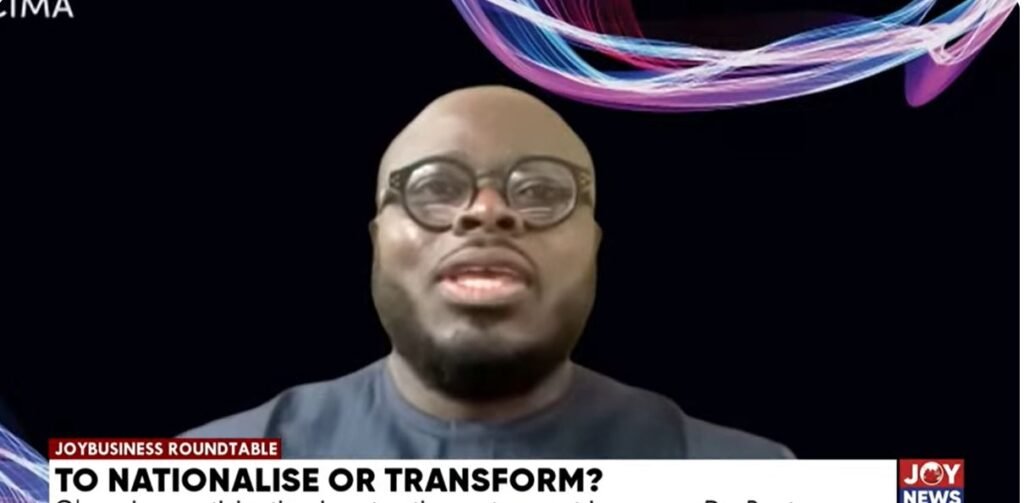
Dr. Frank Boateng, Acting Director of the Institute of Mining Research and Governance (IMRIG) at the University of Mines and Technology, made the urgent appeal during a JoyBusiness Roundtable discussion on rethinking Ghana’s approach to gold mining, oil and critical minerals. His call comes at a time when debates over nationalisation, foreign dominance and local content in the mining sector have intensified across the country.
Why Ghanaian Participation in Extractive Sector Falls Short of National Potential
Ghana’s constitution mandates a 10 percent free carried interest for the state in all mining operations. However, Dr. Boateng argued that this threshold is woefully insufficient for a nation sitting atop billions of dollars in gold, oil, gas and critical mineral deposits.
“I still stand by my point where I feel that Ghanaian participation needs to increase,” Dr. Boateng stated on Tuesday, May 26, during the JoyNews broadcast.
The expert explained that limited local ownership means Ghana captures only a fraction of the value generated by its extractive sector. Mining companies repatriate profits, foreign shareholders reap dividends and local communities bear the environmental and social costs of extraction without proportional economic returns. This structural imbalance, Dr. Boateng argued, demands a fundamental rethink of how the nation approaches resource governance.
Converting Taxes to Equity: A Bold Path for Ghanaian Participation in Extractive Sector
One of Dr. Boateng’s most striking proposals involves converting portions of taxes owed by mining firms into equity stakes, effectively pushing Ghana’s ownership beyond the constitutionally mandated 10 percent free carried interest.
“Can we even defer some of our taxes to increase our equities in some of these mines, so that it pushes our ownership beyond the free carry of 10%?” he questioned during the roundtable.
This approach would allow the government to build significant shareholding positions in mining operations without requiring immediate cash outlays. Over time, the dividends from these expanded equity stakes could dwarf the foregone tax revenue, generating sustainable long-term income for the state and, by extension, for Ghanaian citizens.
Dr. Boateng also proposed that mining lease renewal negotiations should serve as leverage points for securing greater Ghanaian participation in extractive sector operations. “If mining companies are coming to lease renewal, we can renegotiate and increase our participation,” he said, pointing to upcoming lease discussions as immediate opportunities for reform.
Citizen Stock Ownership to Boost Ghanaian Participation in Extractive Sector
Dr. Boateng cautioned against concentrating ownership solely in the hands of government or political actors. Instead, he advocated for broader citizen participation through stock market mechanisms that would allow ordinary Ghanaians to own stakes in mining ventures.
This model mirrors successful approaches in countries like Norway, where sovereign wealth funds and public share ownership ensure that resource wealth benefits entire populations rather than narrow elites. By expanding stock market participation, Ghana could create a new class of citizen-investors with direct financial stakes in the success of the extractive sector.
The concept aligns with broader discussions about Ghana mining participation financing demands experts have revealed at previous policy forums, where specialists argued that creative financing mechanisms are essential for meaningful local ownership.
Artisanal Mining: A Critical Gateway for Ghanaian Participation in Extractive Sector
Dr. Boateng identified the artisanal and small-scale mining sector as a major untapped opportunity for increasing Ghanaian ownership. He argued that supporting well-performing local small-scale mining operators with financing and technical assistance could transform them into medium-scale mining companies capable of attracting larger investments.
He referenced the Minerals Income Investment Fund’s Small-Scale Incubation Project, which aimed to identify promising artisanal mining operators and provide support to help them scale up operations. This approach would create a pipeline of Ghanaian-owned mining firms that could compete more effectively in the broader extractive industry.
The proposal builds on growing consensus that Ghana mining value chain demands powerful partnerships over isolation — a principle that extends from artisanal operations to large-scale industrial mining.
Political Instability Threatens Ghanaian Participation in Extractive Sector Growth
Dr. Boateng also sounded a warning about the impact of Ghana’s changing political landscape on mining sector investment. Policy reversals that accompany government transitions create uncertainty and discourage long-term investment planning, he noted.
“Looking at the nature of our politics in this country, when government changes, things change dramatically, and sometimes decisions are reversed. This does not help,” Dr. Boateng cautioned.
This instability particularly undermines efforts to build lasting Ghanaian participation in extractive sector operations, as investors — whether foreign or domestic — require policy certainty to commit capital over the multi-decade lifespans typical of mining projects. Without bipartisan consensus on extractive sector policy, gains made under one administration risk being undone by the next.
The Broader Economic Case for Enhanced Ghanaian Participation in Extractive Sector
The economic argument for expanding local participation is compelling. Ghana is Africa’s largest gold producer and holds significant reserves of bauxite, manganese, lithium and other critical minerals essential for the global energy transition. Oil and gas production from the Jubilee and TEN fields adds further wealth to the national resource portfolio.
Yet the benefits of this wealth remain concentrated among foreign mining companies and a small domestic elite. Communities in mining regions like Obuasi, Tarkwa and Prestea continue to grapple with environmental degradation, land dispossession and limited economic opportunities despite decades of mineral extraction in their areas.
Dr. Boateng maintained that empowering Ghanaian-owned mining firms and expanding citizen participation would ultimately lead to greater national benefits, stronger local economic development and more equitable distribution of the country’s natural resource wealth. The mining nationalisation debate Ghana is currently engaged in underscores how urgently these structural reforms are needed.
As Ghana navigates the complexities of resource governance in an era of critical mineral demand, the call for enhanced local participation represents not merely an economic preference but a national imperative. The question is no longer whether Ghanaian participation in extractive sector operations should increase, but how quickly and decisively the nation can act to make it happen.
Source: MyJoyOnline