Mining Nationalisation Ghana Exposed: 6 Critical Truths UMaT Expert Reveals About State Ownership Risks
Mining nationalisation Ghana debate reached a new intensity on Tuesday as a senior lecturer at the University of Mines and Technology (UMaT) urged the country to abandon calls for full state ownership of mines in favour of maximising returns through effective partnerships and revenue-sharing arrangements.
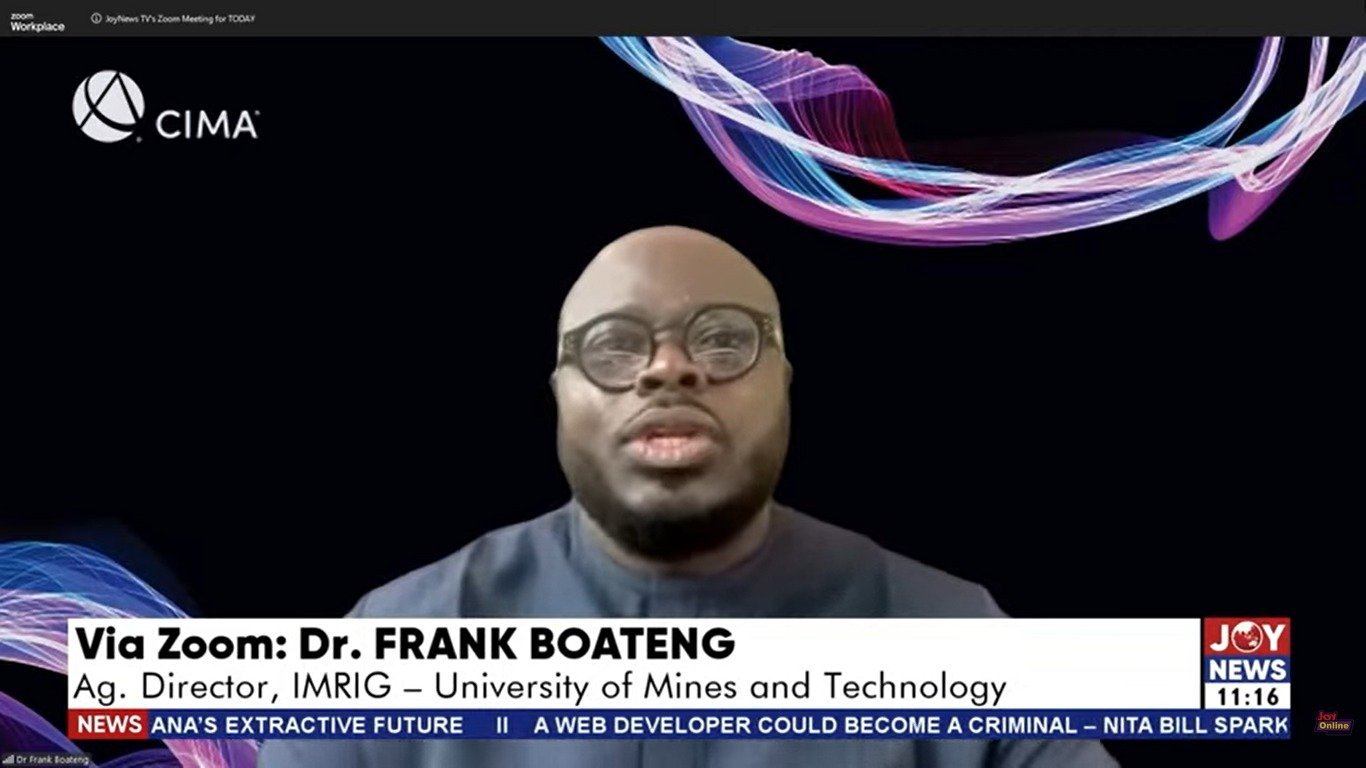
Dr Frank Boateng, speaking during a high-level discussion titled “To Nationalise or Transform? Rethinking Ghana’s Approach to Mining, Oil and Critical Minerals” in Accra, argued that Ghana’s historical experience with state-controlled mining should serve as a cautionary tale. His remarks, delivered at a JoyBusiness-organised event on May 26, have injected fresh urgency into a conversation that divides economists, politicians, and citizens across the country.
Why Mining Nationalisation in Ghana Faces Historical Obstacles
Dr Boateng’s central argument against mining nationalisation in Ghana rests on the country’s own track record. He reminded his audience that Ghana has previously experimented with state ownership and control of mining operations, and the results were largely unsuccessful.
“When the government took over (the mining sector) prior to the liberalisation in the early 80s, we all saw that we were not able to manage these mines, and that brought about the privatisation, where we brought in private investment,” he stated.
The failure of state-run mining operations in Ghana was not unique to the country. Across Africa and the developing world, governments that nationalised extractive industries in the post-independence era frequently struggled with inefficiency, corruption, underinvestment, and declining output. The enormous capital requirements of modern mining operations proved too burdensome for state budgets that were already stretched thin by competing development priorities.
For Ghana, the lesson was clear enough to drive a policy reversal: the sector was returned to private operators, many of whom brought the technical expertise and financial resources needed to modernise operations and boost production. Today, Ghana’s mining industry — anchored by gold, manganese, and bauxite — is a major contributor to government revenue and foreign exchange earnings, largely because of the efficiencies that private investment has introduced.
How Mining Nationalisation in Ghana Could Jeopardise Capital Access
One of the most compelling arguments against mining nationalisation in Ghana relates to capital. Large-scale mining is among the most capital-intensive industries in the world. Developing a single gold mine can require hundreds of millions of dollars in upfront investment before a single ounce of ore is extracted.
“It takes so much to build a gold mine,” Dr Boateng noted, emphasising the financial demands that make full state ownership impractical for a developing economy like Ghana’s.
The University of Mines and Technology lecturer maintained that the financial demands of establishing and operating mines remain beyond the reach of most local investors. This reality means that Ghanaians cannot simply take over existing mining assets or develop new ones without substantial external support. Pursuing outright nationalisation without securing alternative financing mechanisms would effectively halt new mine development and potentially cripple existing operations.
The mining nationalisation Ghana debate must contend with this fundamental economic constraint. While the political appeal of national control over natural resources is understandable, the practical challenges of funding, operating, and maintaining world-class mining facilities require a more nuanced approach than full state ownership can provide.
What Mining Nationalisation in Ghana Means for Public-Private Partnerships
Rather than pursuing outright nationalisation, Dr Boateng advocated a stronger public-private partnership model. This approach would enable Ghana to benefit from private capital, technical expertise, and operational efficiency while ensuring that the State receives a fair share of the wealth generated from its natural resources.
Dr Boateng argued that a collaborative approach between government and private investors offers a more practical and sustainable pathway for growing the mining industry and maximising economic benefits for the country. Under this model, the government would focus on strengthening regulatory frameworks, negotiating better revenue-sharing agreements, and building domestic technical capacity rather than attempting to run mines directly.
This position echoes similar recommendations from other experts. During the same roundtable, mineral economist Mr. Wisdom Puplampu of the Minerals Commission called for a hybrid financing approach to strengthen local mining participation, suggesting that the solution lies in creative capital structures rather than ownership battles.
The mining nationalisation Ghana discussion is not merely academic. As Ghana’s mining value chain demands powerful partnerships over isolation, the practical implications of policy choices will determine whether the country’s mineral wealth translates into sustainable development or economic stagnation.
The Mining Nationalisation in Ghana Debate and Revenue Maximisation
Dr Boateng’s most actionable recommendation was that Ghana should focus on maximising the rents and royalties it collects from mining activities rather than pursuing ownership of the mines themselves. This distinction is crucial: the government does not need to own a mine to benefit enormously from it.
Through well-designed tax regimes, royalty structures, and regulatory frameworks, Ghana can capture a larger share of mining revenues without bearing the operational risks and capital burdens that come with state ownership. This approach also preserves the incentives for private operators to invest in exploration, technology, and efficiency — factors that ultimately expand the revenue base from which the government draws its share.
The focus on revenue maximisation aligns with broader trends in resource governance across Africa. Countries like Botswana, which has successfully managed its diamond resources through a joint venture model with De Beers, have demonstrated that strong governance and smart partnerships can deliver superior outcomes compared to full nationalisation.
Ghana’s existing mining legislation provides a foundation for this approach, though there is room for improvement. Strengthening the capacity of the Minerals Commission, enhancing transparency in revenue reporting, and ensuring that mining communities benefit directly from resource extraction are all steps that could boost Ghana’s mining revenues without the risks associated with nationalisation.
How Mining Nationalisation in Ghana Impacts Foreign Investment
The mining nationalisation Ghana debate also carries significant implications for foreign direct investment. International mining companies and their investors assess political risk when deciding where to allocate capital. A government that signals intent to nationalise mining assets sends a chilling message to the global investment community.
Ghana has built a reputation as one of Africa’s most attractive mining destinations, thanks in part to its stable regulatory environment, democratic governance, and respect for property rights. Pursuing nationalisation would jeopardise this reputation and could trigger an exodus of foreign investment that would take years, if not decades, to reverse.
Dr Boateng’s call for a stronger public-private partnership model offers a way to balance the legitimate desire for greater national control of natural resources with the practical need for foreign capital and expertise. By negotiating better terms within existing frameworks rather than tearing up contracts and seizing assets, Ghana can achieve its development objectives while maintaining the confidence of international investors.
Why Mining Nationalisation in Ghana Must Be Replaced by Strategic Transformation
The title of the roundtable discussion — “To Nationalise or Transform?” — captured the essential choice facing Ghana. Dr Boateng made clear that transformation, not nationalisation, is the path forward. This transformation involves building domestic technical capacity, strengthening institutions, improving governance, and negotiating more favourable terms with mining companies.
It also means investing in education and training to ensure that more Ghanaians can participate meaningfully in the mining industry as engineers, geologists, managers, and entrepreneurs. The University of Mines and Technology, where Dr Boateng teaches, is at the forefront of this effort, but much more needs to be done across the educational ecosystem.
The mining nationalisation Ghana debate is ultimately about sovereignty — not sovereignty over land, which Ghana already possesses, but sovereignty over the benefits that flow from its mineral resources. This sovereignty is best achieved not through state ownership of mines but through strong institutions, smart regulation, and strategic partnerships that ensure Ghanaians capture a fair share of the wealth beneath their feet.
As the public debate continues, the voices of experts like Dr Boateng provide valuable guidance for policymakers navigating this complex terrain. The challenge is to channel the legitimate public desire for greater benefit from natural resources into practical policies that deliver results without repeating the costly mistakes of the past.
Source: MyJoyOnline
Image Source: MYJOYONLINE