Ghana Mining Participation Financing Demands 5 Bold Truths Experts Reveal at JoyBusiness Roundtable
Ghana mining participation financing has emerged as one of the most pressing economic discussions in the country, as experts warn that the capital market alone cannot deliver the investment needed to transform indigenous mining companies into competitive players on the global stage.
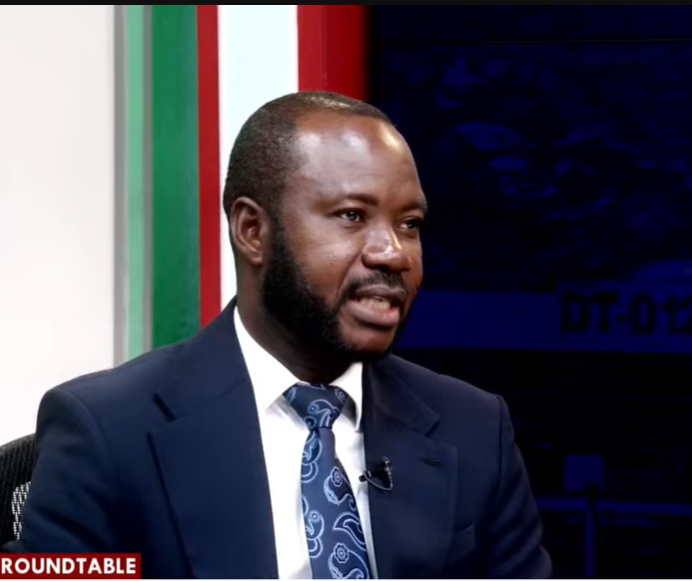
During a high-level JoyBusiness Roundtable held in Accra on Tuesday, May 26, mineral economist Mr. Wisdom Puplampu of the Minerals Commission laid out a compelling case for adopting a hybrid financing model — one that blends equity from the Ghana Stock Exchange with debt from commercial banks and patient capital from the nation’s growing pension fund industry. His remarks have added fresh momentum to a debate that touches the very heart of Ghana’s economic sovereignty in the extractive sector.
Why Ghana Mining Participation Financing Requires a Hybrid Approach
The existing local content regulations in Ghana’s mining industry already provide a pathway for firms to raise capital through stock exchange listings. However, Mr. Puplampu pointed out a fundamental limitation in this strategy.
“The stock exchange cannot give us the required capital we need to operate. So we need a hybrid approach,” he stated during the roundtable discussion on rethinking Ghana’s approach to gold mining, oil, and critical minerals.
The proposed hybrid model would combine equity financing from the Ghana Stock Exchange with debt financing from commercial banks, creating what Mr. Puplampu described as sustainable funding avenues for local mining firms. This dual structure acknowledges a reality that many developing economies face: the domestic capital market, while growing, lacks the depth and liquidity to single-handedly fund the enormous capital expenditures required for large-scale mining operations.
The call for this blended approach resonates with broader conversations about Ghana’s mining value chain and the need for partnerships over isolation, a topic that industry watchers have flagged repeatedly in recent months.
How Ghana Mining Participation Financing Can Unlock Pension Fund Capital
One of the more innovative proposals to emerge from the roundtable was Mr. Puplampu’s call for the National Pensions Regulatory Authority (NPRA) to consider relaxing investment rules. He argued that portions of pension funds should be allowed to flow into the equity market, particularly in mining-related equities.
“The National Pensions Regulatory Authority should try to relax the rules so that we can move some part of our pension fund, which is patient capital, and deploy that into the equity market so that they can participate in the operations,” he explained.
The concept of pension fund capital as a vehicle for mining participation financing is not entirely new, but it carries particular weight in Ghana’s context. The country’s pension industry has grown substantially over the past decade, and redirecting even a fraction of those funds toward strategic sectors like mining could unlock billions of cedis in domestic investment. Pension funds, by their very nature, are designed for long-term horizons — precisely the kind of patient capital that mining ventures demand.
This proposal aligns with growing recognition that Ghana’s untapped gold reserves represent a vast mining potential that could be more effectively harnessed with creative financing solutions.
The Role of Banks in Ghana Mining Participation Financing
Mr. Puplampu also directed attention to the banking sector, urging financial institutions to see the mining industry as an opportunity rather than a risk. Under the hybrid model he envisions, banks would provide the debt component of financing while the stock exchange delivers equity.
“We also need to take steps so that our banks can see opportunities in the industry. The banks are coming in with the debt, while we raise equity from the stock exchange,” he said.
Ghanaian banks have historically been cautious about lending to the mining sector, deterred by the capital-intensive nature of operations and the volatility of commodity prices. However, with gold prices reaching record highs and the country positioning itself as a critical minerals hub, the risk-reward calculus may be shifting in favour of more aggressive banking participation.
The Minerals Commission has been working to create an environment where both local and foreign investors feel confident putting capital into the sector. Ghana’s mineral wealth and the role of foreign investment remain central to this effort, though the emphasis is increasingly on building domestic capacity alongside international partnerships.
Foreign Direct Investment and Ghana Mining Participation Financing
Beyond the domestic financing mechanisms, Mr. Puplampu stressed that attracting foreign direct investment into the mining sector remains essential. Partnerships between local firms and foreign investors, he argued, are not a sign of weakness but rather a pragmatic strategy for sustainable growth.
This nuanced position acknowledges that Ghana cannot build a world-class mining industry in isolation. The technical expertise, technology transfer, and capital access that foreign investors bring are invaluable complements to domestic resources and knowledge. However, the goal is to ensure that Ghanaians are genuine partners in these ventures, not merely passive bystanders while foreign entities extract the nation’s mineral wealth.
What Ghana Mining Participation Financing Means for the Economy
The implications of successfully implementing a hybrid financing model for Ghana’s mining sector extend far beyond the industry itself. Increased local participation in mining could generate significant employment, boost tax revenues, and reduce the country’s dependence on foreign-owned companies for the extraction of its own natural resources.
Mr. Puplampu expressed confidence that the hybrid approach would deliver tangible results. “And if we adopt the hybrid approach, we’ll be able to make some significant impact,” he added.
For a country that is Africa’s leading gold producer and sits atop significant deposits of manganese, bauxite, and other critical minerals, the stakes could not be higher. Ghana’s mining participation financing strategy will determine whether the nation’s mineral wealth translates into broad-based prosperity or remains concentrated in the hands of a few foreign operators.
The roundtable discussion comes at a time when Ghana is actively exploring ways to maximise returns from its extractive sector, with multiple experts weighing in on the optimal balance between state involvement and private enterprise. As the debate continues, the hybrid financing model proposed by Mr. Puplampu offers a pragmatic middle ground — one that respects the realities of capital requirements while championing the cause of local ownership and participation.
With the right policy reforms, regulatory adjustments, and institutional support, Ghana could set a new standard for mining participation financing across the African continent, proving that resource-rich nations need not choose between sovereignty and development.
Source: MyJoyOnline
Image Source: MYJOYONLINE