Congo Visa-Free Africa Policy Announces Bold Open Borders for All Africans by 2027
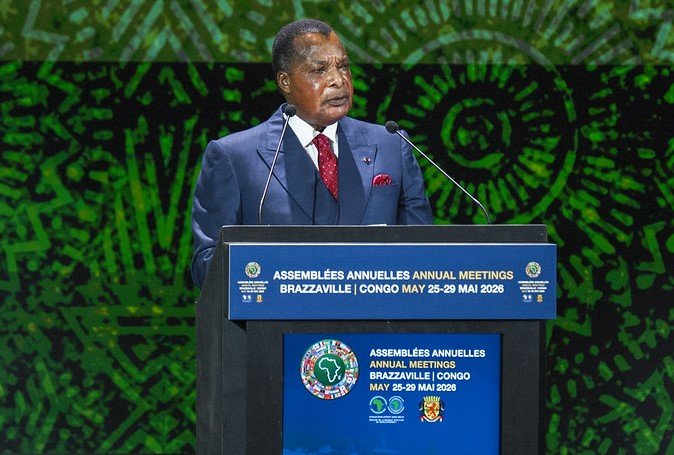
The Congo visa-free Africa policy announced by President Denis Sassou N’Guesso on Africa Day marks a watershed moment for continental integration, as the Republic of Congo becomes the latest African nation to eliminate visa requirements for all African nationals. Beginning January 1, 2027, citizens from across the continent will be able to enter Congo without a visa — a decision that carries profound implications for trade, tourism, and Pan-African unity. (Source: Ghana Business News)
The announcement was made during the celebration of Africa Day on the sidelines of the Annual Meetings of the African Development Bank (AfDB) in Brazzaville, lending the declaration both symbolic and practical weight. By tying the policy to Africa Day — a commemoration of the continent’s independence struggles and collective aspirations — President N’Guesso framed the move as both a tribute to Africa’s founding fathers and a concrete step toward the continent’s economic future.
Congo Visa-Free Africa Policy Signals a New Era of Continental Openness
“From January 1, 2027, entry into the Republic of Congo will no longer require a visa for all African nationals. That is the end,” President N’Guesso declared. “In accelerating its march toward development, Africa will continue building a continent firmly committed and determined on the path of unity and prosperity.”
The Congo visa-free Africa initiative places the country among a growing list of African nations that have embraced open-border policies for continental travellers. Rwanda, Kenya, Ghana, and Burundi have already implemented major visa regime reforms, and Congo’s decision adds significant momentum to the movement toward a borderless Africa.
The policy aligns with the African Union’s Agenda 2063, which envisions a continent where the free movement of people, goods, and services drives economic growth and social cohesion. For the Republic of Congo — a nation rich in oil, timber, and mineral resources — the removal of visa barriers could attract new waves of business travellers, investors, and tourists from across the continent.
Congo Visa-Free Africa Announcement Honours Independence Heroes
President N’Guesso used the occasion to deliver an extensive tribute to the fathers of African independence, connecting the Congo visa-free Africa policy to the sacrifices of those who fought for the continent’s liberation. He spoke at length about figures whose struggles paved the way for the Africa of today.
Among those honoured were Eduardo Mondlane, the first president of FRELIMO and father of independent Mozambique, assassinated in 1969; Amílcar Cabral, the Pan-African political leader from Guinea-Bissau, killed in 1973; and Patrice Emery Lumumba, the first prime minister of the Democratic Republic of Congo, assassinated in January 1961. He also paid tribute to Steve Biko, the South African anti-apartheid activist murdered in police detention, and Nelson Mandela, who spent 27 years in prison before becoming South Africa’s first Black president.
He further eulogised Kenneth Kaunda of Zambia, Kwame Nkrumah of Ghana — “champion of Pan-Africanism who advocated for the total independence of the continent and the creation of the United States of Africa” — and Ahmed Sékou Touré of Guinea, who rejected the Franco-African Community proposed by General Charles de Gaulle during the 1958 referendum.
President N’Guesso also honoured the contributions of women to Africa’s liberation struggles, citing Kimpa Vita, the African prophetess from the Kingdom of Kongo who fought against colonisation; Winnie Mandela, the iconic ANC activist; and Miriam Makeba, the South African artist whose music called for the liberation of African peoples.
Congo Visa-Free Africa Policy Adds to Growing Continental Trend
The Congo visa-free Africa announcement is part of a broader continental trend that has accelerated in recent years. The African Union’s Protocol on Free Movement of Persons, adopted in 2018, called on member states to progressively eliminate visa requirements for African citizens. The AU Free Movement Protocol remains the foundational document. While implementation has been uneven, a growing number of countries have taken unilateral action to open their borders.
Rwanda was among the pioneers, offering visa-free entry to all African nationals in 2018. Kenya followed suit, and Ghana implemented its own reforms under the Year of Return initiative in 2019, which opened the country’s doors to the African diaspora. Burundi has also joined the movement, and several other nations have introduced visa-on-arrival schemes for African travellers.
The economic case for visa-free travel is compelling. Studies by the African Development Bank and the World Bank have shown that visa restrictions significantly reduce intra-African trade, tourism, and investment. By removing these barriers, countries like Congo stand to benefit from increased economic activity, greater cultural exchange, and stronger regional integration.
Congo Visa-Free Africa Move Could Reshape Central African Travel
The Republic of Congo’s decision is particularly significant for the Central African region, where visa requirements have historically been among the continent’s most restrictive. By opening its borders, Congo could catalyse similar reforms among its neighbours, including Cameroon, Gabon, and the Central African Republic.
The Congo visa-free Africa policy also has practical implications for the thousands of traders, entrepreneurs, and business professionals who move across Central Africa’s borders daily. For many of these individuals, visa requirements represent not just a bureaucratic inconvenience but a genuine barrier to economic participation. Removing these barriers could unlock new opportunities for cross-border commerce and investment.
For the Republic of Congo, the timing of the announcement — during the AfDB Annual Meetings in Brazzaville — was strategically astute. The event attracted delegates, investors, and development professionals from across the continent and beyond, providing an ideal platform to showcase Congo’s commitment to openness and integration.
As the January 2027 implementation date approaches, all eyes will be on the Republic of Congo to see how the policy is executed and what impact it has on travel patterns, trade flows, and diplomatic relations. If successful, it could serve as a powerful model for other African nations still grappling with the tension between sovereignty and integration. The Congo visa-free Africa policy is, in many ways, a bet on the continent’s collective future — and one that could pay handsome dividends for decades to come.
Source: Ghana Business News