Woman and Child Die After Falling Into Abandoned Mine Pit in Ashanti Region
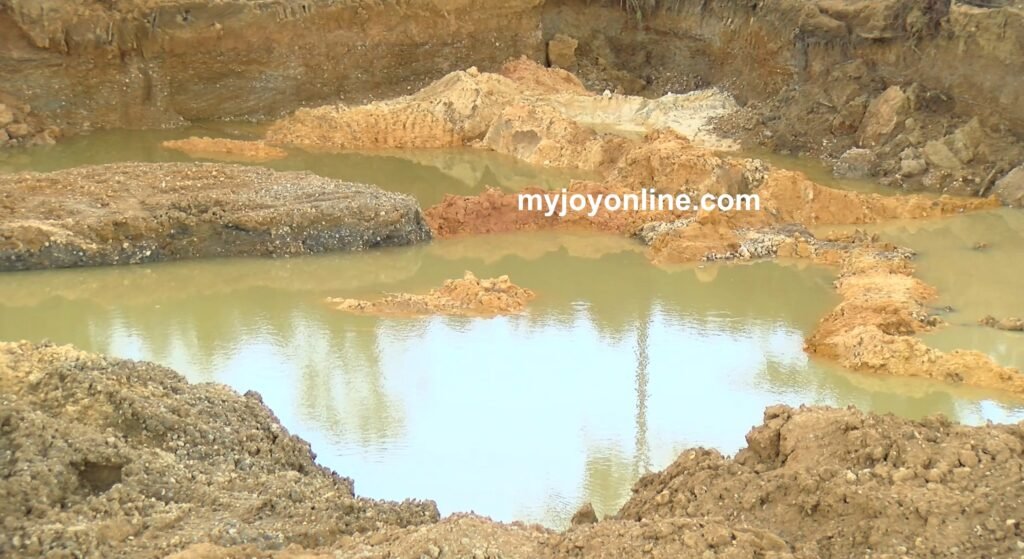
A woman and her young child have died after falling into an abandoned mining pit in the Bosome Freho District of the Ashanti Region, prompting local authorities to order the arrest of the pit’s owner and launch a broader effort to catalogue and reclaim hundreds of similar death traps scattered across the district.
The tragedy unfolded in Bobriase, where the woman, described as middle-aged, was attempting to fetch water for cooking when she slipped into the water-filled pit with her child strapped to her back. Neither survived.
The incident, reported last week, has laid bare the lethal legacy of illegal small-scale mining in one of the Ashanti Region’s most deprived districts, where hundreds of uncovered pits dot the landscape, many concealed beneath farmland and vegetation.
“When I look at Bosome Freho, it’s been almost a year since I’ve been District Chief Executive, and I came across so many abandoned pits,” said Charles Appiah Kubi, the District Chief Executive. “And some people have lost their lives. At least I could mention maybe two or three people who have lost their lives through these abandoned pits in recent times.”
The pit owner, who failed to reclaim the site after illegal mining operations, is now evading arrest. The assembly has reported the matter to police and instructed its National Disaster Management Organisation Director to conduct a district-wide inventory of all abandoned mining sites.
“We have instructed my NADMO Director to go round to the various sites for the abandoned pits, for us to identify those people who mined that place, for them to be traced, and if possible, arrest, and maybe take them to court,” Appiah Kubi said.
The enforcement action comes amid a broader push to address the environmental and public health damage wrought by years of unregulated mining. The Bosome Freho District has signed onto a reclamation programme backed by the Lands Ministry, the National Security apparatus, and the Ashanti Regional Coordinating Council. Under the scheme, small-scale miners have voluntarily agreed to reclaim mined-out lands at no cost to the assembly.
The Ghana Mine Workers Union has recently urged the government to reconsider its approach to mining sector regulation, underscoring the tensions between economic activity and environmental responsibility that define the country’s mining landscape.
For Bosome Freho, those tensions carry an immediate human cost. The district’s relative poverty compounds the danger: residents often depend on unsafe water sources near abandoned pits, increasing their exposure to the hazards left behind by illegal operators.
The deaths have intensified calls from local leaders for a more aggressive approach to holding mine owners accountable. Beyond the immediate criminal investigation, the assembly’s inventory of abandoned sites could become the foundation for a systematic reclamation effort that has long been absent in the district.
Whether that effort succeeds will depend on the cooperation of miners, the capacity of local authorities, and the willingness of national government agencies to follow through on their commitments. In the meantime, the residents of Bosome Freho continue to live alongside the open wounds carved into their land, each one a potential site of the next tragedy.
Image Source: MYJOYONLINE