Tuchel's Complaints Prompt FIFA to Relocate Photographers at World Cup Venues
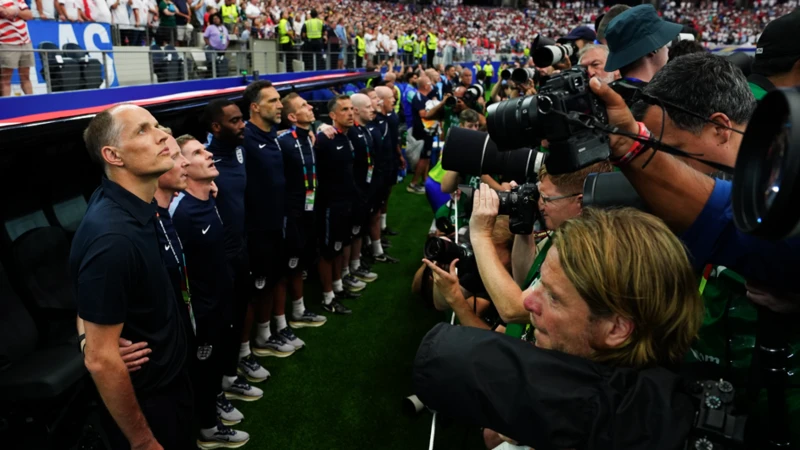
The opening days of the FIFA World Cup 2026 have produced drama on the pitch, but one of the tournament’s most unexpected storylines has unfolded on the sidelines. England head coach Thomas Tuchel successfully pressured FIFA into changing its photographer placement policy after complaining that a wall of roughly 50 camera operators completely blocked his view of players during the national anthems at AT&T Stadium in Dallas.
The incident occurred during England’s 4-2 victory over Croatia in their Group L opener. AT&T Stadium, home of the NFL’s Dallas Cowboys, required significant structural modifications to host World Cup football, including raising the pitch by 1.2 metres to accommodate a regulation-sized surface on the American football field. That elevation, however, narrowed the sidelines considerably, compressing the space available for coaching staff and media personnel during pre-match ceremonies.
Tuchel told reporters after the match that he could not see his team, describing how he was standing in front of a wall of 50 photographers and could not see a single player. The England manager said the situation had ruined part of his experience at his first World Cup match in charge.
FIFA moved quickly to address the concern. Under the new policy, photographers are now grouped in a tighter huddle positioned closer to the halfway line rather than spread across the technical areas. The revised arrangement ensures coaching staff have an unobstructed sightline to their players during the anthems, a moment that carries significant emotional and ceremonial weight at a World Cup.
The revised layout was first deployed on Thursday during the Group A fixture between Czech Republic and South Africa in Atlanta, and is expected to be implemented across all remaining tournament venues.
The episode highlights a broader tension at this World Cup between the tournament’s vast commercial apparatus and the practical needs of the teams competing. The 2026 edition, the first to feature 48 teams and be staged across three host nations, has been praised for its spectacle but scrutinised for logistical challenges at several venues that were not purpose-built for football.
AT&T Stadium is among the most high-profile examples. The Dallas venue, which regularly hosts American football in front of more than 80,000 spectators, is one of the largest and most technologically advanced stadiums in the world. Yet converting it for football required compromises that affected everyone from groundskeepers to photographers.
Tuchel’s willingness to speak publicly about the issue appears to have accelerated FIFA’s response. While the governing body has faced criticism in the past for being slow to adapt to coaches’ concerns, the rapid turnaround here suggests an awareness that the tournament’s success depends as much on the experience of participants as on broadcast spectacle.
Other coaches and federation officials are understood to have raised similar concerns privately. The incident also underscores the growing influence of head coaches in shaping the operational environment of major tournaments, a role that extends well beyond tactical preparation and team selection.
As the group stage continues and venues fill to capacity, the photographer policy will be closely watched. If the revised arrangement proves effective, it could become a permanent feature of FIFA’s tournament planning, a small but telling example of how a single coach’s complaint can reshape the staging of the world’s most-watched sporting event.
Image Source: MYJOYONLINE