Tema Oil Refinery Receives One Million Barrels of Bonga Crude to Boost Ghana Refining Operations
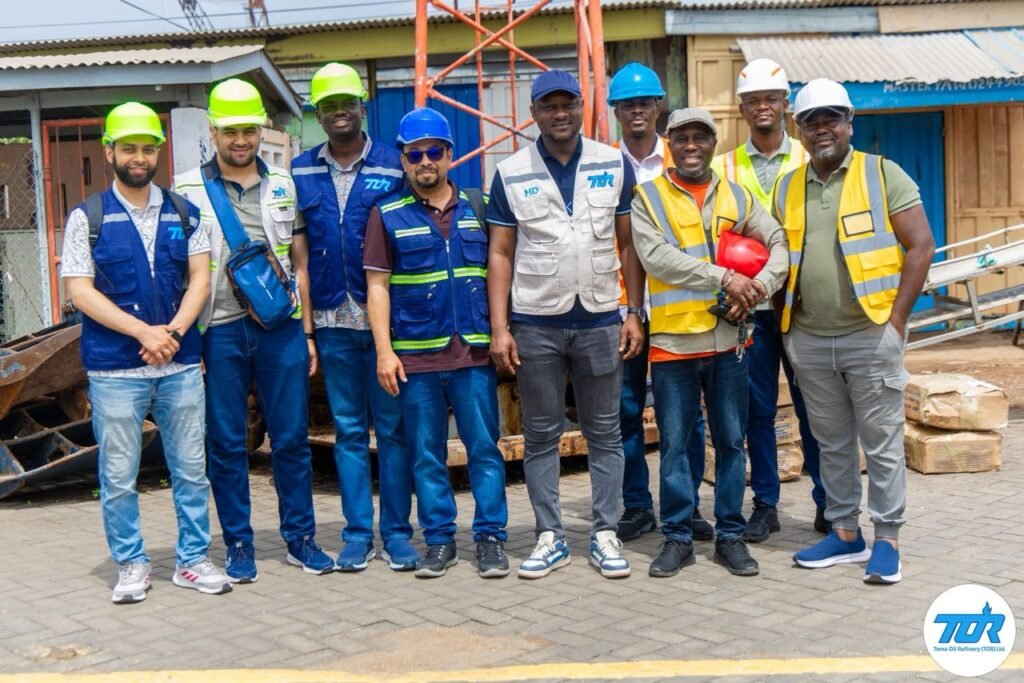
The Tema Oil Refinery has taken delivery of approximately one million barrels of Bonga Crude Oil, a shipment that marks a critical step in Ghana’s effort to revive its refining capacity and reduce its dependence on imported petroleum products.
The cargo, transported aboard the MT Cap Felix, was purchased from global energy giant Shell and supplied through TOR’s tolling partner, Fujeirah/Triangle Commodities Trading (TCT). The arrangement is part of a broader programme to restore stable refining operations at the facility, which has faced years of underperformance and operational setbacks.
Bonga Crude is a high-quality, low-sulphur grade sourced from Nigeria’s offshore Bonga field. Its favourable refining characteristics make it well-suited for producing a range of premium petroleum products, including liquefied petroleum gas (LPG), gasoline, diesel, kerosene, aviation turbine kerosene (ATK), and fuel oil. These outputs are expected to serve both the domestic market and regional buyers across West Africa.
A Milestone in TOR’s Operational Recovery
The arrival of the crude cargo represents what TOR management described as a significant milestone in the refinery’s ongoing revitalisation. For much of the past decade, the state-owned facility has struggled with ageing infrastructure, mounting debt, and intermittent shutdowns that undermined Ghana’s energy self-sufficiency.
The current management inherited a debt burden of $517 million when it took over operations, and has since embarked on a series of measures to stabilise the refinery’s finances and ramp up throughput. The tolling arrangement with Fujeirah/TCT is central to this strategy, allowing TOR to process crude without bearing the full upfront cost of procurement.
Ghana’s energy sector remains under pressure. The Electricity Company of Ghana recently announced day-long power outages across parts of Accra, Ashanti, and Tema for planned maintenance, underscoring the fragility of the country’s energy infrastructure. Against this backdrop, the restoration of domestic refining capacity takes on added urgency. Every barrel processed at home is a barrel that does not need to be imported, easing pressure on foreign exchange reserves and improving supply reliability.
Reducing Import Dependence
Ghana has long relied on imported refined petroleum products to meet domestic demand, a dependency that exposes the economy to global price volatility and supply chain disruptions. The government has repeatedly signalled its intention to reverse this trend by restoring TOR to full operational capacity.
The refinery’s output from the Bonga Crude shipment could make a meaningful dent in the country’s fuel import bill. Ghana recently posted a trade surplus of $5.28 billion, driven by strong gold and cocoa exports. But sustaining that surplus requires reducing the import side of the ledger, and petroleum products have historically been one of the largest categories of imported goods.
TOR management expressed appreciation to the Government of Ghana, regulatory institutions, financial partners, and other stakeholders whose support has contributed to the refinery’s operational resurgence. The refinery also reaffirmed its commitment to transparency, operational excellence, environmental responsibility, and its long-term transformation into a competitive and commercially sustainable energy hub for Ghana and the wider West African region.
Challenges Ahead
Despite the positive developments, significant challenges remain. TOR’s infrastructure requires continued investment to maintain throughput levels and meet increasingly stringent environmental standards. The refinery’s ability to sustain regular crude processing will depend on the continued availability of favourable tolling arrangements and the political will to support the facility through its transition period.
Industry analysts have also called for a review of Ghana’s Petroleum Act to ensure a more secure and predictable crude supply framework for TOR. Without legislative reform, the refinery’s recovery could remain vulnerable to shifts in global oil markets and the commercial decisions of external partners.
Still, the delivery of one million barrels of Bonga Crude is a tangible signal that TOR is moving in the right direction. For a facility that has symbolised the challenges facing Ghana’s state-owned enterprises, the arrival of the MT Cap Felix represents a rare moment of forward momentum.
TOR management has indicated that it will continue to engage stakeholders and the public as operations progress.
Image Source: MYJOYONLINE