GAUA-KNUST Adopts Constitution and Electoral Reforms to Improve Governance
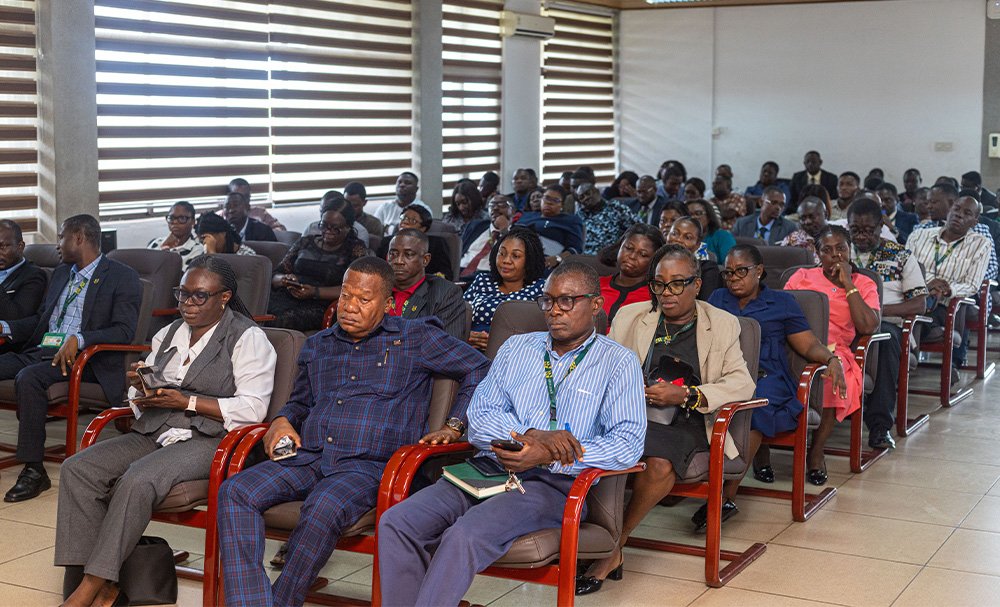
The Ghana Association of University Administrators at Kwame Nkrumah University of Science and Technology in Kumasi has taken a significant institutional step by adopting a local constitution and introducing new electoral procedures, signalling a push toward greater transparency and accountability within the organisation.
The reforms were announced during a general meeting that also served as a platform to brief members on salary negotiations and broader changes within Ghana’s public sector compensation framework. For an association that has long operated without codified rules for leadership transitions, the adoption of formal procedures represents a watershed moment.
Clearer Rules for Leadership Elections
President of GAUA-KNUST, Festus Nyame, said the new provisions address longstanding concerns about the absence of clear procedures for electing executives. Under the proposed framework, an election committee must be constituted three months before the expiration of the current executives’ term of office. The clause also details eligibility requirements, the announcement of vacant positions, circulation of election notices, and voting procedures.
Crucially, the new rules allow for both in-person and electronic voting, a provision that acknowledges the evolving nature of organisational participation in a post-pandemic era. Candidates will also be permitted to appoint representatives at coordination centres where elections are managed centrally, adding a layer of oversight that was previously absent.
The move reflects a broader trend among Ghanaian professional associations to formalise governance structures, a shift driven in part by internal disputes that have historically plagued similar organisations when leadership transitions lack clear guidelines.
Salary Adjustments and the Single Spine Question
Beyond governance reforms, the meeting also addressed pressing compensation issues. Mr Nyame disclosed that the government’s recent salary adjustment combines the market premium and non-basic allowance, consolidating them and increasing the total by 40 per cent. When calculated against current basic salaries, he said, this translates to approximately a 13 per cent increase.
This adjustment is separate from the general 9 per cent salary increment already granted to public sector workers. Implementation is expected to take effect from April 2026, with applicable back pay included.
However, the more significant revelation was the government’s apparent intention to phase out the existing Single Spine Salary Structure, a system that has defined public sector compensation in Ghana for over a decade. Mr Nyame noted that the market premium, a key component of the structure, has remained unchanged for approximately 15 years despite rising inflation and shifting economic conditions.
“Government wants to move away from the existing Single Spine Salary Structure and introduce a new system,” Mr Nyame told members, though he did not provide details on what the replacement framework might look like. The prospect of such a fundamental shift raises questions about how public sector workers, including university administrators, will be compensated in the years ahead.
Broader Implications
The reforms at GAUA-KNUST come at a time when Ghana’s public sector is under increasing pressure to modernise its compensation structures to retain talent. University administrators, who play critical roles in the operational backbone of higher education institutions, have long argued that their compensation does not reflect the complexity of their work.
The adoption of a constitution and electoral reforms, while procedural, sends a signal that the association is positioning itself to advocate more effectively for its members. An organisation with clear governance structures is better equipped to negotiate, to present a united front, and to hold its leadership accountable.
Whether the government follows through on its promise to overhaul the Single Spine system remains to be seen. For now, GAUA-KNUST’s internal reforms suggest that the association is not waiting for external change but is instead building the institutional capacity to navigate whatever comes next.
Image Source: MYJOYONLINE