WHO Chief Demands Ceasefire in Congo as Ebola Outbreak Outpaces Response Efforts
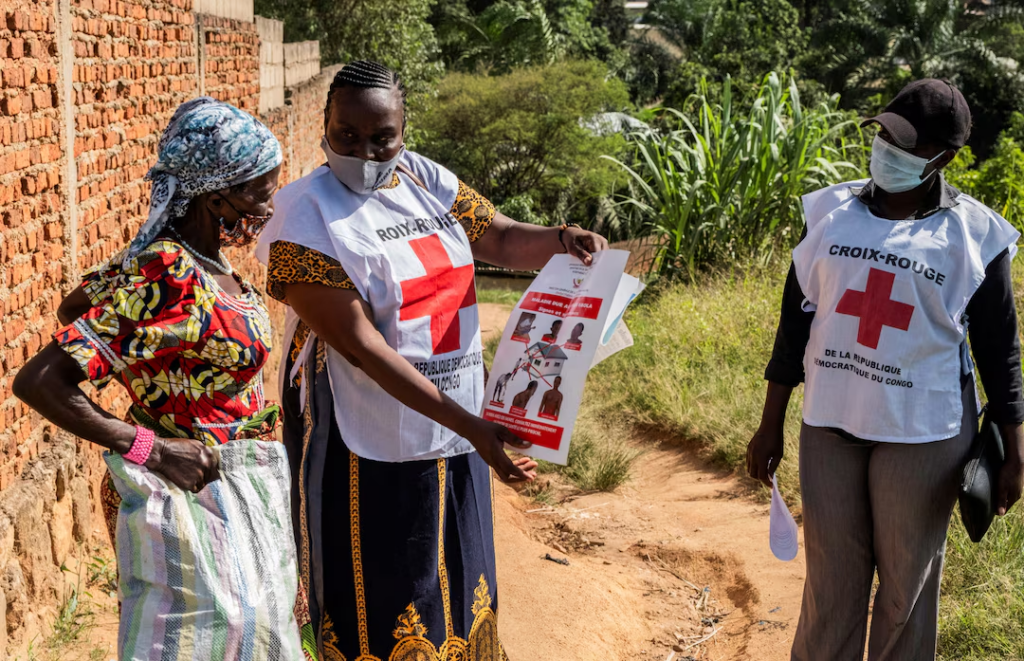
The head of the World Health Organization issued an urgent appeal on Wednesday for an immediate ceasefire in eastern Democratic Republic of Congo, warning that ongoing armed conflict is driving mass displacement and accelerating the spread of an Ebola outbreak that has already claimed more than 200 lives.
“Eastern DRC now faces a catastrophic collision of disease and conflict with the Ebola outbreak in Ituri province outpacing the response,” said WHO Director-General Tedros Adhanom Ghebreyesus, who is due to travel to the region this week. “We cannot build community trust or isolate the sick while bombs are falling.”
The Bundibugyo strain of Ebola — for which there is no approved vaccine or treatment — was declared a Public Health Emergency of International Concern by the WHO earlier this month. Over 900 suspected cases and more than 200 suspected deaths have been reported across three provinces in eastern Congo, including North Kivu, held by Rwanda-backed M23 rebels, and South Kivu, controlled by the Alliance Fleuve Congo rebel group.
Children Bearing the Heaviest Burden
The humanitarian toll is falling disproportionately on the youngest and most vulnerable. Save the Children reported on Wednesday that a quarter of the confirmed Ebola deaths were children, calling for a significant scale-up in infection prevention measures across affected communities.
The outbreak is unfolding in one of the world’s most protracted conflict zones, where decades of fighting between government forces, rebel groups, and foreign-backed militias have left infrastructure shattered and displaced millions. The United Nations refugee agency said transit and reception sites in Uganda’s West Nile region, which borders Congo, are now at more than double their capacity — a sign that the crisis is spilling across borders.
Aid Efforts Hampered by Violence and Distrust
International aid organisations are rushing staff and equipment to eastern Congo, but the response is being hobbled by a combination of insecurity and deep community mistrust. Attacks on health workers — a recurring feature of Ebola responses in conflict-affected areas — have forced some organisations to scale back operations in the most dangerous zones.
The Ebola virus thrives in environments of displacement and overcrowding, where basic hygiene is impossible and contact tracing becomes a near-insurmountable task. The Bundibugyo strain, first identified in Uganda in 2007, is less lethal than the Zaire strain that caused the devastating 2018–2020 outbreak in eastern Congo, but the absence of a licensed vaccine makes containment efforts far more dependent on traditional public health measures: isolation, contact tracing, and community engagement.
Donors have pledged approximately $500 million to support the outbreak response, though health officials say not all of the funds have been disbursed. The gap between pledges and actual spending has been a persistent problem in global health emergencies, and advocates warn that delays in funding translate directly into preventable deaths on the ground.
A Crisis That Demands More Than Medicine
Tedros’s call for a ceasefire reflects a growing recognition within the global health community that disease outbreaks in conflict zones cannot be addressed through medical interventions alone. The DRC’s Ebola response — like those before it — is fundamentally constrained by the political and military dynamics that create the conditions for the virus to spread.
Previous outbreaks in eastern Congo, including the 2018–2020 epidemic that killed more than 2,200 people, demonstrated that even with effective vaccines, the response can be derailed by armed attacks on treatment centres and the refusal of communities to cooperate with health workers they do not trust. The current outbreak, unfolding against a backdrop of intensified fighting and widespread displacement, risks repeating those failures on an even larger scale.
Whether the warring parties in eastern Congo will heed the WHO’s call remains an open question. Mediation efforts led by the United States and others have so far failed to halt the fighting, and the humanitarian situation continues to deteriorate. For the people of Ituri, North Kivu, and South Kivu, the convergence of war and disease represents a threat that neither peacekeepers nor epidemiologists can resolve alone.
Image Source: MYJOYONLINE