South Africa Repatriation: Only 10 of Nearly 300 Ghanaian Migrants Were Legally in the Country
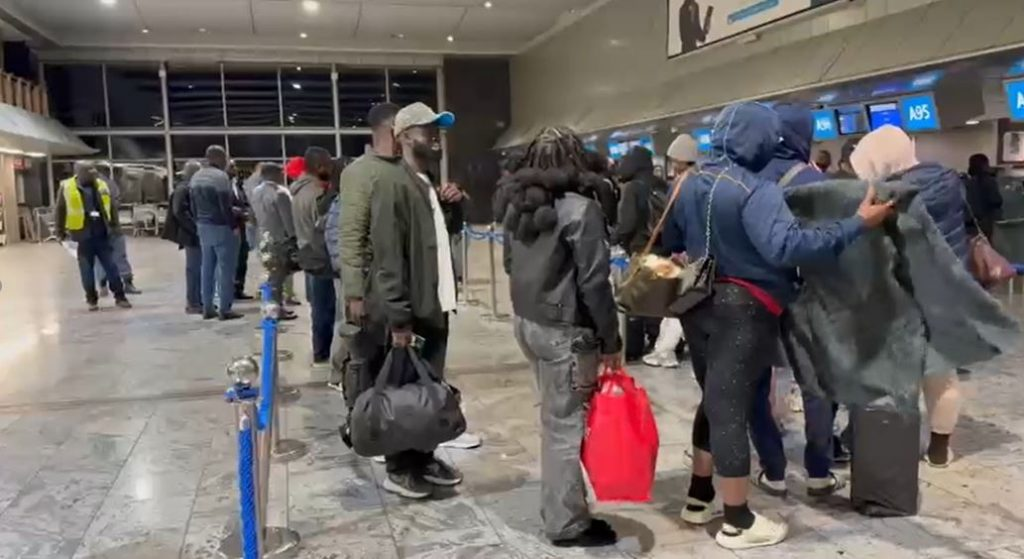
The mass repatriation of Ghanaian nationals from South Africa took a dramatic turn this week when Home Affairs officials revealed that only 10 of nearly 300 migrants who registered for voluntary return were found to be legally residing in the country.
The disclosure, made by South African Home Affairs Immigration and Law Enforcement head Stephen van Neel, underscores the scale of undocumented migration that has fuelled months of anti-immigrant protests across parts of South Africa — and raises uncomfortable questions about the regulatory failures on both sides of the migration corridor.
“Of the 300 individuals that were on that list, we only found 10 of them being legal in the country,” van Neel told reporters, as quoted by the South African Broadcasting Corporation. He said the remainder were either undocumented, non-compliant with visa conditions, or had overstayed their permits, adding that the Department of Home Affairs would pursue the necessary sanctions.
A Flight Marked by Exclusion
The group had been scheduled to depart from OR Tambo International Airport in Johannesburg for Accra, part of a government-organised repatriation effort that followed weeks of rising anti-immigrant unrest targeting foreign nationals across South Africa. However, Ghana’s High Commission later confirmed that fewer than 300 nationals ultimately boarded the flight, after some were turned away over documentation issues. Those affected are expected to be considered for a second repatriation flight later this week.
The figures tell a stark story. If van Neel’s numbers hold, roughly 97 per cent of the Ghanaian nationals who sought voluntary repatriation were in some form of immigration violation. The statistic is likely to intensify the political debate in both countries — in South Africa, where anti-immigration groups have long argued that undocumented foreigners strain public services and undercut local workers, and in Ghana, where the government faces pressure to protect its citizens abroad while acknowledging the legal realities of their status.
Diplomatic Restraint Amid Tensions
Ghana’s High Commissioner to South Africa, Benjamin Kofi Quashie, struck a measured tone in response to the developments. He urged calm and ruled out any retaliatory action against South Africans living in Ghana, a position that reflects Accra’s broader diplomatic strategy of de-escalation.
“We believe that if there are any South Africans that need to be repatriated, it is the responsibility of state institutions, not individuals,” Quashie said. He added that Ghana would continue to promote cooperation and “the spirit of pan-Africanism” despite the ongoing tensions.
The High Commissioner’s comments come against the backdrop of a broader government effort to support returning citizens, including logistical arrangements for evacuees and reintegration assistance. Foreign Minister Samuel Okudzeto Ablakwa had earlier outlined a support framework for Ghanaians arriving from South Africa, stressing that the returnees “are not refugees” but citizens being assisted by their own government.
The Broader Migration Question
The repatriation episode is the latest chapter in South Africa’s long and fraught relationship with migration from the rest of the continent. Anti-immigrant sentiment has periodically erupted into violence — most notably in the xenophobic attacks of 2008 and 2015 — and the current wave of protests, driven by groups such as Operation Dudula, has created a hostile environment for foreign nationals, particularly those without documentation.
For Ghana, the situation presents a delicate balancing act. The country has historically been one of the more open societies in West Africa, and its citizens have long migrated to South Africa in search of economic opportunities, particularly in the retail, construction, and informal trading sectors. The fact that the overwhelming majority of those repatriated were found to be undocumented suggests that many had been operating in a grey zone for years — tolerated in practice but vulnerable to exactly the kind of crackdown now underway.
As a second repatriation flight looms, the challenge for both governments will be to manage the process in a way that upholds the rule of law without inflaming xenophobic passions or deepening the diplomatic rift between two of Africa’s most prominent democracies.
Image Source: MYJOYONLINE