Africa Could Unlock 125 Billion Dollars in Revenue by Formalising Informal Economies, Says AfDB
Africa stands to gain as much as $125 billion annually in additional government revenue if the continent succeeds in shifting a significant share of its economic activity from the informal sector to the formal economy, according to the African Economic Outlook 2026 published by the African Development Bank.
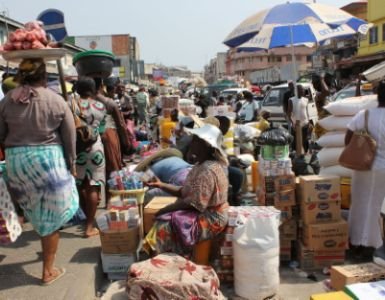
The report, released during the AfDB’s ongoing Annual Meetings in Brazzaville, Congo, paints a stark picture of the scale of informality across the continent. Roughly 85 per cent of employment in Africa is informal — characterised by limited job security, minimal access to social protections, and incomes that largely escape the tax net.
The fiscal implications are enormous. The AfDB estimates that each percentage point of GDP produced in the informal sector is associated with a tax revenue loss of between 0.17 and 0.41 percentage points of GDP. Extrapolated across the continent, this represents billions of dollars in forgone revenue that could otherwise fund infrastructure, healthcare, and education.
More concretely, the report estimates that moving just 10 percentage points of GDP from informality into formality could yield up to 2.6 percentage points of GDP in additional tax revenue annually — equivalent to approximately $75 billion. The broader $125 billion figure reflects the cumulative gains from expanded tax bases, improved financial intermediation, and stronger property rights that accompany formalisation.
“From a public finance perspective, formalization is a key lever for strengthening domestic revenue mobilization because it expands the tax base,” the report states.
The findings arrive at a moment when African governments are under increasing pressure to mobilise domestic resources. With global aid flows contracting and borrowing costs elevated, the case for broadening the tax base through formalisation has never been more compelling. Ghana, for instance, has been grappling with fiscal consolidation while seeking new avenues for economic growth and investment.
But the AfDB’s analysis extends well beyond revenue. Informality, the report argues, acts as a structural drag on economic development in multiple ways. Workers in the informal sector typically have limited access to banking services, which constrains financial deepening. Transaction records are scarce, collateral is difficult to verify, and firms operate outside the regulatory frameworks that protect both consumers and businesses.
The result is a vicious cycle: informal firms lack the documentation needed to access credit, which limits their ability to invest and grow, which keeps them informal. Formalisation, even when partial, can break this cycle by improving access to finance, strengthening property rights, and reducing competitive distortions between registered and unregistered businesses.
The human cost of informality is equally significant. While Africa’s aggregate unemployment rate stood at around 6.7 per cent in 2024, approximately 29.3 per cent of those employed were classified as working poor, earning less than $2.15 per day. Low-skilled workers and those in vulnerable employment are especially susceptible to external shocks — a reality underscored by the fact that the 2022 surge in global energy and food prices pushed an estimated 15 million additional Africans into poverty.
“Exogenous shocks, especially those that trigger oil and food price increases, tend to exacerbate inequalities by pushing more people into poverty,” the report notes, adding that the poorest households spend 50 to 60 per cent of their incomes on food alone.
The AfDB projects that Africa’s economies will grow at 4.2 per cent in 2026, a slight moderation from 4.4 per cent in 2025, before rebounding to 4.4 per cent in 2027. The growth outlook, while positive, is tempered by geopolitical tensions, tighter global financial conditions, and persistent supply chain disruptions.
The report’s overarching message is that formalisation is not merely a bureaucratic exercise but a fundamental economic transformation. Countries that find ways to bring informal businesses and workers into the formal economy — through simplified registration processes, digital identification systems, and targeted incentives — stand to reap substantial fiscal and developmental dividends.
The Annual Meetings, running from May 25 to 29, are convened under the theme “Mobilising Africa’s development financing at scale in a fragmented world” — a theme that, given the report’s findings, takes on added urgency.
Image Source: GHANA BUSINESS NEWS