Asante King Makes Historic Visit to Poland as European and African Leaders Discuss New Partnerships
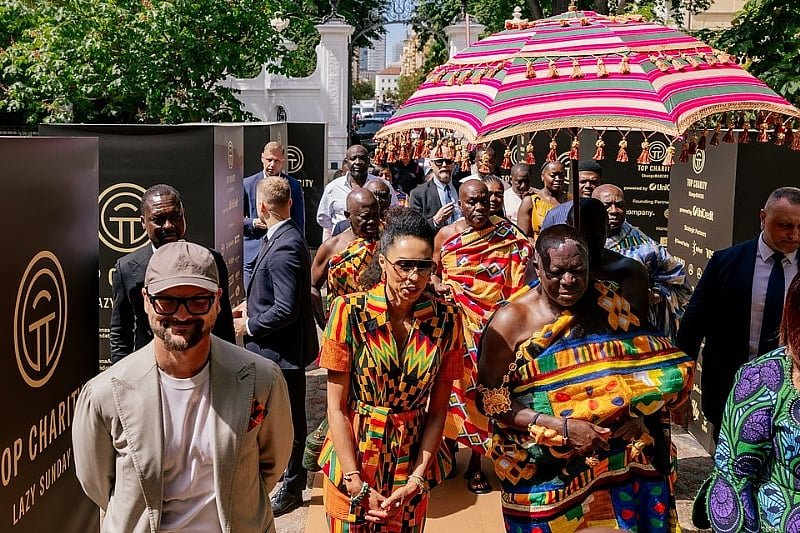
Warsaw played host to an unusual and symbolically significant gathering this week when the Asante King visited Poland as part of a broader conversation about the future of relations between Europe and Africa. The visit, tied to the anniversary edition of the TOP CHARITY ChangeMAKERS 2026 forum, brought together political leaders, cultural figures, and business executives under the theme “The Age of Reimagination: Art, Business and Philanthropy.”
The event, organised by Omenaa Mensah and Rafał Brzoska, positioned Africa — and Ghana in particular — as one of the key directions of global development, alongside discussions on artificial intelligence, the future of governance, and responsible business practices.
The presence of the Asante King marked a departure from the usual diplomatic channels through which African-European relations are conducted. Traditional leaders rarely feature in European policy forums, and the invitation signals a growing recognition in European capitals that Africa’s cultural and political landscape extends well beyond elected governments.
Polish officials, including representatives from the country’s foreign ministry and UNESCO, used the occasion to discuss new frameworks for partnership that move beyond the donor-recipient model that has long characterised European engagement with the continent. The conversations covered trade, cultural exchange, educational collaboration, and investment — areas where Poland, as a mid-sized European economy, sees particular opportunity for mutually beneficial engagement.
For Ghana, the visit carries diplomatic weight at a moment when the country is navigating complex international relationships. The Asante Kingdom, while not a sovereign state, wields considerable cultural influence and commands deep loyalty among millions of Ghanaians. Its participation in European forums lends a dimension of cultural authority to Ghana’s international presence that formal diplomacy alone cannot replicate.
The timing is notable. Ghana has been working to diversify its international partnerships beyond traditional Western allies and is increasingly looking to European nations that have not historically been major players in West African affairs. Poland, with its growing technology sector and agricultural expertise, represents a potentially valuable partner in areas where Ghana is seeking to build capacity.
The forum also touched on broader continental themes. Speakers addressed the African Continental Free Trade Area, the role of the diaspora in economic development, and the need for African nations to assert greater agency in defining the terms of their engagement with global partners. The Asante King’s presence served as a reminder that Africa’s soft power — its cultural heritage, its traditional institutions, its artistic traditions — is itself a form of diplomatic capital that the continent has only begun to deploy strategically.
The visit concluded with commitments to explore further exchanges between Polish and Ghanaian institutions, though specific agreements were not immediately announced. For observers of African diplomacy, the significance lies less in any single deal than in the signal it sends: that African leaders, traditional and otherwise, are increasingly sought after as partners rather than petitioners on the world stage.
Image Source: GHANAMMA