Scientists Warn Invisible Radon Gas May Be Raising Lung Cancer Risk in Parts of Ghana
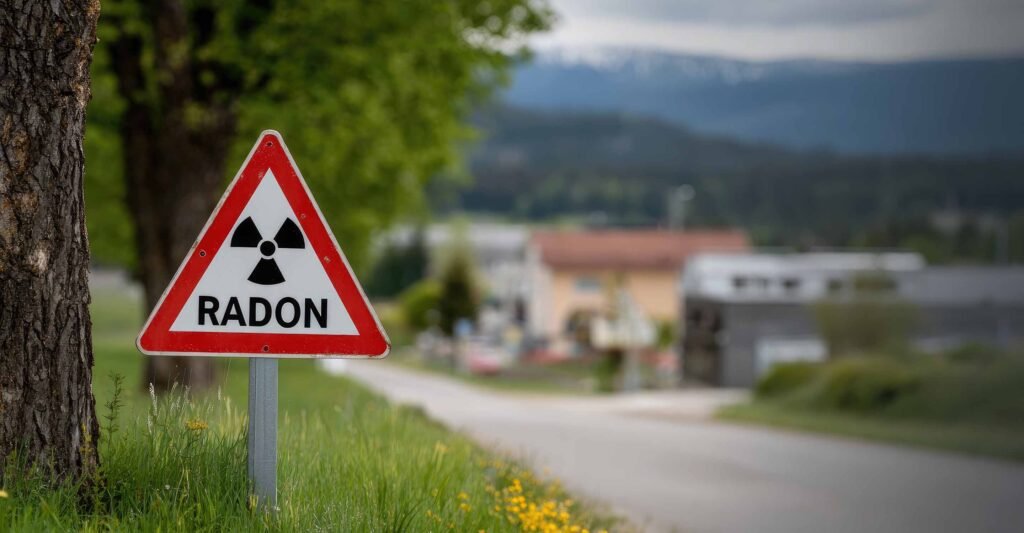
Air pollution in Ghana is often understood through visible markers — the haze of vehicle exhaust, the pall of dust over construction sites, smoke from burning waste. But researchers at the Ghana Atomic Energy Commission say one of the most dangerous pollutants affecting Ghanaians cannot be seen or smelled at all.
Radon, a radioactive gas that seeps naturally from the ground into homes through cracks and poorly ventilated spaces, is quietly elevating lung cancer risk in communities across the country, even among people who have never smoked a cigarette.
Dr Irene Opoku-Ntim, a Senior Research Scientist at the Commission, has been sounding the alarm about what she describes as a hidden public health crisis. “There are other pollutants, as we all know, that we talk about, the dust, the burning and all those things, but there’s also another hidden risk that is radon, which is giving people lung cancer beyond smoking and the other pollutants that we know out there,” she said.
The warning carries particular urgency for residents of Weija, Kasoa, and McCarthy Hill — areas along the southwestern corridor of Greater Accra where preliminary mapping has identified elevated radon concentrations. The connection, researchers say, is geological. These areas sit along fault lines, and radon concentrations are closely correlated with seismic activity. Where the earth fractures, radon finds its way to the surface.
The World Health Organisation sets the threshold for action at 100 becquerels per cubic metre of indoor air. Above that level, health risks begin to accumulate with prolonged exposure. The Ghana Atomic Energy Commission is working to refine a national radon map that will give communities and builders the information they need to make informed decisions about construction and ventilation.
The practical implications are significant. Modern building techniques already offer partial solutions. Laying polyethylene membranes beneath foundations during construction can block radon from seeping upward into living spaces. Sealing cracks in existing structures and improving ventilation in older homes can also reduce indoor concentrations.
“If you test the soil and the levels are high, we will advise you on how to build,” Dr Opoku-Ntim explained. “We see that nowadays, we build by casting our foundation, laying this polyethene. It’s one of the ways to reduce the impact. Any space that it gets, it can enter your room. So if you have cracks in your homes, make sure that you seal them.”
The research underscores a broader challenge in Ghana’s approach to air quality. While the country has made strides in addressing visible pollution — including being the first in West Africa to phase out leaded gasoline and adopt low-sulphur diesel — invisible hazards like radon have received far less public attention. A recent partnership between Ghana’s Environmental Protection Authority and Columbia University is now working to build comprehensive air quality data infrastructure that could eventually incorporate radon monitoring alongside particulate matter tracking.
Greater awareness remains the most immediate tool available. Many Ghanaians living in high-risk areas are simply unaware of the gas beneath their feet. For families building new homes, soil testing before construction could prove to be a life-saving investment. For those already living in older structures, basic maintenance — sealing foundation cracks, improving airflow, and testing indoor air where possible — offers a degree of protection against a threat that, by its very nature, is impossible to detect without scientific instruments.
Image Source: MYJOYONLINE