African Games Audit Exposes GH₢580 Million in Inflated Contracts — 7 Shocking Findings Revealed
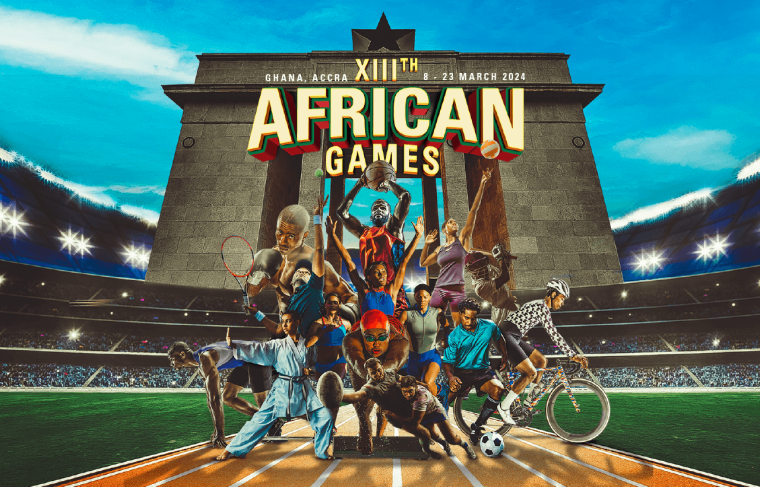
African Games audit findings, first reported by MyJoyOnline, have ripped the lid off what may be one of Ghana’s most staggering financial scandals, revealing that inflated contracts, procurement breaches and unsupported expenditure totalling GH₢580 million plagued the nation’s hosting of the 2023 continental sporting event.
The 700-page forensic audit report, referenced AG.SAR/2026/03 and signed by Auditor-General Johnson Akuamoah-Asiedu, paints a damning picture of financial mismanagement at every level of the Games’ organisation. Commissioned by President John Dramani Mahama, the audit examined procurement, infrastructure delivery, broadcasting and post-Games asset management — and found systemic failures across the board.
African Games Audit Reveals GH₢2.245 Billion Total Expenditure Under Scrutiny
The scale of spending documented in the African Games audit is staggering. Ghana received and spent a total of GH₢2.245 billion on the Games through government releases, sponsorships and participation fees. Despite this massive outlay, auditors identified outstanding liabilities of GH₢208.6 million, comprising GH₢155.1 million, US$4.1 million and €288,775 still owed.
The audit was conducted under Section 16 of the Audit Service Act, 2000 (Act 584), following a formal request from the Office of the President dated 22 October 2025. The report repeatedly recommends recovery actions and sanctions against former Youth and Sports Minister Mustapha Ussif, former Chief Director William Kartey and former Local Organising Committee Chairman Dr Kwaku Ofosu-Asare.
Overpriced Sports Equipment and Anti-Doping Tests in African Games Audit
Among the most egregious findings in the African Games audit, the Ministry of Sports paid GH₢38.9 million to Delovely Company Limited under a sports equipment contract valued at US$3.24 million. However, equipment worth US$206,000 for table tennis, badminton and handball was never supplied. Auditors also questioned an additional lump-sum item of US$408,000 labelled simply as “Sports Equipment” without specifications or supporting documentation.
The report concluded that the revised payable contract value should have been US$2.62 million, resulting in an overpayment of US$374,000 — approximately GH₢4.5 million.
Anti-doping tests procured from Omni Speciality Product Limited at €739,000 were similarly overpriced. Benchmarking against World Anti-Doping Agency-accredited laboratory rates showed unit prices significantly exceeded market rates, resulting in an estimated overcharge of €572,000, approximately GH₢8 million.
JDK Travel Contracts: A Central Focus of the African Games Audit
The audit described the engagement of JDK Travel and Tours as particularly problematic. Accommodation services were contracted at US$150 per room per night for 500 rooms over 21 days, amounting to US$1.58 million. Market verification showed official hotel rates ranged between US$50 and US$70 per room, placing the justifiable total at approximately US$735,000. Auditors identified an inflated component of US$840,000 — roughly GH₢10.1 million.
Compounding concerns, the report noted that JDK Travel and Tours was registered as a travel and tour entity with no accommodation licence. Two hotels listed by the company could not be independently verified. JDK was also paid GH₢45.7 million under two vehicle transportation contracts, with benchmark comparisons identifying overpricing of GH₢13.1 million. An additional GH₢2.2 million was flagged as inflated following audit recomputation of actual quantities and usage frequencies.
The company further received GH₢3.16 million for branding and de-branding Games vehicles. Auditors concluded that comparable services should have cost about GH₢1.16 million, resulting in overpricing of GH₢2 million.
GH₢336 Million Spent Without Verification in African Games Audit
Perhaps the most troubling aspect of the African Games audit involves GH₢336.6 million committed and paid without verifiable evidence of services consumed. The report identified systemic weaknesses in the management of 14 major service contracts covering anti-doping tests, accommodation, catering, air tickets and transportation.
These contracts were awarded as fixed lump sums despite involving variable services. Contract files lacked rooming lists, meal registers, passenger manifests, transport logs and test documentation linking payments to actual services delivered. This absence of accountability mechanisms effectively rendered GH₢336.6 million untraceable.
Related-Party Exposure and Cash Withdrawals Flagged in African Games Audit
The African Games audit further identified what auditors described as “Common Beneficial Owner and Related-Party Exposure” amounting to GH₢150.6 million. Several companies awarded contracts were found to share common ownership or beneficial control, raising concerns about undisclosed conflicts of interest and anti-competitive procurement practices.
Irregular cash withdrawals totalling GH₢20.4 million from Local Organising Committee accounts were also flagged. Payments were made in cash to third parties in violation of mandatory electronic transfer requirements, while several transactions bypassed the Ghana Integrated Financial Management Information System (GIFMIS). An additional GH₢15.1 million from LOC accounts was used for activities unrelated to the Games, including advance salary payments and other disbursements to Black Stars officials and technical staff.
Infrastructure Defects and Legacy Concerns from the African Games Audit
Physical inspections of major Games facilities uncovered widespread construction defects, including slab cracking, drainage failures, corrosion, inadequate waterproofing and incomplete works at venues such as the Aquatic Centre, Legon Stadium and Achimota Pavilion. Auditors estimated rectification works would cost at least US$1 million — approximately GH₢12 million.
At the Borteyman Sports Complex, engineering analysis of the “May Action Plan” variation order showed omitted works valued at US$49.3 million against additions of only US$14.9 million, resulting in a net loss of US$34.4 million. The report also highlighted the near-total absence of competitive procurement, with single-source contracts worth approximately GH₢2.7 billion awarded without documented justification.
“The magnitude, recurrence, and cross-cutting nature of the irregularities indicate that these were not isolated lapses but structural deficiencies in institutional control environments,” the Auditor-General stated.
The African Games audit warned that Ghana’s failure to fulfil outstanding obligations under the Host Agreement with the African Union Commission could affect the country’s eligibility to host or participate in future African Games — a sobering consequence of what the report characterises as systemic governance failure.
Source: MyJoyOnline