Banking Consultant Questions Proposed Auditors’ Courts, Calls for Capacity Building in Financial Oversight
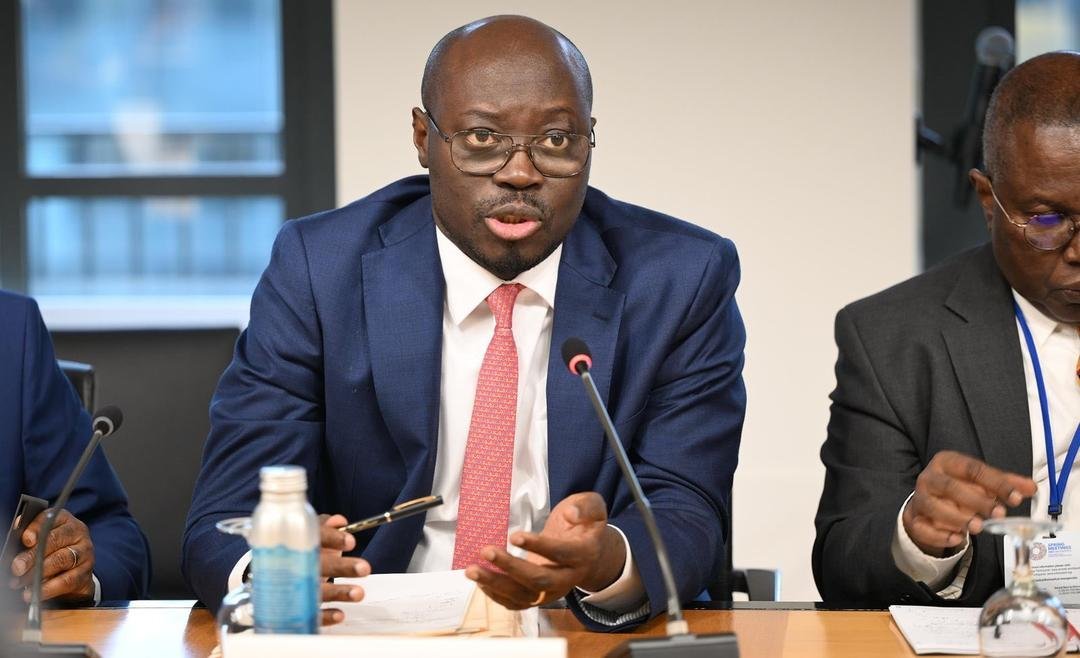
Dr. Richard Atuahene, a prominent banking analyst, has questioned the constitutional and practical basis of the government’s proposed Auditors’ Court, arguing that Ghana should invest in building the human and institutional capacity needed to tackle financial malfeasance before creating new judicial structures.
Speaking on Starr FM’s Morning Star programme on Monday, Dr. Atuahene challenged Finance Minister Dr. Cassiel Ato Forson’s plan to establish a specialised court to oversee internal auditors and strengthen public-resource accountability.
“I don’t know where this one is coming from. Have they looked at the Constitution?” Dr. Atuahene asked. “It’s not the court that matters. There are weaknesses and internal weaknesses in the systems.”
The Case Against a New Court
Ghana’s existing judicial framework already includes the High Court, the Court of Appeal, and the Supreme Court, all of which are mandated to handle cases of financial malfeasance. Dr. Atuahene argued that the problem lies not in the absence of a specialised forum but in the systemic weaknesses that allow financial irregularities to persist unchecked within public institutions.
Financial crime cases in Ghana currently take up to two years to resolve, a timeline that Dr. Atuahene suggested would not meaningfully improve simply by adding another court to the system. “I have never seen anywhere in this world that the court can solve financial malfeasances at a go in Ghana,” he said. “Because the way the system is, it will take years and years and years to stop it.”
Capacity Before Structure
The banking consultant’s central argument is that any move to create a specialised court must be preceded by substantial investment in professional capacity. He asked pointedly whether Ghana has — lawyers well-versed in finance, accounting, and audit, and judges trained to adjudicate complex financial cases.
“You don’t set another court when you don’t even have the competencies, the skills, and the abilities,” he said. “If you are setting up a special court, you first need to build capacity.”
The call for capacity building echoes broader concerns about the effectiveness of Ghana’s financial regulatory infrastructure. The Bank of Ghana has recently taken steps to tighten oversight in the financial technology space, including ordering a halt to unauthorised foreign currency wallets on cryptocurrency platforms — a move that underscored the challenge of keeping regulatory frameworks in step with evolving financial practices.
Systemic Reform Over Judicial Expansion
Rather than establishing new courts, Dr. Atuahene urged policymakers to examine the entire public financial management operational system and strengthen internal control mechanisms within public institutions. These include segregation of duties, regular independent audits, and robust reporting channels for whistleblowers.
His recommendations include conducting a capacity audit of legal and judicial personnel currently handling financial cases, investing in specialised training programmes for lawyers and judges, and re-evaluating the need for an Auditors’ Court only after existing capacity gaps have been addressed.
The debate reflects a deeper tension in Ghana’s governance landscape: whether to respond to institutional failures by creating new structures or by strengthening the ones that already exist. For Dr. Atuahene, the answer is clear — the foundations must come first.
Image Source: STARR FM