South Africans Divided as Angry Malawian Nationals Confront Ngizwe Mchunu in Durban
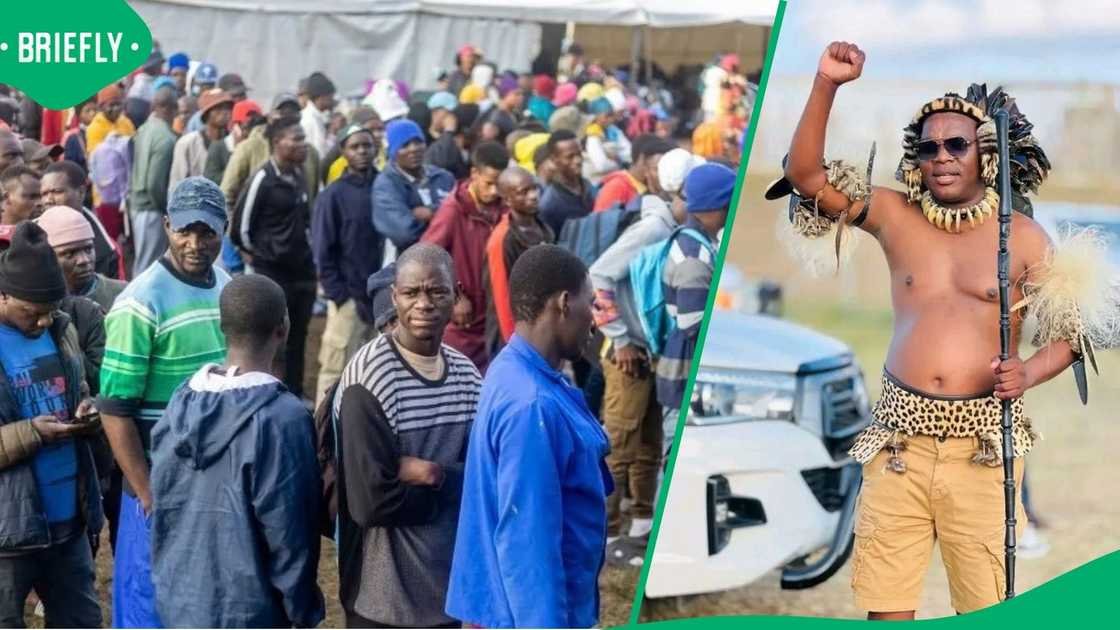
Tensions over undocumented immigration in South Africa erupted into open confrontation on Monday when a crowd of angry Malawian nationals confronted anti-immigration activist Ngizwe Mchunu outside Sherwood Hall in Durban, forcing police intervention and igniting a fierce national debate over tactics, dignity, and the boundaries of protest.
The South African Police Service was on high alert as some members of the crowd, reportedly wielding sticks, confronted Mchunu and members of March and March, an organisation that has been vocal in calling for undocumented foreign nationals to leave the country. Officers stepped in to prevent the situation from turning violent, but the incident laid bare the raw emotions surrounding South Africa’s immigration crisis.
The confrontation came against the backdrop of an accelerating repatriation programme. The Department of Home Affairs has confirmed that more than 1,100 Malawians processed for repatriation were in the country illegally. On 14 June alone, eight buses carrying 645 Malawian nationals departed Durban. An additional 670 individuals had already been processed and sent home in preceding weeks, while 980 more were deported directly from the Lindela Repatriation Centre. Undocumented foreign nationals have been given until 30 June to leave the country voluntarily.
What made Monday’s confrontation particularly charged was the question of Mchunu’s presence at the repatriation site. Witnesses said the Malawian nationals were willing to leave but viewed his appearance as a deliberate provocation.
“This guy must go. We do not want to see his face here,” one angry protester was quoted as saying. Another added: “What they are doing is wrong; even God will punish him. I am black, he is also black, why is he treating us like dogs? We just want transport to go back home.”
The incident quickly spilled onto social media, where South Africans found themselves divided. Some condemned Mchunu’s decision to appear at the scene as needless antagonism. “My question is, what is he doing there? Isn’t that intimidation?” wrote one user. Another asked: “What is he doing there? We don’t have to rub it in like that. Let them go in peace.”
Others rushed to Mchunu’s defence, arguing that as a South African citizen, he had every right to be present. “Ngizwe is in his homeland. Finish,” wrote one supporter. “Ngizwe is a South African. He can go anywhere he wants, without being told by any illegal foreigner,” added another.
The divide cuts to the heart of a broader tension in South African society: how to enforce immigration law while preserving basic human dignity. The repatriation of undocumented Malawian nationals is a lawful exercise of state authority, but the spectacle of an anti-immigration activist appearing at the point of departure — however legal his presence — raises uncomfortable questions about motive and proportionality.
For the Malawian nationals caught in the middle, the calculus is simpler. Many say they came to South Africa seeking economic opportunity and are prepared to return home. What they object to is being treated, in the words of one protester, “like dogs” in the process. The anger directed at Mchunu was not, for most, a rejection of repatriation itself but of the feeling that their departure was being turned into a public spectacle for political theatre.
The incident also highlights the broader regional dynamics of migration in southern Africa. Malawi, one of the continent’s poorest nations, has long been a source of labour migration to South Africa. The current crackdown, while framed in terms of legality, is shaped by domestic economic pressures — high unemployment, strained public services, and growing anti-immigrant sentiment that politicians are sometimes reluctant to counter.
With the 30 June deadline approaching and further repatriation flights and bus convoys expected, the question is whether Monday’s confrontation was an isolated flashpoint or a sign of deeper friction to come. South Africa’s immigration debate is far from settled, and the scenes outside Sherwood Hall suggest that finding a path that satisfies both legal imperatives and basic compassion will require more than deadlines and bus convoys.
Image Source: GHANAMMA