Parliament Urged to Champion Open Government Partnership to Restore Public Trust
Ghana’s Parliament has been urged to take a more active role in implementing the Open Government Partnership, the multilateral initiative that MPs say holds the key to restoring waning public confidence in democratic institutions.
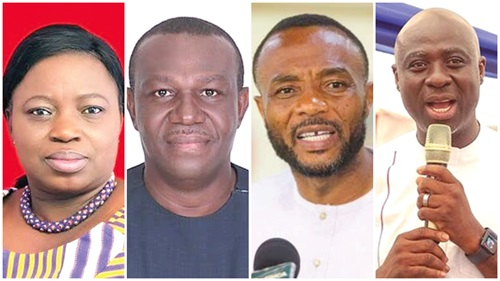
In a joint statement delivered on the floor of Parliament last Friday to mark the 2026 Open Government Week, NDC Members of Parliament Lydia Lamisi Akanvariba and Emmanuel Kwasi Bedzrah — who represent Tempane and Ho West respectively — argued that transparent, accountable governance is not merely an aspiration but a prerequisite for democratic survival.
“When government institutions are open, accountable, and responsive to citizens, public confidence in state institutions and governance processes is strengthened,” the two legislators told the House. Their intervention comes at a moment when trust in public institutions across West Africa faces mounting strain, from allegations of corruption to perceptions of elite capture of state resources.
Ghana joined the Open Government Partnership in 2011, and the MPs pointed to several tangible outcomes from that engagement. The passage and operationalisation of the Right to Information Act, the establishment of a Public Beneficial Ownership Register, and reforms in public financial management were cited as concrete achievements. The country also received continental recognition at the 2023 OGP Global Summit in Tallinn, Estonia, winning the African Regional Award for promoting accountability through the Public Accounts Committee and audit reforms.
At the parliamentary level, the institution has established an Open Parliament Action Plan, an OGP Caucus, and an Open Parliament Steering Committee chaired by the Speaker. These structures, the MPs argued, position Parliament as a central actor in the open governance ecosystem — not merely a legislative body but a bridge between executive action and citizen oversight.
Yet the gains, they warned, are fragile. “Sustaining the gains required renewed political and financial commitment from both Parliament and the executive,” the statement read. The MPs called for deeper stakeholder engagement across all regions, the strengthening of Parliament’s institutional role in the OGP process, and the passage of pending legislative instruments needed to enhance transparency.
Contributing to the statement, NPP MP for Effia Isaac Boamah-Nyarko pushed for the partnership to move beyond policy documents and into everyday governance. “Governments must proactively brief citizens on critical national matters,” he argued, insisting that open governance should be visible in the daily lives of Ghanaians rather than remain an abstract concept confined to conference rooms.
The debate took a sharper turn when Second Deputy Minority Whip Jerry Ahmed Shaib, the NPP MP for Weija-Gbawe, raised concerns about what he described as a growing culture of silence in the country. His remarks touched on the delicate balance between state authority and civil liberties — a tension that has surfaced repeatedly in Ghanaian politics, particularly around media freedom and the right to protest.
NDC MP for Kwesimintsim Philip Fiifi Buckman offered a counterpoint, arguing that freedom of speech must be exercised responsibly. “The constitution enjoins you to also act in a manner that is not detrimental to the peace of the state,” he said. “You can’t just go about haywire saying anything you want.” The exchange reflected a broader philosophical divide about where the boundaries of open governance should lie.
The OGP, which brings together national and sub-national governments committed to transparency, anti-corruption, and citizen participation, has become an increasingly important platform for countries seeking to strengthen democratic norms. For Ghana, which has long been regarded as a beacon of democratic stability in West Africa, the partnership offers both a framework and a benchmark. The call for greater openness echoes recent demands from Majority Chief Whip Dafeamekpor for the Office of the Special Prosecutor to expand its anti-corruption footprint beyond Accra.
Whether Parliament can translate the rhetoric into sustained institutional reform will depend on political will — and on whether citizens themselves demand the accountability that open governance promises. The MPs’ statement was a step in that direction, but the distance between a parliamentary pronouncement and a transparent government remains considerable.
Image Source: MYJOYONLINE