Dafeamekpor Urges Special Prosecutor's Office to Establish Regional and District Presence Across Ghana
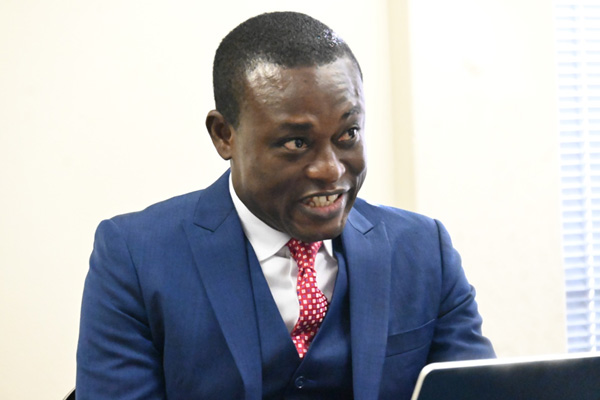
Majority Chief Whip Rockson-Nelson Dafeamekpor has called for a fundamental expansion of the Office of the Special Prosecutor, arguing that the anti-corruption body cannot effectively combat graft while remaining concentrated in Accra.
The South Dayi MP, speaking on JoyNews’ PM Express programme on Tuesday evening, said the OSP must establish offices across the country — particularly in districts where corruption is deeply entrenched but largely invisible to Accra-based investigators.
Crime Beyond the Capital
“Crime is not only coterminous to the people or the lifestyle in Metropolitan Accra or Tema,” Mr Dafeamekpor declared, pointing to Auditor-General reports as evidence that financial misconduct pervades local assemblies and state agencies far from the capital.
His remarks come shortly after he publicly demanded the OSP expand beyond Accra or face parliamentary scrutiny, signalling that the Majority Chief Whip is maintaining sustained pressure on the institution. While acknowledging President Mahama’s appeal for patience with the OSP, he made clear that goodwill alone is insufficient.
“I believe in the wisdom of the president,” he said. “But I believe that, as the President said, he himself knows that the OSP could do better.”
A Proposed Structure
Mr Dafeamekpor outlined a decentralised model where regional offices would coordinate district-level operations throughout the country. Under the OSP Act, the office already has a mandate to establish regional branches — a provision he believes has been insufficiently pursued.
“If every district knows that there is an OSP officer resident in the district, certain things won’t happen in the assemblies,” he argued. “Some of the statutory agencies operating in the district would do things differently.”
The proposal envisions a presence-based deterrent: the mere knowledge that anti-corruption officials operate locally could shift behaviour among public servants and elected officials in district assemblies, where Auditor-General reports consistently flag widespread pilfering and deliberate disregard for financial regulations.
Patience With Conditions
Asked whether the OSP still deserves time to prove itself, Mr Dafeamekpor answered affirmatively — but with a caveat that sharpens the political pressure on the institution.
“Yes, but when you are not committed to expanding, then I have a problem with you,” he said. “Then I will question why we give you so much money, and yet you are delivering so little.”
The comments come amid an already heated debate over the OSP’s future. The Supreme Court recently adjourned indefinitely the case challenging the office’s prosecutorial powers, leaving the institution in a state of legal uncertainty even as its supporters push for greater operational reach.
Whether the OSP takes up the challenge of decentralisation remains to be seen. But Mr Dafeamekpor’s intervention signals that parliamentary patience has limits — and that the institution’s next moves will face close scrutiny from the very lawmakers who control its funding.
Image Source: MYJOYONLINE