Lead Exposure Devastates Ghana's Battery and Paint Workers in 5 Alarming Ways Experts Warn
Lead exposure remains a hidden danger for Ghana’s battery and paint workers, with thousands of informal labourers handling toxic materials daily without protective equipment, unaware that the headaches, fatigue and body pain they experience may be early symptoms of a slow-developing poisoning crisis.
Inside crowded mechanic enclaves and small paint shops across the country, workers like “Kojo” and “Yaw” bend over damaged batteries and mix pigments with bare hands, breathing in contaminated dust and chemical fumes that health experts say can cause irreversible damage to the brain, kidneys, nerves and blood system. Their stories reveal a public health emergency that is growing in silence.
How Lead Exposure Threatens Ghana’s Battery and Paint Workers
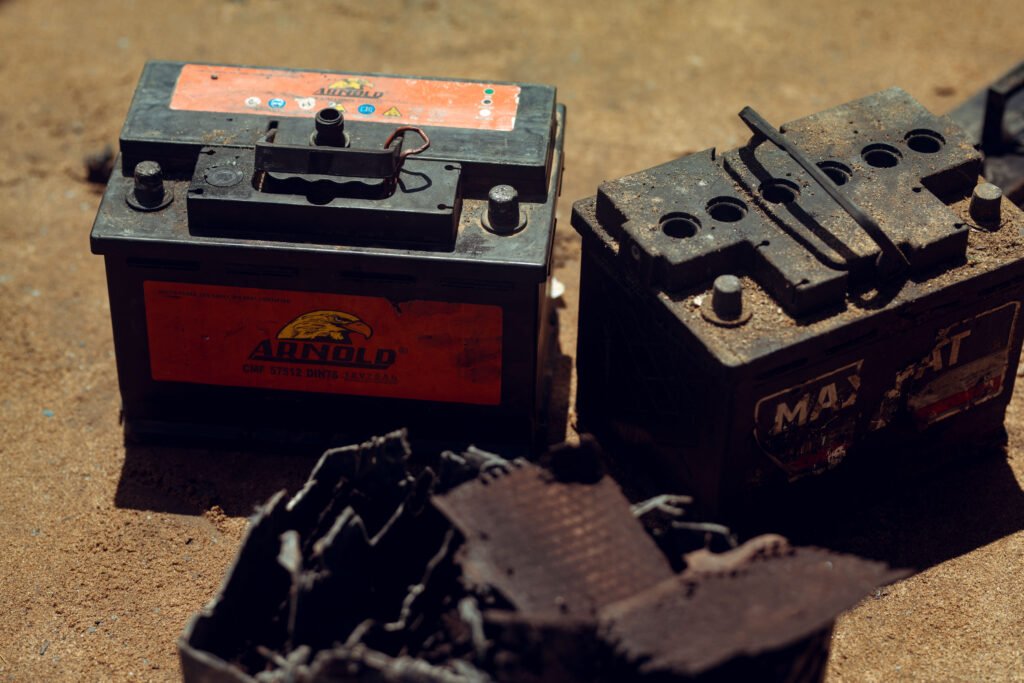
For workers in Ghana’s battery repair and paint industries, lead exposure is not a distant theoretical risk — it is a daily reality woven into the fabric of their livelihoods. “Kojo,” whose real name has been withheld for safety and privacy reasons, has spent years repairing, opening and charging old vehicle batteries in a mechanic yard in southern Ghana. He does the work without gloves, masks or protective clothing.
“Before I leave the workshop every day, I bath,” Kojo explains. “I also do not allow my children inside the shop. If they come around, they stay outside.”
But health experts say these precautions are dangerously insufficient. Lead is a toxic metal that enters the body through contaminated dust, polluted surfaces or unwashed hands. Long-term exposure can cause headaches, fatigue, memory loss and high blood pressure — symptoms that many workers dismiss as the normal toll of physical labour.
Lead exposure among Ghana’s battery and paint workers is compounded by the conditions in which they operate. In busy mechanic yards, food vendors sell tea and rice while workers eat alongside battery waste, engine oil and chemical residue. The invisible nature of lead contamination means exposure happens gradually over years, with workers unaware of the damage accumulating in their bodies.
The Hidden Scale of Lead Exposure Among Ghana’s Battery and Paint Workers
The scale of lead exposure in Ghana is alarming. According to 2025 estimates from the Institute for Health Metrics and Evaluation, approximately 32 percent of children under five years old have blood lead levels of five micrograms per decilitre or higher — a level experts consider unsafe and requiring public health action.
In 2023, more than 1.4 million children under five were estimated to have unsafe blood lead levels in Ghana. Researchers estimate that children exposed to lead lose an average of 4.8 IQ points, while the country’s economy loses billions of dollars annually through reduced productivity and health costs.
The Global Burden of Disease 2023 study further estimates that lead exposure contributes to more than 5,000 cardiovascular deaths each year in Ghana. Health experts say these figures reveal not only a health emergency but also a social and economic burden that affects communities and national development.
“There is no safe level of lead exposure,” health experts stress. They also warn that there is no cure for lead poisoning, while treatment options for many of its long-term health effects remain limited in Ghana. All cases of lead exposure are entirely preventable.
Why Ghana’s Battery and Paint Workers Cannot Afford Safety Equipment
For many informal workers, the decision to forgo protective equipment is not ignorance — it is economics. Proper safety equipment such as respirators, gloves and protective clothing can cost thousands of Ghana cedis, far beyond the reach of labourers struggling to survive on daily wages.
“For us, survival comes first,” one worker says. “If I use all my money to buy equipment, how will I feed my family?”
This tension between immediate survival and long-term health defines the experience of lead exposure among Ghana’s battery and paint workers. Economic hardship forces workers to prioritise daily income over the invisible, slow-developing threat of lead poisoning.
A few metres from Kojo’s mechanic yard, “Yaw” faces similar risks inside a small paint shop. Containers of blue, red, yellow and black pigments line the front of his shop. The strong smell of paint fills the air as customers arrive throughout the day requesting custom colours for homes and businesses.
“The mask makes it hard to breathe and you are more exposed because of the heat,” Yaw explains. “So sometimes I remove it.”
Environmental health experts warn that some paint pigments and older paint products may still contain harmful levels of lead and other toxic substances. Workers who spend hours mixing paints without adequate protection face cumulative exposure that can manifest as serious health problems years or decades later.
Global Research Underscores the Urgency of Addressing Lead Exposure in Ghana
The dangers of lead exposure extend far beyond Ghana’s borders. Research published in The Lancet Planetary Health estimated that lead exposure caused approximately 5.5 million adult cardiovascular disease deaths worldwide in 2019. More recent Global Burden of Disease data estimated about 3.5 million deaths in 2023 alone.
Globally, an estimated 800 million children — roughly one in every three — are believed to have unsafe blood lead levels. More than 90 percent of the global disease burden linked to lead exposure occurs in low- and middle-income countries, particularly in regions such as Sub-Saharan Africa, South Asia and parts of Latin America.
Dr Sumi Mehta, Vice President for environment, climate and urban health at Vital Strategies, says symptoms of lead poisoning are often difficult to identify in the early stages. “Even people who appear healthy may already have high levels of lead in their blood,” she explains.
Beyond its human cost, the economic impact is staggering. Global estimates suggest lead exposure cost the world economy approximately US$6 trillion in 2019, representing nearly 7 percent of global GDP. Researchers also estimate that about 21.7 million years of healthy life were lost globally due to lead-related illnesses in the same year.
What Must Be Done to Protect Ghana’s Battery and Paint Workers From Lead Exposure
Experts say the first step in addressing lead exposure among Ghana’s battery and paint workers is identifying and removing the source of contamination. For pregnant women and children with blood lead levels of five micrograms per decilitre or higher, calcium or iron supplementation is recommended. Chelation therapy may be considered when blood lead levels reach 45 micrograms per decilitre or higher.
Although the Government of Ghana has taken steps to reduce lead exposure, including working with the Food and Drugs Authority and partners to study lead in consumer products, experts say major challenges remain. They point to weak regulatory enforcement and limited controls on high-risk imported products such as kohl and turmeric, which continue to enter the country through ports and markets.
Surveillance Coordinators at Vital Strategies, Justice Sitsofe Yevugah and Benjamin Nobel Adjei, noted that some sources of lead exposure remain deeply tied to culture and everyday practices. “Many practices, such as the application of kohl to children’s eyes, are deeply rooted in Ghanaian culture and tradition. Eliminating the use of lead-containing substances, especially in households and among children, will take time and sustained effort,” they said.
Vital Strategies recently brought together journalists from across Ghana for a three-day training programme in Koforidua on lead poisoning and environmental health reporting. The programme, supported by Bloomberg Philanthropies, forms part of broader efforts targeting countries in Africa, Asia and South America considered highly vulnerable to lead exposure.
For workers like Kojo and Yaw, the path forward is uncertain. They know their work exposes them to danger, but the alternative — abandoning their livelihoods — is unthinkable. Their experiences reflect a wider challenge across Ghana’s informal sector, where thousands of workers handle batteries, paints, scrap metals and industrial chemicals daily with little protection, limited access to health screening and no safety net to fall back on.
Until regulatory enforcement strengthens, protective equipment becomes affordable and public awareness deepens, lead exposure will remain a hidden but devastating danger for Ghana’s battery and paint workers.
Source: MyJoyOnline