AfDB and UNFPA Sign Landmark Maternal Health Agreement to Transform Africa's Economic Future
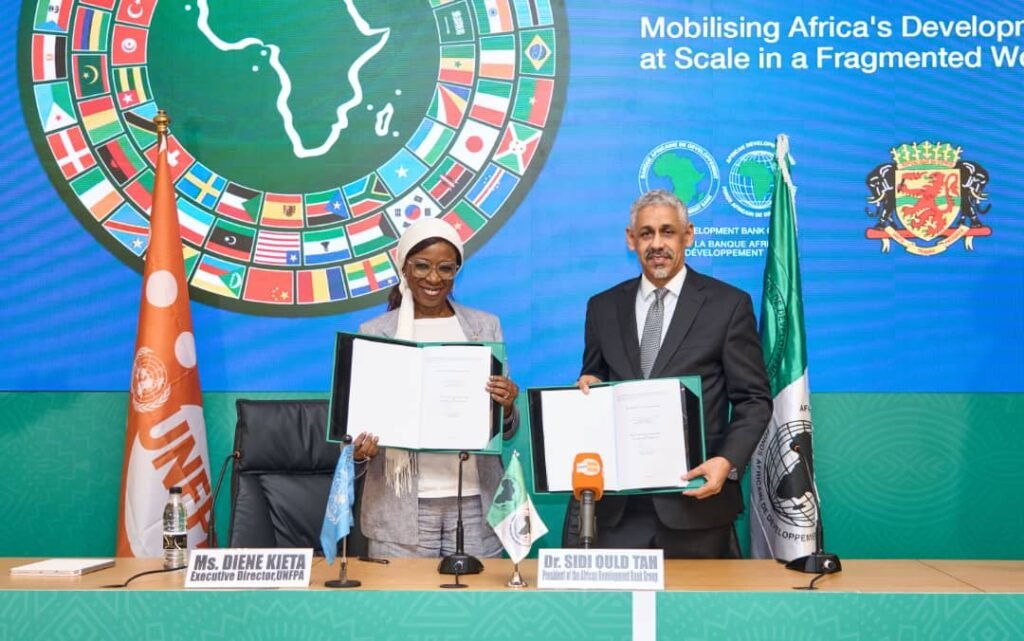
The African Development Bank and UNFPA have signed a landmark agreement to boost maternal health and accelerate Africa’s economic transformation, marking a pivotal moment in the continent’s push to treat women’s health as a strategic investment rather than a charitable afterthought.
The strategic Memorandum of Understanding was signed on the sidelines of the African Development Bank’s Annual Meetings in Brazzaville on May 26, 2026. The agreement establishes a comprehensive framework for collaboration on health financing, demographic resilience and human capital development across the African continent.
How the AfDB and UNFPA Maternal Health Agreement Will Transform Africa
The AfDB and UNFPA maternal health partnership is built on a shared recognition that Africa’s economic future is inextricably linked to the health and wellbeing of its women and young people. Under the new framework, the two institutions will jointly explore innovative financing and implementation mechanisms designed to help countries unlock critical investments in maternal health infrastructure.
Diene Keita, Executive Director of UNFPA, spoke with conviction during the signing ceremony about the transformative potential embedded in the agreement. “Immense opportunity is within Africa’s grasp if we make strategic investments in women and young people,” she said.
Keita further emphasised that “economic progress for Africa is only possible if we prioritise women’s health and address one of the continent’s most pressing development challenges: preventable maternal deaths.”
The AfDB and UNFPA maternal health agreement outlines several key priorities that will guide the partnership’s work in the coming years. These include investments to modernise the health workforce through digital training, strengthening local procurement systems for medical supplies, upgrading climate-resilient health infrastructure and supporting the digitisation of health information systems across the continent.
Why the AfDB and UNFPA Maternal Health Deal Matters for Ghana
For Ghana, the AfDB and UNFPA maternal health agreement carries particular significance. Despite making substantial progress in reducing maternal mortality over the past two decades, the country continues to face persistent challenges in ensuring equitable access to quality maternal health services, particularly in rural and underserved communities.
Ghana’s maternal mortality ratio, while improved, remains above the global average. Health experts attribute this to structural obstacles including inadequate health infrastructure in remote areas, a shortage of skilled birth attendants and significant financing gaps in the health sector.
The World Health Organisation has consistently highlighted the need for increased domestic health financing in African countries, and the AfDB-UNFPA partnership is expected to catalyse new funding streams that could benefit countries like Ghana directly.
The agreement’s emphasis on digitising health information systems is particularly relevant for Ghana, where the government has been working to strengthen its health data infrastructure. Better data collection and analysis could help identify gaps in maternal health service delivery and guide more targeted interventions.
The Economic Case for the AfDB and UNFPA Maternal Health Partnership
The AfDB and UNFPA maternal health agreement positions maternal health not merely as a health issue but as a strategic economic priority. This framing represents a significant shift in how development institutions approach the challenge of maternal mortality on the continent.
Research has consistently shown that investments in maternal health yield substantial economic returns. When women survive pregnancy and childbirth, they contribute to their families’ economic wellbeing, participate in the labour force and invest in their children’s education and health. Conversely, preventable maternal deaths create ripple effects that extend far beyond the immediate family, undermining community productivity and national economic growth.
According to the African Development Bank, the partnership will ensure that demographic transition roadmaps sit at the heart of national financing strategies. This approach recognises that investments in health and rights should be understood as smart investments in Africa’s future, rather than as expenditure items to be minimised.
The agreement builds on a long history of collaboration between UNFPA and the AfDB dating back to 1992. Previous joint achievements include the modernisation of Côte d’Ivoire’s population census, improved emergency obstetric and newborn care services in Cameroon, reproductive health awareness campaigns in Madagascar and climate adaptation programmes integrating gender and reproductive health concerns in Eastern and Southern Africa.
How the AfDB and UNFPA Maternal Health Alliance Strengthens Media and Advocacy
Beyond its direct health and economic impacts, the AfDB and UNFPA maternal health partnership is expected to strengthen the role of media networks in amplifying public awareness and policy dialogue on critical health issues across Africa.
UNFPA is expected to become a future partner of the Réseau des Médias Africains pour la Promotion de la Santé et de l’Environnement (REMAPSEN), a media network focused on health and environmental reporting in Africa. This development could deepen collaboration between development institutions and African media stakeholders, ensuring that maternal health issues receive sustained and informed coverage.
The press release underscored the long-term objective of the partnership, stating that “UNFPA will work with the AfDB to ensure that demographic transition roadmaps sit at the heart of national financing strategies, ensuring that investments in health and rights are recognized as smart investments for Africa’s future.”
For journalists and media practitioners covering health and development across the continent, the partnership opens new avenues for accessing data, expertise and resources that can support deeper, more impactful reporting on maternal health challenges and solutions.
The AfDB and UNFPA maternal health agreement represents more than a symbolic gesture of institutional cooperation. It embodies a growing recognition among Africa’s leading development organisations that the continent’s economic transformation cannot be achieved without addressing the systemic barriers that continue to claim the lives of women during pregnancy and childbirth.
Source: MyJoyOnline