Senegal Political Crisis Deepens as Faye Dismisses Sonko and Appoints Economist Lo as PM
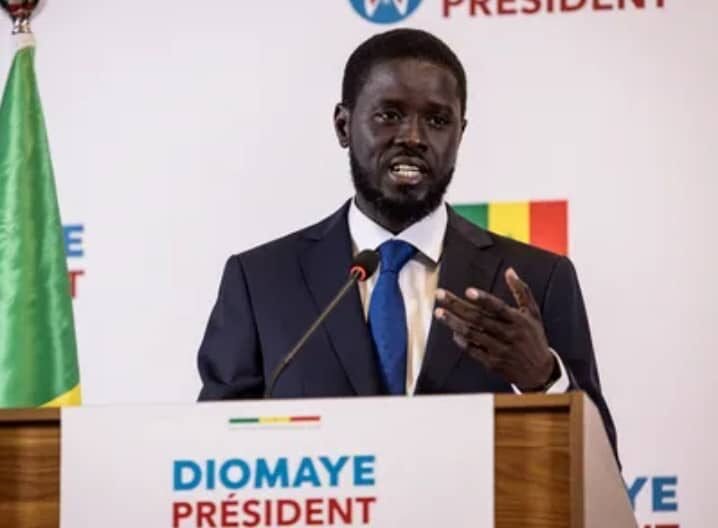
The Senegal political crisis has taken a dramatic new turn after President Bassirou Diomaye Faye appointed economist Ahmadou Al Aminou Lo as the country’s new prime minister on Monday, following the sudden dismissal of Ousmane Sonko and his entire cabinet the previous Friday. The reshuffle — triggered by months of simmering tensions between the president and his one-time mentor — has plunged one of West Africa’s most stable democracies into uncharted political territory. (Source: MyJoyOnline)
The crisis deepened almost immediately when the National Assembly, defying the president, elected the freshly ousted Sonko as its new parliament speaker on Tuesday morning. The move threatens to paralyse legislative action and raises fundamental questions about the balance of power between Senegal’s executive and legislative branches.
Senegal Political Crisis Erupts Over Economic Policy Disagreement
The roots of the Senegal political crisis lie in a fundamental disagreement over how to address the country’s crushing debt burden. Senegal’s public debt stands at an estimated 132 per cent of GDP — a staggering figure that has forced the government to confront painful choices about fiscal policy and international financing.
When Faye and Sonko came to power after the March 2024 parliamentary election, they accused former President Macky Sall’s government of hiding a portion of the national debt. The discovery of misreported debt led to the suspension of a $1.8 billion IMF aid programme that had been agreed in 2023, leaving Senegal without a financial safety net at a critical moment. The IMF’s country page for Senegal provides additional background.
The two leaders’ approaches to resolving this crisis diverged sharply. Faye favoured engaging with the International Monetary Fund to negotiate a new aid programme, viewing multilateral support as essential to stabilising the economy. Sonko, by contrast, championed a sovereigntist approach, opposing any debt restructuring that he believed would subject Senegal to external economic dictates. The disagreement, which played out publicly over several months, ultimately became irreconcilable.
Senegal Political Crisis Deepens as Sonko Reclaims Parliamentary Power
The Senegal political crisis escalated dramatically on Tuesday when lawmakers elected Sonko as speaker of the National Assembly, just days after his dismissal as prime minister. The move was made possible when the previous speaker, El Malick Ndiaye — a close Sonko ally — resigned on Sunday, clearing the path for Sonko’s return to the legislature.
Sonko had been elected as a lawmaker in the November 2024 legislative elections but had his mandate suspended at his own party’s request after Faye appointed him prime minister. His re-emergence as a parliamentary leader creates a formidable challenge for the president, who now faces the prospect of a hostile legislature controlled by his own political ally-turned-rival.
Sonko had warned in March that he could take the ruling Pastef party into opposition if the president strayed from the party’s agenda. With Pastef holding a commanding majority of 130 out of 165 seats in the National Assembly, the threat is not idle. If Sonko directs the party’s lawmakers to obstruct the president’s legislative programme, Faye could find himself unable to pass the very reforms needed to unlock international financial support.
New Prime Minister Lo Promises Continuity Amid Senegal Political Crisis
In appointing Ahmadou Al Aminou Lo, President Faye has chosen a technocrat with deep financial credentials. Lo formerly served as head of the Senegal branch of the Central Bank of West African States, where he shaped monetary and economic policies at the regional level. He also possesses intimate knowledge of the current administration, having served as state minister to the president and secretary-general of Sonko’s government.
Appearing on state television, Lo sought to reassure both local and international audiences. “We must all be aware of the state of emergency our country currently finds itself in,” he said. “In particular, the state of public finances and its impact on the economy. Senegal is a safe and reliable country and intends to remain so.”
Lo was careful to frame his appointment as a change in method, not direction. “This is not a change of direction but of method,” he said, citing integrity, transparency, and “economic and cultural sovereignty” — values that Sonko himself had championed. He also offered conciliatory words for his predecessor, praising the Sonko government’s economic recovery plan, which had relied heavily on domestic funding.
Senegal Political Crisis Raises Constitutional Concerns
The Senegal political crisis has not gone unchallenged by the opposition. Aissata Tall Sall, who heads the main opposition coalition, denounced what she called an “institutional coup” prepared under “pressure that the majority wants to impose.” She argued that Sonko, to return as a lawmaker, should first have formally resigned as prime minister before re-entering parliament.
Tall Sall urged President Faye to refer the matter to the Constitutional Council to prevent what she termed “an illegal diktat of the majority.” Her concerns highlight the fragility of Senegal’s institutional framework at a time when the ruling party itself is deeply divided.
Significant legislative hurdles remain. Parliament must approve Faye’s choice of prime minister within three months of the nomination. Under current law, the president cannot dissolve parliament until November 2026, marking two years since the last parliamentary election. Furthermore, a recent reform of the electoral code — approved by parliament before the crisis — means Sonko is now eligible to run for the presidency, raising the possibility that the two former allies could eventually face each other in a future election.
Senegal Political Crisis Carries Regional Implications for West Africa
The Senegal political crisis carries implications far beyond the country’s borders. Senegal has long been regarded as one of West Africa’s most stable democracies, and its political health is seen as a bellwether for the broader Economic Community of West African States (ECOWAS). Politicians and civic leaders across the region are watching closely to see how Faye balances executive authority with legislative consensus.
The crisis also resonates with broader African economic debates. Much like Ghana, which has recently undertaken intensive domestic and external debt restructurings, Senegal faces the challenge of balancing social mandates against strict multilateral conditions. Sonko’s anti-restructuring stance mirrors a growing sentiment among African populations weary of austerity, while Faye’s pivot to a technocrat like Lo reflects a trend among African heads of state who prioritise global market integration.
The outcome of Senegal’s fiscal course under Prime Minister Lo will likely serve as an influential benchmark for economic management across the continent. As the political showdown shifts to the legislative floor, the coming weeks will determine whether this resource-rich nation can execute its promised economic overhaul — or whether the rift at the top of the ruling party will derail Senegal’s progress entirely.
Source: MyJoyOnline