HIV Testing in Ghana: 5 Alarming Gaps the AIDS Commission Exposes in the 2024 Treatment Cascade
HIV testing in Ghana faces an urgent crisis as new data from the Ghana AIDS Commission reveals that barely two-thirds of people living with the virus know their status, leaving a dangerous gap in the nation’s fight to end the epidemic by 2030.
The Commission’s latest HIV treatment cascade for 2024, presented by Director-General Dr. Kharmacelle Prosper Akanbong, paints a sobering picture of a country that, despite making progress in some areas, remains significantly behind global targets for testing, treatment, and viral suppression.
Ghana HIV Testing Gaps: The Numbers Behind the Crisis
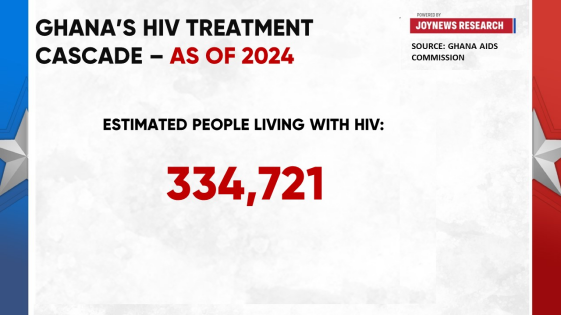
The data reveal a stark reality. An estimated 334,721 people are living with HIV in Ghana. Of that number, only 227,593 people — representing 68 percent — know their HIV status. This means that approximately 107,000 Ghanaians living with the virus are unaware of their infection, posing both a personal health risk and a public health challenge, as undiagnosed individuals cannot access treatment and may unknowingly transmit the virus.
The numbers deteriorate further down the treatment cascade. Only 156,821 people, representing 47 percent of all people living with HIV, are currently receiving antiretroviral therapy (ART). And just 140,357 people, representing 42 percent, have achieved viral suppression — the stage where the virus becomes undetectable in the blood and the risk of transmission is dramatically reduced.
These figures point to major gaps in Ghana’s HIV response chain, particularly at the testing and treatment initiation stages. Without a significant acceleration in HIV testing across Ghana, the country’s ability to reach its epidemic control targets will remain compromised.
Why HIV Testing in Ghana Falls Short of UNAIDS 95-95-95 Targets
When measured against the global UNAIDS 95-95-95 targets, Ghana’s performance reveals critical shortfalls at every stage of the response. The targets, which aim to ensure that by 2030, 95 percent of people living with HIV know their status, 95 percent of diagnosed persons are on treatment, and 95 percent of those on treatment achieve viral suppression, represent the gold standard for epidemic control.
Ghana’s current numbers tell a different story. Of the total population living with HIV, 68 percent know their status (versus the 95 percent target). Of those who know their status, 69 percent are on treatment (versus 95 percent). And of those on treatment, 90 percent have achieved viral suppression — the one area where Ghana shows relatively strong performance, though still short of the 95 percent benchmark.
According to UNAIDS global data, countries that have made the most progress toward epidemic control have done so primarily by expanding testing coverage. Without knowing who is infected, the entire treatment cascade becomes bottlenecked at its first stage, rendering downstream interventions less effective.
The Ghana AIDS Commission’s Plan to Intensify HIV Testing Across Ghana
Dr. Akanbong emphasized that intensifying HIV testing in Ghana is the Commission’s top priority. “We need to step up our efforts and test more people, and these people must be brought to treatment, hence suppressing the viral load,” he stated, identifying viral suppression as one of the strongest tools available for reducing HIV transmission.
The Commission is expanding its preventive interventions alongside testing efforts. These include the rollout of pre-exposure prophylaxis (PrEP) for individuals at high risk of infection, post-exposure prophylaxis (PEP) for emergency situations, and improved condom accessibility services across the country.
“All these activities are targeted at minimising the figures when it comes to HIV in the country,” Dr. Akanbong explained, signaling a comprehensive approach that combines testing, treatment, and prevention in a coordinated strategy.
The expansion of community-based testing is particularly critical for reaching populations that may not access traditional healthcare facilities. Mobile testing units, community health workers, and partnerships with civil society organizations are all part of the Commission’s strategy to bring HIV testing closer to the people who need it most.
HIV Testing in Ghana: Can the Country Meet Its 2030 Epidemic Control Goal?
The question of whether Ghana can close its testing and treatment gaps in time to meet the 2030 deadline is one that carries enormous implications. The U.S. Centers for Disease Control and Prevention (CDC) has noted that countries in sub-Saharan Africa that have achieved the most dramatic reductions in HIV transmission have done so through aggressive testing campaigns combined with rapid linkage to treatment.
Ghana’s relatively strong viral suppression rate of 90 percent among those on treatment offers a foundation of hope. It demonstrates that when people living with HIV are identified and placed on treatment, the health system is capable of delivering effective care. The bottleneck, as the data clearly show, is in finding and testing the estimated 107,000 Ghanaians who are living with HIV but do not know it.
The Ghana AIDS Commission says it remains committed to strengthening the national HIV response through intensified testing, expanded treatment access, and stronger preventive interventions. With renewed efforts in awareness creation, PrEP and PEP rollout, condom accessibility, and community-based testing, the Commission believes Ghana can accelerate progress toward the global targets and ultimately bring the HIV epidemic under control.
However, achieving this ambition will require sustained political commitment, adequate funding, and the active engagement of communities across the country. Without these elements, the gaps revealed by the 2024 treatment cascade risk widening rather than closing — a prospect that would have devastating consequences for hundreds of thousands of Ghanaians and their families.
Source: MyJoyOnline