15 Nations Adopt Mombasa Declaration to Combat Illegal Fishing and Boost Ocean Transparency
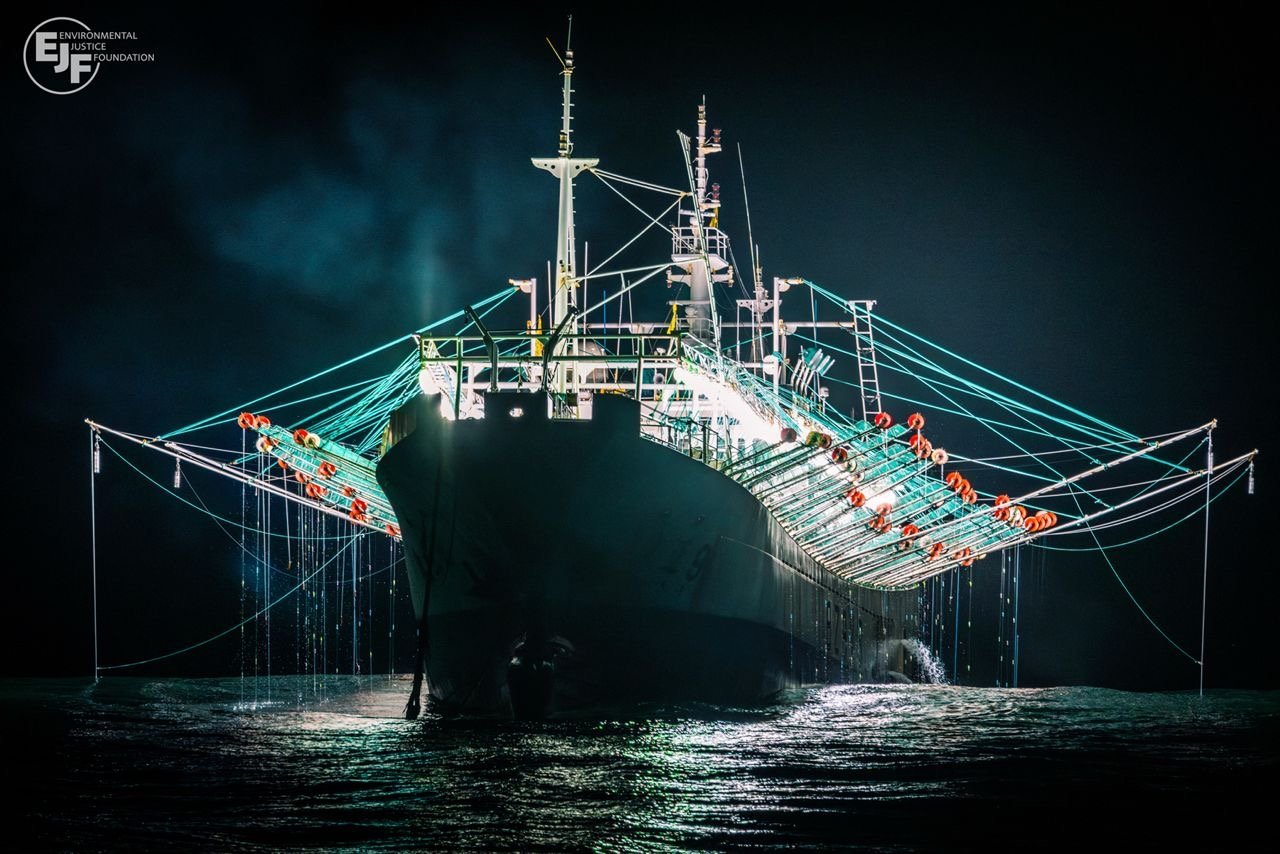
Fifteen countries from four continents have formally committed to sweeping reforms in fisheries governance, signing the Mombasa Declaration at the 11th Our Ocean Conference in Kenya on Tuesday in a bid to curb illegal fishing and improve transparency across the global seafood supply chain.
The signatories — spanning Africa, Asia, the Caribbean, Europe and the Pacific — pledged to modernise vessel registries, publish fishing authorisations and strengthen data-sharing systems designed to hold both coastal and flag states accountable for activity on the high seas.
Among the nations joining the initiative are Ghana, Cameroon, The Gambia, Guinea, Liberia and Somalia on the African continent, alongside Belgium, Chile, France, the Dominican Republic, Panama, Papua New Guinea, Peru, the Republic of the Congo and South Korea.
A $50 Billion Problem
The declaration targets illegal, unreported and unregulated (IUU) fishing, a practice that costs the global economy an estimated $50 billion annually and has been identified as one of the most significant drivers of declining fish stocks worldwide. For coastal communities in West Africa and beyond, the consequences are existential: depleted catches, collapsing marine ecosystems and the erosion of livelihoods that depend on healthy oceans.
Ghana’s Minister for Fisheries and Aquaculture Development, Emelia Arthur, underscored the stakes for her country during the conference. “In my country, our very existence depends on fish. Sixty percent of our animal protein comes from fish, and ten percent of our population depends on the fisheries value chain for livelihood,” she said.
The minister’s remarks reflect a broader reality across West Africa, where industrial trawlers — many operating under flags of convenience — have been documented depleting fish stocks that sustain millions of people. Communities along Ghana’s coast have for years reported dwindling catches, forcing fishermen to travel further offshore at greater personal risk and expense.
Transparency as Enforcement
At its core, the Mombasa Declaration treats transparency as an enforcement mechanism. By requiring signatory states to make vessel ownership records, licensing details and fishing permits publicly accessible, the agreement aims to close the information gaps that allow illegal operators to evade detection.
Maisie Pigeon, Director of the Coalition for Fisheries Transparency, which helped develop the declaration, described it as evidence of “growing global momentum towards stronger ocean governance and sustainable fisheries management.”
The declaration also commits signatories to improve real-time information exchange, a measure intended to help enforcement agencies across different jurisdictions coordinate responses to suspected IUU activity — something that has historically proved difficult when vessels cross maritime boundaries.
France’s Minister Delegate for the Sea and Fisheries, Catherine Chabaud, called the agreement a vital opportunity for governments to demonstrate genuine political commitment to better fisheries governance through international cooperation.
What Comes Next
The signing in Mombasa is being framed not as a conclusion but as the opening phase of a broader campaign. Organisers are seeking to recruit additional nations ahead of the next Our Ocean Conference in 2027, hoping to build a critical mass of signatories that creates meaningful pressure on non-participating states.
For Ghana, the declaration aligns with ongoing domestic efforts to strengthen maritime governance. The country has been bolstering its presence in international maritime institutions, with Dr Sylvia Adusu recently becoming the first African woman elected to the International Tribunal for the Law of the Sea — a development that signals Accra’s growing commitment to ocean governance at the multilateral level.
Whether the Mombasa Declaration translates into tangible reductions in illegal fishing will depend on implementation. Previous international commitments on ocean protection have sometimes struggled to move beyond communiqués. But the breadth of signatories and the specificity of the pledges — particularly on public data disclosure — suggest a framework designed for measurable progress rather than aspirational language alone.
Image Source: STARR FM