President Mahama Calls on Ghanaian Youth to Embrace Discipline and Serve the Nation
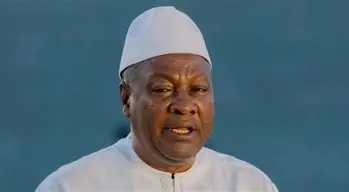
President John Dramani Mahama used the occasion of Eid al-Adha celebrations at Independence Square on Wednesday to deliver a pointed message to Ghana’s younger generation: the nation’s future depends on discipline, hard work, and a commitment to service.
Addressing a large gathering during the national Eid observance, the President urged young Ghanaians to channel their energy into education, skills development, entrepreneurship, and humanitarian service. His remarks carried the weight of a leader attempting to shape the moral direction of a country where youth unemployment and social pressures continue to test the resilience of a generation.
“The country’s development depends largely on a generation that is focused on education, skills development, entrepreneurship, and service to humanity,” Mahama told the crowd. The message was deliberately broad, reaching beyond the Muslim faithful to touch on themes of national responsibility that resonate across religious and ethnic lines.
The President drew particular attention to the example of National Chief Imam Sheikh Osman Nuhu Sharubutu, whose decades of public life have made him a symbol of interfaith tolerance in Ghana. “We are blessed to have the enduring example of our revered National Chief Imam Sheikh Osman Nuhu Sharubutu, whose life continues to inspire all Ghanaians through his humility, his compassion, his simplicity, his tolerance, and his peacebuilding,” Mahama said.
The invocation of the Chief Imam was more than ceremonial. At a time when religious identity is increasingly politicised across West Africa, Mahama positioned Sharubutu’s legacy as a counterweight to extremism and division. Interior Minister Muntaka Mubarak made a similar appeal earlier in the day, calling on Muslims to use Eid as an occasion to deepen national unity and promote peaceful coexistence.
The timing of the President’s address is significant. Ghana’s youth bulge — with a median age of around 21 — presents both an opportunity and a challenge. A young, energetic population can drive economic transformation, but only if the conditions exist for meaningful participation. Rising living costs, limited job prospects, and the lure of irregular migration continue to push many young Ghanaians toward risky choices.
Mahama’s call for discipline and focus therefore carries an implicit acknowledgment of these pressures. By urging the youth to “avoid behaviours that could derail their ambitions,” the President was speaking to a generation that faces temptations his own did not encounter in the same measure — from synthetic drugs to online fraud to the desperation that drives perilous journeys across the Sahara and Mediterranean.
The Eid al-Adha celebration itself provided a fitting backdrop. The festival, which commemorates the willingness of Prophet Ibrahim to sacrifice his son in obedience to God, is rooted in themes of submission, generosity, and communal solidarity. Mahama’s message sought to extend those religious principles into the civic realm, framing national development as a form of collective sacrifice.
Whether the message will translate into tangible policy action remains to be seen. Previous administrations have made similar appeals during religious holidays, only for the underlying structural issues — inadequate vocational training, insufficient support for small businesses, and a public education system under strain — to persist. The test for this government will be whether rhetoric about youth empowerment is matched by investment in the institutions and programmes that make such empowerment possible.
For now, the President’s words added to a day of reflection and celebration across the country. From the festivities at Independence Square to smaller gatherings in communities nationwide, Eid al-Adha served as a reminder that Ghana’s social fabric, though tested, remains remarkably intact.
Image Source: MYJOYONLINE