In Amanase, a Simple Washroom Restores Girls' Right to Education
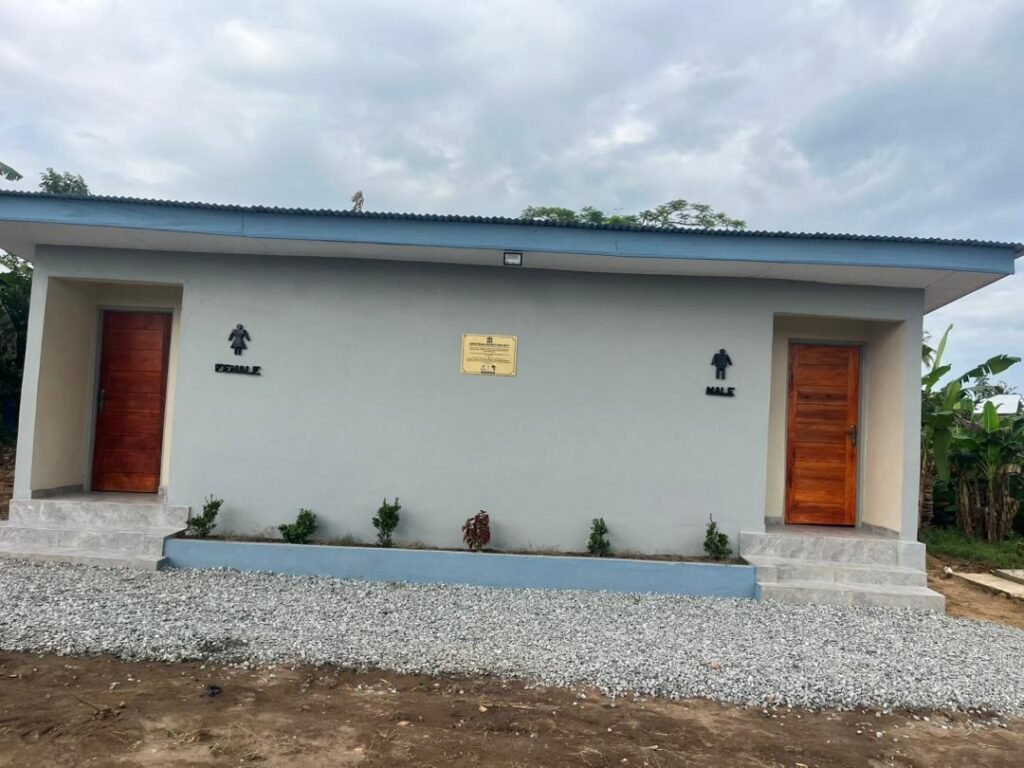
In the farming community of Amanase, near Suhum in Ghana’s Eastern Region, a quiet revolution is unfolding. For years, menstruation meant missed lessons, interrupted learning, and diminished confidence for girls at Amanase Asare Panyin D/A JHS and Nana Appaitu D/A JHS. Without proper washroom facilities, many were forced to stay home during their periods or leave school mid-day, their education disrupted by a natural biological process.
That changed on June 17, 2026, when the CEIBS GEMBA 2025 cohort, in partnership with Fairafric Ghana Limited, commissioned two dedicated washroom facilities — a six-unit block at Amanase Asare Panyin and a three-unit block at Nana Appaitu. The initiative, part of an environmental, social, and governance (ESG) project, also included comprehensive menstrual hygiene education and the distribution of sanitary kits to over 250 girls.
The impact is immediate and tangible. “It offers privacy where there was once none, dignity where there was discomfort, and confidence where there was uncertainty,” said one observer. The project addresses a critical barrier to girls’ education in rural Ghana, where inadequate sanitation facilities contribute to high absenteeism and dropout rates during menstruation.
Beyond infrastructure, the project empowers girls with knowledge. Educational sessions and kits containing reusable and disposable pads, brochures, face towels, and backpacks equip them to manage their menstruation with dignity. The backpacks, in particular, support their schooling by allowing them to carry books and supplies.
Community ownership is emphasized as essential for long-term value. Fairafric Ghana Limited has pledged continued support, urging the community to protect and maintain the new infrastructure. The CEIBS GEMBA 2025 cohort views the project as a practical translation of classroom learning into measurable community change — a model for how business education can drive social impact.
The initiative aligns with broader efforts to keep girls in school. While government programs like the free sanitary pad initiative have faced criticism over sustainability and distribution challenges, community-led projects like this one offer a replicable approach. By addressing both hardware (facilities) and software (education), the Amanase project tackles the root causes of menstrual-related absenteeism.
As the district director of education, Rev. Alexanda Amaya Narh, noted, the scale and design of the intervention are unprecedented in the area, potentially encouraging further investment from organizations willing to examine everyday barriers facing rural schools.
For the girls of Amanase, the new washrooms are more than concrete and pipes; they represent a restored right to learn, to grow, and to thrive without interruption. In a nation striving for inclusive education, such initiatives remind us that dignity begins with basic amenities — and that sometimes, the most transformative interventions are the simplest.
Image Source: MYJOYONLINE