Reform education to conform to Artificial Intelligence - Technical universities urged
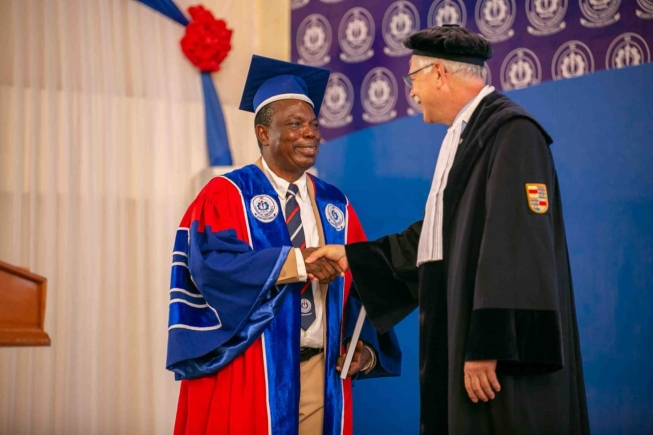
At a recent lecture at Ho Technical University, Professor Ron S.J. Tuninga of Wittenborg University of Applied Sciences delivered a stark warning: Ghana’s technical universities must overhaul their curricula to center on artificial intelligence, or risk producing graduates obsolete in an AI-driven world. The call for reform is not merely about adding new courses; it demands a fundamental shift from rote memorisation to judgement, critical thinking, creativity, and problem-solving—skills that will remain valuable as AI assumes routine cognitive functions.
The professor’s message resonated deeply in a nation where youth unemployment remains a pressing concern. By integrating AI, machine learning, and data analytics into both technical and business programmes, institutions can equip students for the jobs of tomorrow. Embedding ethics and responsible AI use throughout teaching ensures that innovation serves society, not just profit. Moreover, promoting multidisciplinary models and strengthening industry partnerships will bridge the gap between academia and real‑world applications.
This call echoes the sentiment expressed in Ghana’s AI Aspirations Hinge on Solid Digital Foundations that without a robust digital foundation, AI ambitions risk building on sand. Indeed, the challenges highlighted— inadequate networks and hardware, shortage of AI‑qualified professionals, weak research capacity, data governance concerns, and the lack of African language representation in AI systems—are systemic barriers that require coordinated action from government, academia, and the private sector.
The path forward is clear but demanding. Technical universities must adopt flexible, modular programmes that support lifelong learning, enabling workers to upskill and reskill as technology evolves. They should also leverage AI‑driven tools internally to boost efficiency and data‑driven decision‑making, setting an example for students. Crucially, these efforts must be matched by investment in digital infrastructure and policies that encourage local AI solutions tailored to Ghana’s unique context.
As Professor Tuninga noted, AI‑driven transformation is no longer optional but an urgent necessity for higher education institutions seeking global competitiveness. For Ghana to harness AI’s potential to drive industrial transformation and create inclusive growth, its technical universities must lead the way—not by chasing trends, but by building a resilient, future‑ready education system that empowers learners to shape, not just use, the technology that will define their era.
Image Source: MYJOYONLINE