150 Years of Ghana’s Supreme Court: A Historical Overview

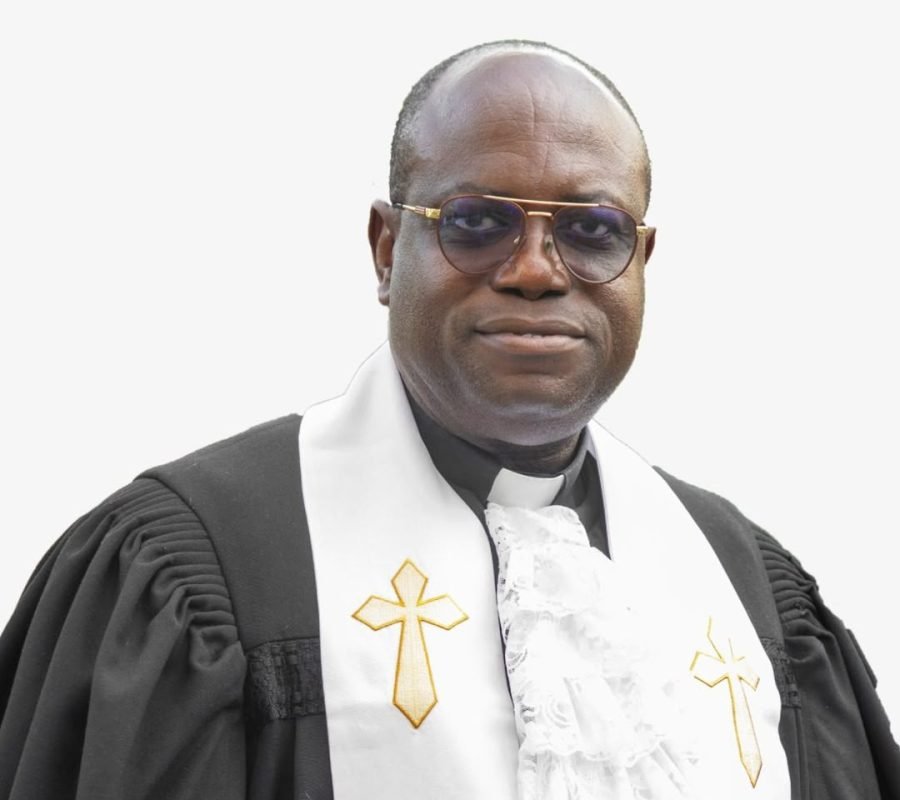
In early July 2026, as Ghana marked the 150th anniversary of its Supreme Court, Professor Philip Ebow Simpson delivered a comprehensive lecture tracing the institution’s evolution from colonial roots to its present role as the guardian of constitutional democracy. Speaking at the University of Cape Coast, the former rector of the Ghana Institute of Management and Public Administration offered a nuanced narrative that underscores both the continuity and rupture in the nation’s judicial development.
The Supreme Court’s origins date back to 1876, when the British colonial administration enacted the Supreme Court Ordinance for the Gold Coast. Contrary to popular belief, this did not introduce judicial administration to the region but rather unified existing courts that had already been operating across British West Africa, including jurisdictions in Lagos and Sierra Leone. As Prof. Bondzi-Simpson noted, the anniversary should be viewed as a shared legal milestone for those territories that once fell under a common judicial framework.
Initially, the court functioned primarily as a trial court, exercising limited appellate jurisdiction. Its structure comprised three divisions: the Full Court, presided over by the Chief Justice with other judges sitting collectively; the Divisional Court, where a single judge wielded the full authority of the Supreme Court within a designated province or district; and the Special Divisional Court, formed when judges from two divisions jointly heard a matter. This arrangement meant that a judge posted to a district effectively held the powers of the Supreme Court within that locality—a concentration of authority that blended judicial, executive and administrative functions.
Such fusion was emblematic of colonial governance. District Commissioners often doubled as magistrates, creating a scenario where the political head of a district also served as its judicial arbiter. Prof. Bondzi-Simpson observed that this confluence inevitably generated conflicts and administrative difficulties, a tension that gradually eased as successive reforms separated the branches of government. The enduring honorific “Your Worship,” still used by magistrates today, traces its origin to this historical arrangement.
The 1876 Ordinance itself was a remarkably comprehensive piece of legislation, spanning more than 160 pages with annexures. It served simultaneously as the Courts Act, the Legal Profession Act, the Evidence Act and even contained the Rules of Court. Over time, as Ghana’s legal system matured, these functions were disaggregated into separate statutes, allowing for greater specialization and clarity.
The lecture also illuminated the trajectory of indigenous participation within the judiciary. Although the Supreme Court was established in 1876, it was not until 1925 that the first Ghanaian was appointed as a puisne judge. This delay reflected the colonial administration’s reluctance to entrust judicial authority to indigenous legal professionals, a hesitation that persisted well into the twentieth century. Similarly, while customary law received recognition under colonial rule, native courts were initially excluded from the formal judicial structure. Supervisory oversight was maintained through the Repugnancy Clause, which permitted colonial courts to set aside customary practices deemed inconsistent with justice or colonial principles. Formal recognition of native courts only emerged during the 1940s through a series of legislative reforms, a legacy that endures in today’s constitutional acknowledgement of customary law as part of Ghana’s common law.
Another significant dimension discussed was the country’s historical appellate links. Litigants could appeal decisions from the Gold Coast to the West African Court of Appeal and, ultimately, to the Judicial Committee of the Privy Council in London. Although the West African Court of Appeal experienced periods of inactivity, it remained part of Ghana’s judicial structure until independence. The 1957 Independence Constitution preserved appeals to the Privy Council because Ghana initially attained Dominion status under the British Crown. However, the adoption of the Republican Constitution in 1960 marked a decisive break: appeals to both the West African Court of Appeal and the Privy Council were abolished, establishing the Supreme Court as the nation’s apex judicial authority. Subsequent constitutions introduced the Court of Appeal, creating the current three‑tier superior court hierarchy comprising the High Court, Court of Appeal and Supreme Court.
Prof. Bondzi-Simpson also traced the evolution of chieftaincy institutions, noting that successive constitutions gradually strengthened the legal recognition of the National and Regional Houses of Chiefs while establishing judicial committees to adjudicate chieftaincy disputes. Although chiefs have increasingly assumed adjudicatory functions, decisions of the National House of Chiefs remain subject to the supervisory jurisdiction of the Supreme Court—a balance that reflects the ongoing negotiation between tradition and modern statehood.
The lecture did not shy away from the tumultuous periods of military rule, during which successive governments suspended or abolished courts, or introduced institutional arrangements aligned with revolutionary priorities. These interventions left lasting imprints on judicial administration, though subsequent constitutional reforms restored the independence and authority of the courts.
In concluding, Prof. Bondzi-Simpson emphasized that the history of Ghana’s judiciary reflects a gradual transition from colonial legal administration to an independent constitutional system rooted in the rule of law. He urged participants in the Supreme Court’s 150th anniversary celebrations to appreciate not only the institution’s longevity but also the complex historical developments that have shaped its evolution. Understanding this past, he argued, is essential not only to safeguard the future of the judiciary but also to strengthen public confidence in the administration of justice—a lesson that remains salient as the nation confronts contemporary challenges to its democratic institutions.