Ghana and The Gambia Strengthen Education Partnership Through High-Level Study Visit
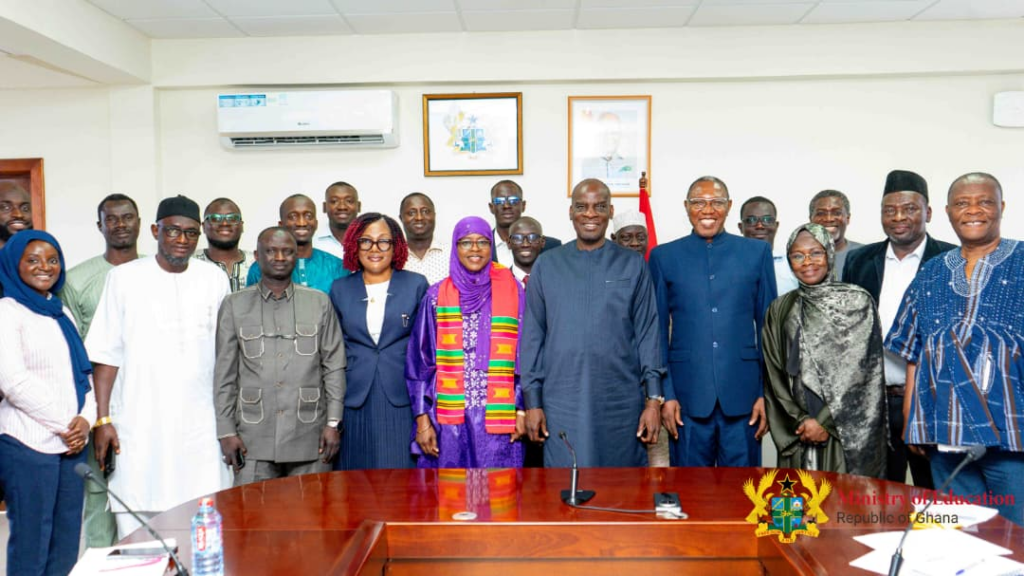
Ghana’s Ministry of Education hosted a delegation from The Gambia this week for a high-level study visit aimed at deepening bilateral cooperation on education governance, digital transformation and evidence-based policymaking — a partnership that both countries say could serve as a model for African-led approaches to educational reform.
The Gambian delegation, led by Dr Habibatou Drammeh of the Ministry of Basic and Secondary Education, spent several days examining Ghana’s education systems, with particular interest in the country’s School Report Card initiative and digital monitoring tools that track teacher attendance, school performance, infrastructure conditions and learning outcomes.
Ghana’s Education Minister Haruna Iddrisu used the visit to outline the country’s education priorities, which include free education from kindergarten through tertiary level and a renewed emphasis on foundational learning. “Strong literacy and numeracy skills at the basic level are critical to the success of the entire education system,” he said. “No education system can succeed if its foundation is weak.”
The minister also revealed that Ghana is reviewing its curriculum to introduce Artificial Intelligence, coding, robotics, financial literacy and collaborative learning into schools — a significant modernisation effort that reflects the country’s ambition to prepare its young population for a rapidly changing global economy.
For The Gambia, the visit offered a window into how a neighbouring West African state has tackled many of the same challenges it faces. Dr Drammeh praised Ghana’s digital monitoring tools as “powerful” for accountability and policymaking, and proposed establishing a formal Memorandum of Understanding between the two ministries to enable ongoing knowledge sharing and joint policy development.
The Gambia is currently implementing a World Bank-supported Public Administration Modernization for Citizen-Centric Service Delivery Project, and officials see Ghana’s education reforms as directly relevant to their own efforts to strengthen public institutions.
Ghana has been steadily expanding its education partnerships and infrastructure. The World Bank recently approved a $300 million package to help the country eliminate the double-track system by 2027, an initiative that has drawn attention from across the continent. That investment, combined with the STARR-J project’s focus on improving learning conditions in senior high schools, has positioned Ghana as something of a laboratory for large-scale education reform in West Africa.
The proposed MoU between Ghana and The Gambia would cover continuous exchange of best practices, technical expertise and policy innovations, with potential joint initiatives in curriculum development, teacher training and digital monitoring. Both delegations expressed optimism that the partnership would produce practical outcomes rather than remaining at the level of diplomatic niceties.
The study visit comes at a time when African nations are increasingly looking to one another for policy solutions rather than relying solely on models imported from the global north. Ghana and The Gambia, despite their difference in size, share many structural similarities in their education systems — including the challenge of delivering quality basic education across diverse geographic and socioeconomic contexts.
If the proposed memorandum materialises, it would formalise a relationship that both sides clearly see as mutually beneficial, and potentially open the door to wider collaboration across the Economic Community of West African States region.
Image Source: MYJOYONLINE