Pollution Near Schools May Be Undermining Learning, Researcher Warns
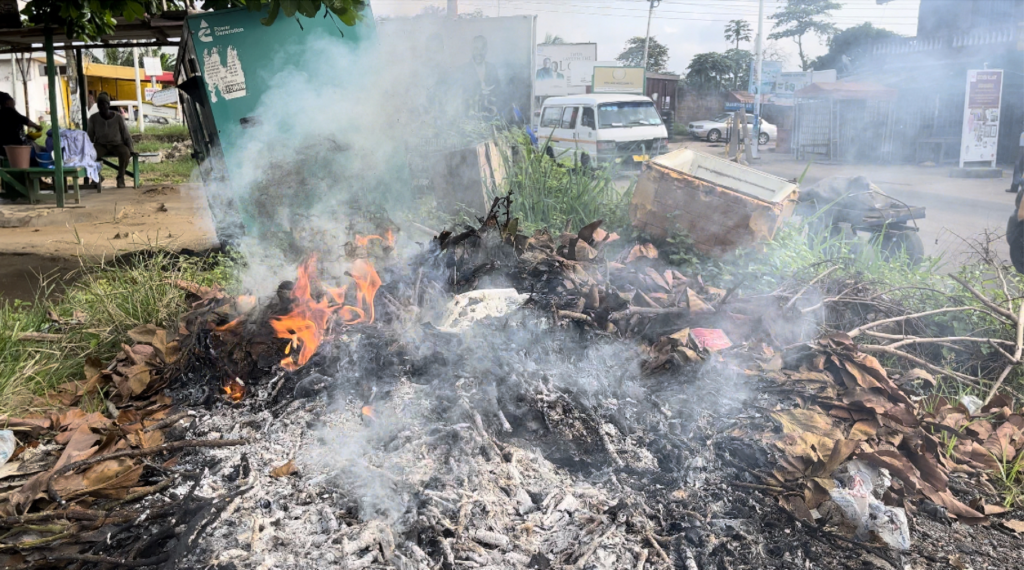
An estimated two million Ghanaian children attend schools within five kilometres of documented contaminated sites, and the health consequences of that proximity may be doing more to widen the global education gap than policymakers have acknowledged, according to new research from the Centre for Global Development.
The study, published this week, found that pollution exposure could account for up to a fifth of the difference in education quality between high-income countries and low- and middle-income nations – a finding that one lead researcher described as comparable in scale to the effects of teacher training or class size reduction.
“It is as big as most of the education interventions that we study – teacher training, class size and those kinds of interventions,” the researcher said. “We think lead poisoning is as significant, but in the reverse direction.”
Lead poisoning emerged as a particular concern. The neurotoxin, which is invisible and odourless, has long been linked to cognitive impairment in children, but its role in explaining persistent learning deficits across developing countries has received less attention than traditional education policy levers such as curriculum reform or school infrastructure spending.
The findings carry implications for Ghana, where rapid urbanisation has pushed residential areas – and the schools that serve them – closer to industrial zones, informal waste dumps and sites contaminated by illegal mining. Earlier this year, a governance expert argued that electing metropolitan, municipal and district chief executives could strengthen local accountability and address environmental failures that contribute to recurring crises such as flooding. The pollution research adds another dimension to that argument: if local planning authorities had stronger mandates and accountability, contaminated sites might have been relocated before schools were built beside them.
“It is a real failure of urban planning that these sites have not been moved out of residential areas,” the researcher said. “It is an environmental problem. It is an environmental management problem and a failure of regulation.”
Surprisingly, the study found that wealthier households were more likely than poorer ones to have children attending schools near contaminated sites – a pattern observed across all 17 countries examined. Private schools, too, were more frequently located near toxic sites than their public counterparts. The finding challenges the assumption that environmental risk in education falls disproportionately on the poorest families, though the researchers cautioned that poorer communities may face greater health consequences because they have fewer resources to mitigate exposure.
The economic implications extend beyond individual classrooms. Children exposed to pollutants such as lead suffer reduced cognitive development, which translates into lower earnings, diminished productivity and slower economic growth over time. “It is a significant drain on the economy as well as the learning of children,” the researcher noted.
Ghana has invested heavily in education reform in recent years. The World Bank recently approved a $300 million package to help the country end the double-track system by 2027, and the STARR-J initiative aims to transform learning conditions in senior high schools across the country. But the new research suggests that without addressing the environmental conditions surrounding school buildings, even the most ambitious infrastructure and staffing programmes may fall short of their potential.
The researchers called for environmental health assessments to be integrated into school site selection processes, stronger enforcement of regulations preventing construction near contaminated sites, and public awareness campaigns about invisible pollution risks. “It is difficult because it is something we cannot see,” the researcher said. “But it is there and the science just keeps on building.”
For a country that has made free education from kindergarten through tertiary level a centrepiece of its development agenda, the findings represent an uncomfortable truth: the quality of learning may depend not only on what happens inside the classroom, but on what is in the air and soil around it.
Image Source: MYJOYONLINE