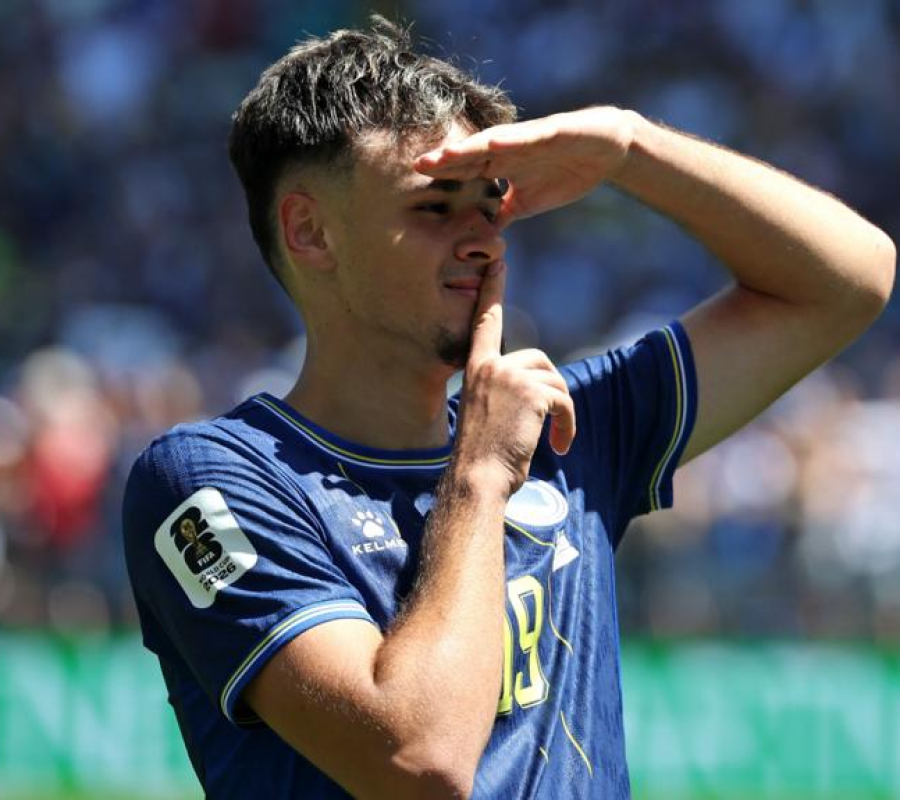
The Tactical Genius Behind Senaya's Stoppages: How Ghana's Goalkeeper Outsmarted Gordon and Saka

Ghana’s goalkeeper delivered a masterclass in tactical goalkeeping during their recent World Cup encounter with England, demonstrating how intelligent positioning and game reading can be as valuable as athletic reflexes in preventing goals against world-class attacking talent.
The match, which featured several tense moments as England pushed for a breakthrough, saw Ghana’s number one repeatedly frustrate the efforts of Premier League stars Gordon and Saka through a combination of anticipatory positioning, precise timing, and strategic decision-making that went far beyond conventional shot-stopping abilities.
From the opening minutes, it was evident that the Ghanaian goalkeeper had done his homework. Rather than adopting a standard reactive approach, he positioned himself based on deep knowledge of his opponents’ tendencies, cutting off angles before shots were even taken and forcing England’s attackers into less dangerous areas of the pitch. This proactive methodology proved particularly effective against Gordon’s preferred pattern of cutting inside from the right flank to unleash his powerful left foot, as the goalkeeper consistently narrowed the space available for such attempts.
When Gordon did manage to create shooting opportunities, the Ghanaian’s timing and hand positioning were exemplary. Rather than lunging or guessing, he appeared to wait for the precise moment of commitment before making his move, maximizing his coverage while minimizing the risk of being wrong-footed by a last-minute change of direction. Several point-blank saves throughout the match bore the hallmark of this disciplined approach, with the goalkeeper making himself big while maintaining the agility to react to deflections or rebounds.
Saka presented a different challenge with his tendency to drift inside from the left wing and either shoot with his right foot or look for late-rushing teammates in the box. Here, the goalkeeper’s tactical acumen manifested in his communication with the back line, ensuring proper coverage of near-post and far-post risks while maintaining readiness to intercept crosses or through balls. His ability to shift laterally with economical movements preserved his balance and readiness for secondary actions, a crucial consideration when facing an attacker of Saka’s technical sophistication.
Perhaps most impressively, the goalkeeper’s influence extended beyond mere shot prevention. His confident handling of crosses and willingness to claim aerial balls alleviated pressure on Ghana’s defenders, allowing them to play with greater freedom knowing their last line of command was secure. When he did come off his line, it was with clear purpose and timing that minimized the risk of being caught out of position—a delicate balance that separates elite goalkeepers from merely competent ones.
The distribution aspect of his game also contributed significantly to Ghana’s overall strategy. Rather than simply clearing danger, the goalkeeper frequently looked to initiate quick transitions with accurate throws or kicks to teammates in advanced positions, recognizing that England’s commitment to attack left them vulnerable to counterattacks. This dual role as both last line of defense and first point of attack exemplifies the evolving demands placed on modern goalkeepers at the highest level of competition.
Statistical analysis of the match would likely reveal that while the goalkeeper faced a considerable number of high-quality chances, his save percentage reflected not just athletic excellence but superior decision-making. By consistently putting himself in the optimal position before shots were taken, he reduced the difficulty of many saves that might otherwise have required extraordinary athletic efforts.
This performance underscores an important evolution in the goalkeeper’s role. While shot-stopping remains the fundamental requirement, the modern goalkeeper must also possess the analytical skills to interpret game flow, the communication abilities to organize a defense, and the tactical intelligence to contribute to team strategy beyond the penalty area. The Ghanaian number one demonstrated all these qualities in abundance, turning what could have been a routine athletic performance into a tactical masterclass.
For England’s attackers, the frustration of repeatedly encountering a well-prepared and intelligently positioned opponent likely contributed to their eventual inability to break down Ghana’s defense. When attackers cannot predict or exploit defensive weaknesses, even the most talented individuals can be rendered ineffective—a testament to the power of preparation and intelligence in sport.
The psychological impact of such a performance should not be underestimated. By consistently denying high-quality chances, the goalkeeper not only preserved the clean sheet or kept the score tight but also imposed a cumulative mental toll on the opposing attackers. Knowing that their efforts were likely to be thwarted regardless of execution can lead to hesitation, second-guessing, and ultimately diminished effectiveness—a subtle but significant way in which goalkeeping excellence influences match outcomes beyond the mere prevention of goals.
As the tournament progresses, this display of tactical goalkeeping will undoubtedly serve as a reference point for both aspiring young keepers and experienced professionals seeking to refine their craft. It reminds us that at the highest levels of competition, where athletic differences between opponents are often minimal, the margins of victory frequently belong to those who combine physical gifts with superior preparation, intelligence, and tactical understanding.
The significance of this performance extends beyond the immediate match result, offering valuable insights into how national teams from traditionally under-resourced footballing backgrounds can compete effectively against opponents with greater individual talent and deeper squad resources. By emphasizing tactical preparation, analytical scouting, and disciplined execution, Ghana demonstrated that competitive parity can be achieved through intelligent coaching and player dedication rather than relying solely on innate athletic superiority.
This approach represents a sustainable model for football development in regions where access to elite training facilities and year-round professional competition may be limited. Investments in video analysis, tactical education, and psychological preparation can yield significant returns by maximizing the effectiveness of available talent, particularly in specialized positions like goalkeeping where decision-making and positioning are paramount.
For the Ghanaian goalkeeper personally, this performance likely represents the culmination of years of focused development that prioritized cognitive aspects of the position alongside traditional athletic training. His ability to consistently outthink and outposition world-class attacking talent suggests a commitment to the often-overlooked intellectual components of goalkeeping that separate good keepers from great ones.
As football continues to evolve toward greater emphasis on pressing, positional play, and rapid transitions, the value of goalkeepers who can read the game, organize defenses, and contribute to attacking phases will only increase. Performances like this one serve as both an inspiration and a blueprint for how the position can be played at its highest potential—not merely as a last line of defense, but as an integral component of team strategy capable of influencing match outcomes in multiple ways.