UK-Ghana Deal to Unlock Private Investment and Climate-Smart Growth, Says Mahama
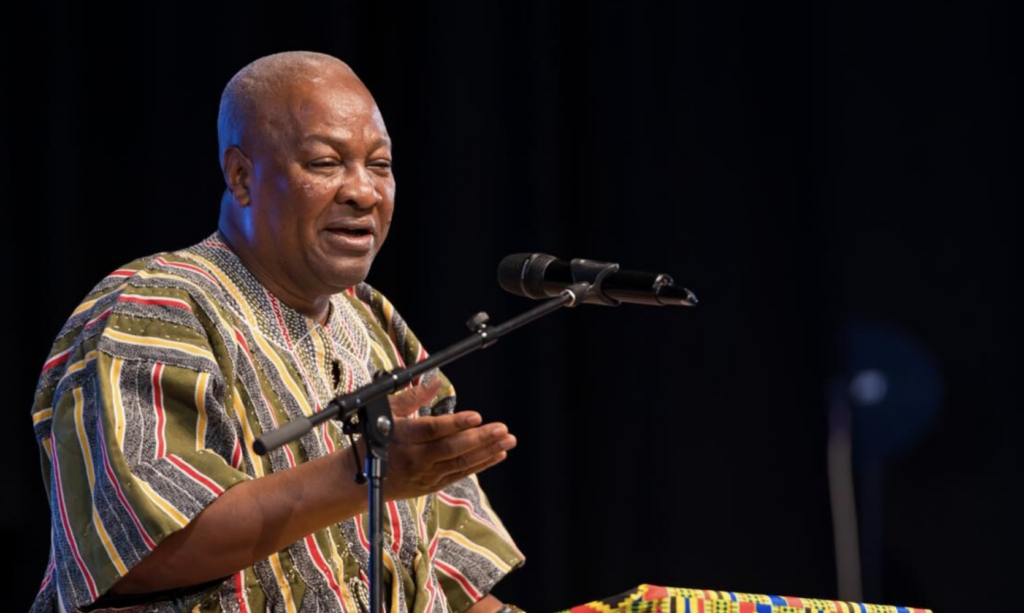
President John Dramani Mahama has hailed the newly signed UK-Ghana Growth Partnership as a transformative agreement that will unlock private sector investment and accelerate climate-smart economic growth across the country.
Speaking after the formal signing ceremony, President Mahama said the deal goes beyond traditional aid frameworks, positioning Ghana as an attractive destination for British private capital while simultaneously advancing the country’s green development agenda. The partnership, he argued, represents a new model of cooperation that aligns commercial opportunity with environmental responsibility.
The agreement builds on the broader UK-Ghana Growth Partnership launched earlier this year, which committed over £215 million to infrastructure, trade, skills development and job creation. The latest phase places particular emphasis on mobilising private investment in sectors where Ghana has demonstrated strong growth potential, including agriculture, renewable energy and digital infrastructure.
“This is not about handouts. It is about creating the conditions for Ghanaian and British businesses to invest, innovate and grow together,” President Mahama said. “Climate-smart growth is not a luxury for us — it is an economic imperative.”
A central pillar of the deal is the promotion of climate-resilient agricultural practices and clean energy projects. The partnership will channel funding into programmes that help Ghanaian farmers adapt to changing weather patterns while reducing carbon emissions in the agricultural value chain. British development finance institutions are expected to play a key role in de-risking private investments in these sectors.
The announcement comes at a time when Ghana is actively seeking to diversify its economic partnerships and attract foreign direct investment to support post-pandemic recovery. The country’s investment drive has gained momentum in recent months, with the government signing several bilateral agreements aimed at boosting industrial capacity and export competitiveness.
For the United Kingdom, the deal represents a strategic effort to deepen economic ties with one of West Africa’s most stable democracies. British officials have indicated that the partnership is designed to create a pipeline of investable projects that deliver both financial returns and measurable development outcomes.
Private sector leaders from both countries have welcomed the agreement, noting that the combination of concessional finance and private capital could unlock projects that neither source of funding could deliver alone. The de-risking mechanisms embedded in the partnership are expected to lower the cost of capital for Ghanaian businesses, particularly small and medium enterprises that have historically struggled to access affordable financing.
Climate advocates have also praised the focus on climate-smart growth, arguing that Ghana’s development trajectory must account for the country’s vulnerability to rising temperatures, erratic rainfall and coastal erosion. The integration of climate considerations into investment decisions, they say, could set a precedent for how development partnerships are structured across the continent.
The deal underscores a broader shift in international development thinking, where traditional donor-recipient relationships are giving way to investment-led partnerships that seek to generate sustainable economic returns. For Ghana, the challenge will be translating the commitments on paper into tangible projects that create jobs and improve livelihoods across the country.
Image Source: MYJOYONLINE