Opposition Parties Call Ethiopia’s 7th Election Peaceful, Free and Participatory
Ethiopia’s seventh parliamentary and regional council elections unfolded on Monday with opposition candidates and party leaders describing the process as peaceful, free, and broadly democratic — a significant endorsement for a country whose recent political history has been marred by conflict and contested votes.
From the early hours of the morning, Ethiopians formed long queues at thousands of polling stations across the country, marking what many observers view as a pivotal moment for the Horn of Africa nation’s democratic dispensation. The vote comes at a time when the continent’s democratic credentials face increasing scrutiny, with several nations grappling with questions about electoral integrity and political inclusion.
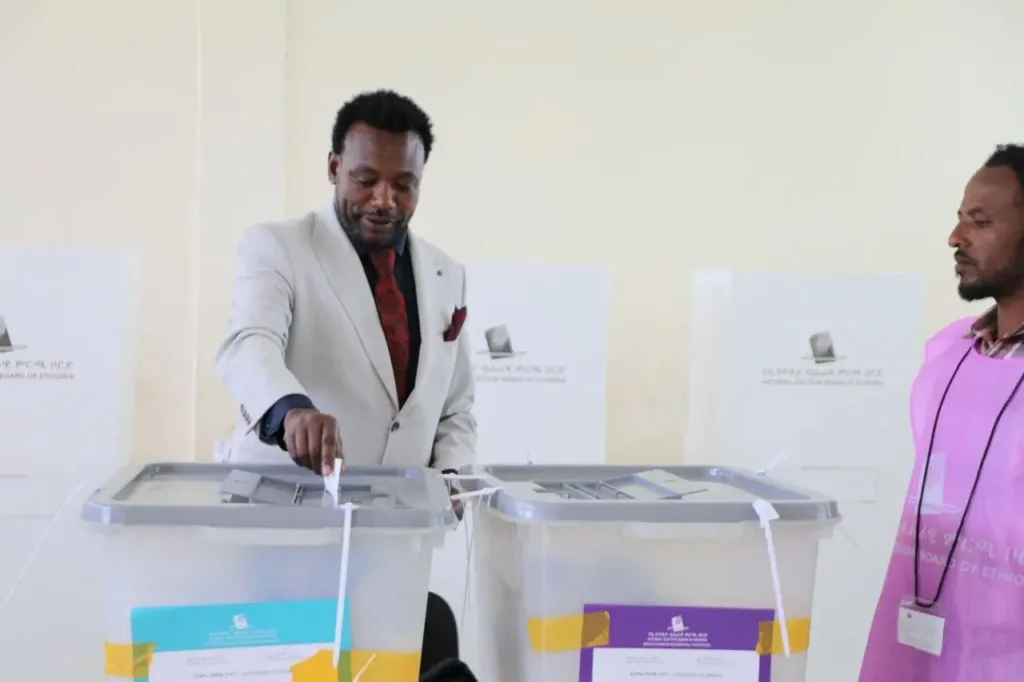
Jamal Abdullahi, a candidate for the Freedom and Equality Party, cast his ballot at the Madda Walabu polling station in Robe town, Oromia Regional State. He reported that the election was conducted without pressure or interference, with party members and supporters exercising their franchise freely. His assessment was echoed across multiple regions.
In Gondar, Awgichew Malede, Chairman of the Qemant Democratic Party, highlighted the breadth of participation, noting the involvement of youth, women, persons with disabilities, and elderly voters. He described the process as more inclusive than previous elections, with his party deploying observers across polling stations to monitor proceedings.
The diversity of candidates participating in the vote underscored the multi-party nature of the contest. Independent candidate Dr. Dima Noggo voted in Gore town, while EZEMA representative Dr. Tilahun Gebrehiwot participated in Addis Ababa’s Lideta Sub-City. National Movement of Amhara executive member Yesuf Ebrahim was also among those who exercised their democratic right.
Ethiopia’s electoral journey has not been without challenges. The country’s political landscape has been shaped by internal conflicts and questions about governance, making the conduct of these elections a critical test of institutional resilience. The positive assessments from opposition figures suggest a meaningful step forward in the country’s democratic evolution.
The elections carry broader significance for the African continent, where democratic norms continue to develop. As leaders across the continent have emphasised the importance of collective progress, Ethiopia’s ability to conduct peaceful, participatory elections sends a powerful signal about the maturity of its political institutions.
Voting continued nationwide throughout the day, with political participation remaining active across parties and candidates. The final results will determine the composition of Ethiopia’s national and regional legislatures, setting the political direction for the country in the years ahead.
Image Source: MYJOYONLINE