No African Nation Can Thrive in Isolation, Mahama Tells London Diaspora
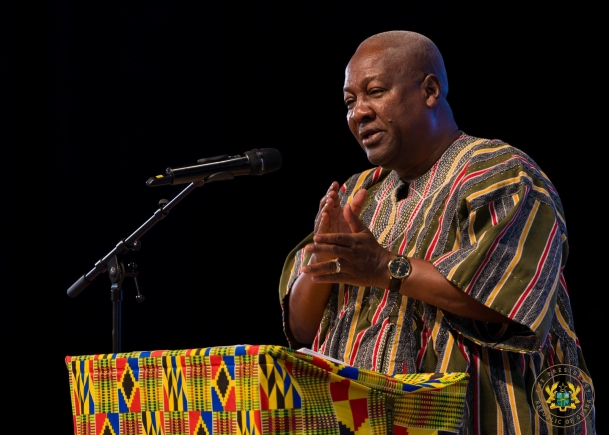
President John Dramani Mahama has made an impassioned case for deeper continental integration, telling a diaspora town hall meeting in London that no African nation can achieve meaningful progress on its own.
Speaking on Sunday as part of a high-level visit to the United Kingdom, the president framed African unity not as an abstract ideal but as an economic necessity. He pointed to the African Continental Free Trade Area (AfCFTA) as the continent’s most ambitious tool for dismantling barriers to the movement of people, goods and capital.
“We have always pushed for Africa’s unity, so it is sad to see some of the things that are happening on the continent,” Mahama said. “There is no way that any African country can achieve the kind of progress that it needs without working with other countries; we cannot achieve it in isolation.”
The president’s remarks came against the backdrop of Ghana’s recent decision to scrap visa fees for all African passport holders, a policy he described as a concrete expression of Pan-African solidarity rather than mere symbolism. The accompanying e-Visa system, he added, was designed to make travel even more convenient for citizens living in the diaspora.
Ghana has long positioned itself as a champion of African integration. It was among the first countries to ratify the AfCFTA agreement, and the continental trade secretariat is headquartered in Accra. Mahama’s London appearance reinforced that positioning, framing Ghana as a bridge between the continent and its global diaspora, a role that has taken on fresh significance as African parliamentarians prepare to gather in Accra for the 10th Ghana International Trade and Finance Conference.
The AfCFTA, which came into force in 2021, aims to create a single market spanning 1.3 billion people across 55 African Union member states. If fully implemented, the United Nations Economic Commission for Africa estimates it could boost intra-African trade by as much as 52 percent by 2030. Yet progress has been slow, hampered by infrastructure deficits, non-tariff barriers and political resistance in some quarters.
Mahama’s London visit also dovetails with a broader push to reset economic ties between Ghana and the United Kingdom. The recent Ghana-UK Investment Summit sought to rebuild investor confidence through sectors like cocoa, and the diaspora engagement in London signals that the government sees overseas Ghanaians as central to that economic recalibration.
He urged African governments not to lose momentum. Unity and cooperation, he stressed, remain critical to the continent’s long-term competitiveness in the global economy. The president’s call resonates with a broader continental debate about whether Africa’s fragmented national economies can realistically compete with integrated blocs like the European Union or ASEAN without deeper coordination.
The London event drew members of the Ghanaian and broader African diaspora, many of whom have long advocated for policies that make it easier to invest, travel and do business across the continent. For them, Mahama’s message was both a validation and a challenge: integration requires not just grand declarations but sustained political will and practical reforms on the ground.
Image Source: MYJOYONLINE