Youth Unemployment Worsening — Oppong Nkrumah Unveils Five-Point Rescue Plan
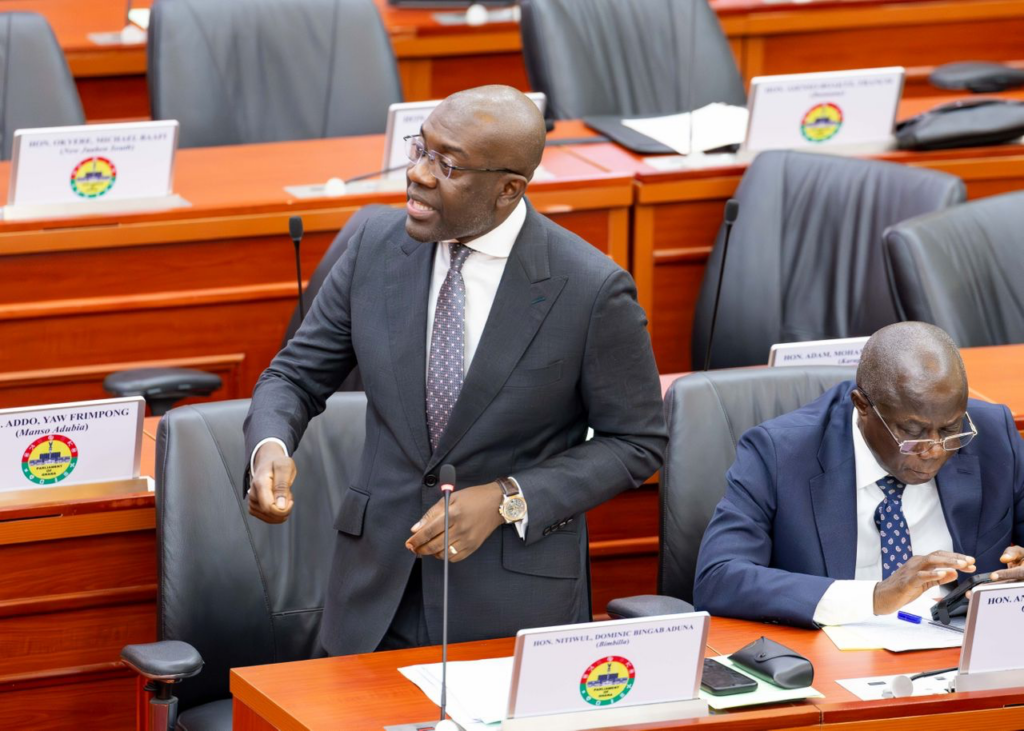
Ghana’s youth unemployment crisis is deepening despite headline economic growth, Ranking Member on Parliament’s Economy and Development Committee Kojo Oppong Nkrumah warned on Thursday, as he presented a detailed five-point strategy to arrest the decline.
Speaking on the floor of Parliament on June 11, the Ofoase-Ayirebi MP described youth unemployment as one of Ghana’s most pressing socio-economic challenges and called for urgent, measurable action to reverse a trend that threatens to undermine the country’s demographic dividend.
“Mr. Speaker, we do not need more slogans or promises that results are in the pipeline. We need a more effective architecture to solve the worsening youth unemployment problem in our country,” he told the House. “Data from the Statistical Service is clear. The youth unemployment problem is getting worse. The time to act is now.”
The numbers paint a troubling picture. According to the Ghana Statistical Service, unemployment among persons aged 15 to 24 rose from 32 per cent in December 2024 to 32.5 per cent by the third quarter of 2025. Nearly two million young Ghanaians are currently classified as NEET — neither in education, employment, nor training — while almost half of young people in the Greater Accra Region remain without work.
The data is particularly striking when set against recent figures showing Ghana’s economy expanded by 6.4 per cent in the first quarter of 2026, driven largely by mining and ICT. The disconnect between aggregate growth and youth job creation has become a recurring theme in Ghana’s economic discourse, with critics arguing that the benefits of expansion are not reaching the country’s young population.
Oppong Nkrumah’s five-point plan attempts to bridge that gap. First, he called for all government job creation programmes to be tied to published delivery scorecards measuring key indicators such as the number of beneficiaries, cost per job created, time-to-placement and employment retention rates.
Second, the MP advocated a clear distinction between skills training programmes and actual job creation initiatives, arguing that training alone cannot solve unemployment if graduates have no employment pathways. Third, he proposed greater private-sector participation in job creation, with government focusing on reducing investment risks, co-investing in strategic sectors and creating an enabling regulatory environment for businesses to expand employment.
His fourth recommendation centred on making apprenticeship programmes the backbone of Ghana’s youth employment strategy, supported by national certification, employer incentives and structured pathways into jobs and entrepreneurship. Finally, he called for the establishment of a credible Labour Market Information System to provide timely data on vacancies, skills gaps and labour demand to guide evidence-based policymaking.
While acknowledging that successive governments have struggled with the challenge, Oppong Nkrumah insisted the country must move beyond rhetoric. “Ghanaian youth do not want slogans. They want feasible programmes that create dignified, productive and well-paid jobs,” he stated.
The proposals come at a critical juncture. With Ghana’s population growing rapidly and the economy generating insufficient jobs to absorb new entrants to the labour market, the youth employment challenge is set to define the country’s socio-economic trajectory for years to come. Whether Parliament and the executive will heed the call for structured, measurable interventions remains to be seen.
Image Source: MYJOYONLINE