Ghana’s Farmer Service Centres: A Promise of Mechanisation That Remains Unfulfilled
For the farmers of Ghana’s Upper West Region, the promise of Farmer Service Centres was never just another government programme. It was meant to be a lifeline – a way to end years of back-breaking work and bring mechanisation to communities that have watched the modern agricultural revolution pass them by entirely. As of mid-2026, that promise remains largely unmet.
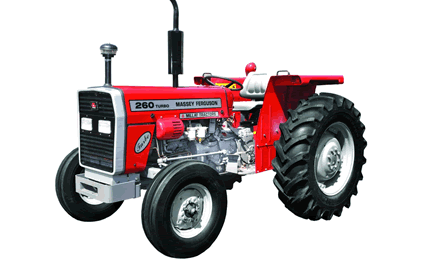
The concept was straightforward: establish regional centres where farmers could access ploughers, combine harvesters, planters, and sprayers at affordable rates, reducing production costs, boosting yields, and improving livelihoods. In communities such as Jonga in the Wa Municipality, Daffiama in the Daffiama-Bussie-Issa District, and Serekpere in the Nadowli-Kaleo District, anticipation was high.
The reality has been starkly different. Across the Upper West Region, the scarcity of mechanisation services, particularly ploughing and harvesting equipment, remains one of the most binding constraints on agricultural productivity. Every cropping season, tractors are transported from southern Ghana to the north, but demand far outstrips supply.
At Jonga, farmers describe a frustrating cycle in which securing a tractor can take days or even weeks, frequently causing them to miss optimal planting windows. Daubile Alhassan Ibrahim, the Assembly Member for the Jonga Electoral Area, told the Ghana News Agency that the situation has made farming increasingly untenable.
“Sometimes, when you even have the money, it is difficult for you to get a tractor to go to your farm. You will be holding the money while looking for a tractor,” he said. The delays ripple through the entire growing season, reducing output and income for households that depend entirely on agriculture.
In Daffiama, the picture is equally bleak. Edward Ziema Kpieonoma, a Unit Committee Member, said farmers sometimes rise before dawn in pursuit of tractor services, only to return home empty-handed. “A farmer can sometimes wake up as early as 4:00 a.m. in search of a tractor to plough his or her farm but will still not get it. The queues are usually very long because the available tractors are not many,” he explained.
Women bear the heaviest burden. In a region where patriarchal norms still shape access to resources, female farmers report being pushed to the back of every queue. Madam Kende Aziz, a farmer at Jonga, said many women have the capacity and willingness to cultivate larger plots but are constrained by the cost and scarcity of services. “The high cost of ploughing, and the difficulty you go through to get a tractor to farm for you becomes difficult just because you are a woman,” she said.
Madam Salima Osman, another Jonga farmer, described how women routinely lose days waiting for tractors that men are given priority to use. The consequences are tangible: some women have been forced to reduce the size of their farms despite rising food demand, while others have abandoned farming altogether.
The mechanisation gap extends beyond ploughing. Combine harvesters are equally scarce, leaving crops vulnerable to post-harvest losses from animals, bushfires, and adverse weather. For households living from harvest to harvest, such losses can be devastating.
There is a deeper worry, too. Madam Agness Bara, a Daffiama farmer, observed that many young men are leaving agriculture for illegal small-scale mining, known locally as galamsey, partly because the challenges of farming – including mechanisation – have made the sector unattractive. The exodus threatens to drain already depleted rural labour pools.
The situation in the Upper West Region mirrors broader challenges across Ghana’s agricultural sector. Fairtrade Africa recently launched a farmer-led cocoa rehabilitation programme to address similar structural gaps in the south, underscoring that mechanisation and productivity deficits are not confined to any single region or crop.
For the farmers of Jonga, Daffiama, and Serekpere, the question is no longer whether the government made the right promise – it did. The question is whether that promise will be honoured before another generation of farmers is lost to frustration, poverty, and the lure of the mines.
Image Source: GHANA BUSINESS NEWS