You Can't Turn Against Those Who Liberated You — Mbeki Pushes Back on South Africa's Anti-Immigrant Sentiment
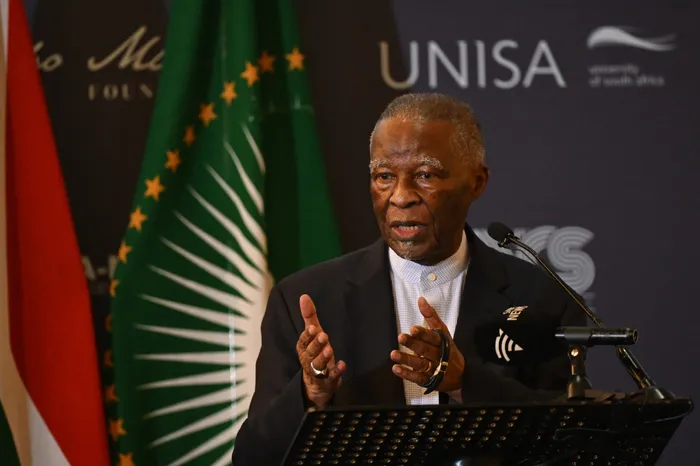
Former South African President Thabo Mbeki has mounted a vigorous defence of African migrants in South Africa, warning that growing hostility toward foreign nationals is built on a false narrative that lets the real architects of the country’s economic decline escape scrutiny.
Speaking at the Thabo Mbeki Foundation and AUDA-NEPAD Business Breakfast, the former president acknowledged that South Africa faces genuine crises of unemployment and crime, but insisted that undocumented African immigrants are not responsible for either.
“We’ve got many problems here. The problem legitimately led to high levels of unemployment; that’s correct. High levels of crime, that’s correct. But the finger is being pointed at the wrong people,” Mbeki said.
His intervention comes at a moment of acute tension. Nearly 300 Ghanaians returned home this week following anti-immigrant protests that raised fears about their safety, a repatriation exercise that underscored the real-world consequences of the xenophobic rhetoric Mbeki is challenging.
“The levels of high unemployment in this country are not due. They are not due to undocumented Africans. They are not,” he said firmly, arguing that South Africa’s economic decline predates current migration debates and cannot credibly be attributed to foreign nationals.
The former president offered a pointed diagnosis of what he sees as a dangerous misdirection of public anger. “The people who caused that decline, they are laughing in a corner there, because we’re pointing not at them, but we’re pointing somewhere else. It’s wrong,” he said.
Mbeki also framed the issue in historical terms, reminding his audience that many African countries played a critical role in supporting South Africa’s liberation struggle during apartheid. The suggestion was clear: turning against fellow Africans now represents both a moral failure and a historical betrayal.
“It’s a particular frame of mind with regard to South Africa, which they helped to liberate,” he said, predicting that migration from across the continent would continue regardless of efforts to prevent it.
The former president’s remarks carry particular weight given his Pan-African credentials and his long-standing engagement with continental integration through the African Union. His message was ultimately one of redirection: South Africans must confront the structural causes of their economic hardship rather than scapegoating vulnerable outsiders.
“Here is the truth: you are busy chasing after ghosts, and you are leaving this devil,” Mbeki concluded, urging citizens to reject divisive narratives and address the country’s real challenges head-on.
Image Source: MYJOYONLINE