Water Resources Commission Partners With University of Johannesburg to Advance Ghana’s Water Management

Ghana’s Water Resources Commission has entered into a formal partnership with the University of Johannesburg, signing a three-year Memorandum of Understanding that aims to reshape how the country tackles its most pressing water challenges — from pollution and scarcity to the long-term sustainability of its water systems.
The agreement, signed during an official delegation visit to Johannesburg, establishes a framework for collaboration spanning water governance, quality assessment, environmental engineering and public health. It represents one of the most comprehensive institutional partnerships Ghana has forged with a South African university on water-related issues, and it comes at a time when the country’s water infrastructure faces mounting pressure from illegal mining, industrial pollution and rapid urbanisation.
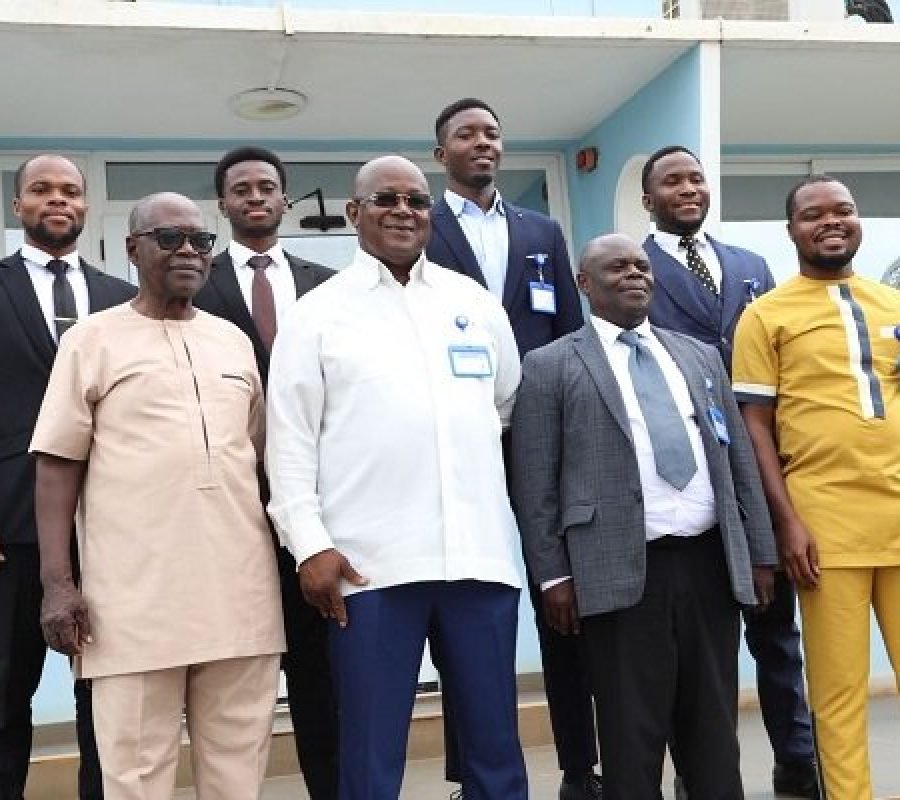
Daasebre Kwebu Ewusi VII, Board Chairman of the Water Resources Commission, signed on behalf of Ghana, while Professor Letlhokwa Mpedi, Vice Chancellor and Principal of the University of Johannesburg, signed for the South African institution at the university’s Auckland Park Kingsway Campus.
The partnership extends beyond formal agreements. The Ghanaian delegation — which included Dr Mawuli Lumor, Acting Executive Secretary of the Commission, and Ms Florence Mawusi Dagbanu, Senior Human Resource Officer — engaged directly with three faculties at the university: Science, Engineering and the Built Environment, and Health Sciences.
At the Faculty of Science, discussions centred on nanotechnology applications in water treatment and pollutant removal. The delegation toured the Central Chemistry Laboratory, the Membrane Technology Laboratory and the SARChI Chair in Nanotechnology for Water Laboratory — facilities that could serve as models for Ghana’s own research infrastructure. Key topics included advanced water quality monitoring techniques, joint research projects and postgraduate supervision arrangements.
The engagement with the Faculty of Engineering and the Built Environment focused on more immediate, practical concerns: engineering solutions to pollution caused by illegal mining and industrial activities, and the development of affordable community-level water treatment systems. These are not abstract academic questions in Ghana, where communities along rivers affected by galamsey operations have watched their water sources turn brown and toxic over the past decade. The expansion of illegal gold mining around Lake Bosomtwe, documented by NASA satellite imagery, illustrates the scale of the environmental crisis the country faces.
At the Faculty of Health Sciences, the conversation turned to the link between water quality and public health — waterborne diseases, environmental health risks and community water safety. The session emphasised the need for multidisciplinary approaches that integrate science, engineering and health sciences into water resources management, a recognition that water policy cannot be siloed from broader public health concerns.
The MoU provides for staff and student exchanges, postgraduate training and short professional courses. Both institutions indicated the partnership would prioritise implementation-oriented programmes capable of producing measurable outcomes rather than purely theoretical research.
A joint implementation committee is expected to be constituted to operationalise the agreement, while priority pilot projects and opportunities for joint funding applications will also be pursued. The emphasis on tangible results reflects a broader shift in how African institutions approach international academic partnerships — moving away from symbolic agreements towards programmes that deliver visible improvements on the ground.
The timing is significant. Ghana’s water sector has faced a series of challenges in recent months. Earlier this year, Ghana Water Limited opened all spill gates at the Weija Dam after water levels exceeded the facility’s maximum operating threshold, a reminder of the infrastructure vulnerabilities that persist across the country’s water systems.
For the Water Resources Commission, the partnership with the University of Johannesburg offers access to research capabilities and laboratory infrastructure that Ghana currently lacks. For the University of Johannesburg, it provides a real-world testing ground for water technologies and governance models in one of West Africa’s most dynamic economies. Whether the agreement translates into meaningful change will depend on the commitment both institutions bring to the implementation phase — and on whether the political will exists to act on the research findings that emerge.
Image Source: GHANA BUSINESS NEWS