USTED, KNUST Host SFA Foundation team for NEPS Youth Mental Health Project review
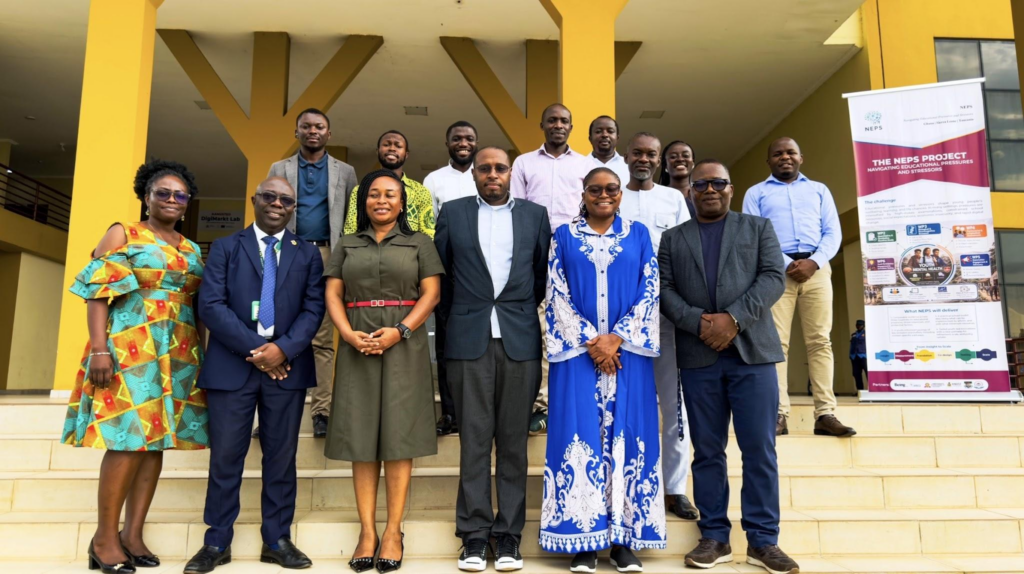
Ghana’s higher education institutions are intensifying efforts to address the growing mental health crisis among students, as evidenced by a recent high-level review of the Navigating Educational Pressures and Stressors (NEPS) Project. Hosted by the University of Skills Training and Entrepreneurial Development (USTED) in collaboration with the Kwame Nkrumah University of Science and Technology (KNUST), the meeting brought together representatives from the Science for Africa Foundation (SFA Foundation) to assess progress on this critical four-year initiative aimed at understanding and mitigating the psychological toll of academic life on young people.
The NEPS Project, spanning Ghana, Sierra Leone, and Tanzania, investigates how academic pressures, socioeconomic hardships, stigma, and other psychosocial stressors impact the mental well-being of adolescents and young adults. By generating evidence-based insights, the initiative seeks to inform practical interventions at the school, community, and policy levels—ultimately fostering environments where students can thrive emotionally and academically.
“The Navigating Educational Pressures and Stressors Project seeks to deepen our understanding of the realities facing students and learners within our educational systems,” said Prof. Isaac Boateng, Pro Vice-Chancellor of USTED, speaking on behalf of the Vice-Chancellor. “More importantly, it aims to generate evidence-based solutions that can inform policies, institutional practices, and support mechanisms that promote students’ well-being and academic success.”
He emphasized that the project’s significance extends beyond individual campuses, aligning with Ghana’s National Development Agenda and the African Union’s Agenda 2063, which envisions a prosperous continent driven by its youth. “The significance of this work extends far beyond individual institutions. It speaks directly to Ghana’s National Development Agenda and Africa’s broader aspiration under Agenda 2063, which envisions a prosperous Africa driven by its people, particularly its youth,” Prof. Boateng added.
Today’s students confront a complex web of stressors: rigorous academic demands, social expectations, financial constraints, rapid technological shifts, family obligations, and uncertainty about future employment. Left unaddressed, these pressures can erode mental health, undermine learning outcomes, and jeopardize long-term personal and national development. The NEPS Project recognizes that mental well-being is not a luxury but a foundational component of educational quality and societal progress.
The SFA Foundation delegation, led by Programme Manager Byron Bitanihirwe and including Dr. Leah Aoko, Benard Kituku, Judy Mwaniki, Brian Awiti, and Kelvin Kasoli, reviewed the project’s governance, implementation progress, institutional roles, partner engagement, financial management, reporting mechanisms, emerging challenges, and future steps. Their visit underscores the international commitment to addressing youth mental health as a critical component of sustainable development.
Local research leaders—Prof. Obed Brew, Prof. Daniel Ansong, Prof. Linda Ahenkorah Fondjo, Robert Anohene, Akosua Gyamfua, Dr. Linda Banning, Dr. Kotor Asare, and Dr. Jeff Boakye—are driving the Ghanaian component, ensuring the study reflects the nation’s unique educational and socio-cultural landscape. Their work aims to produce context-specific recommendations that can be integrated into school curricula, counseling services, and national youth policies.
This initiative gains urgency amid troubling trends: Ghana has recorded at least 13 university student deaths since 2024, with campus safety fears mounting. In response, institutions like USTED are taking proactive steps, such as launching maiden career fairs to bridge the gap between academia and industry—efforts that directly address one of the key stressors identified by the NEPS Project: anxiety about future employment.
As Ghana strives to harness its demographic dividend, investments in student mental health are not merely compassionate but strategic. By fostering resilience, reducing stigma, and providing accessible support, the nation can unlock the full potential of its young people—turning educational pressures into catalysts for growth rather than barriers to success.
Image Source: MYJOYONLINE