Thousands Will Follow the Black Stars as Diaspora Power Fuels World Cup Ambitions
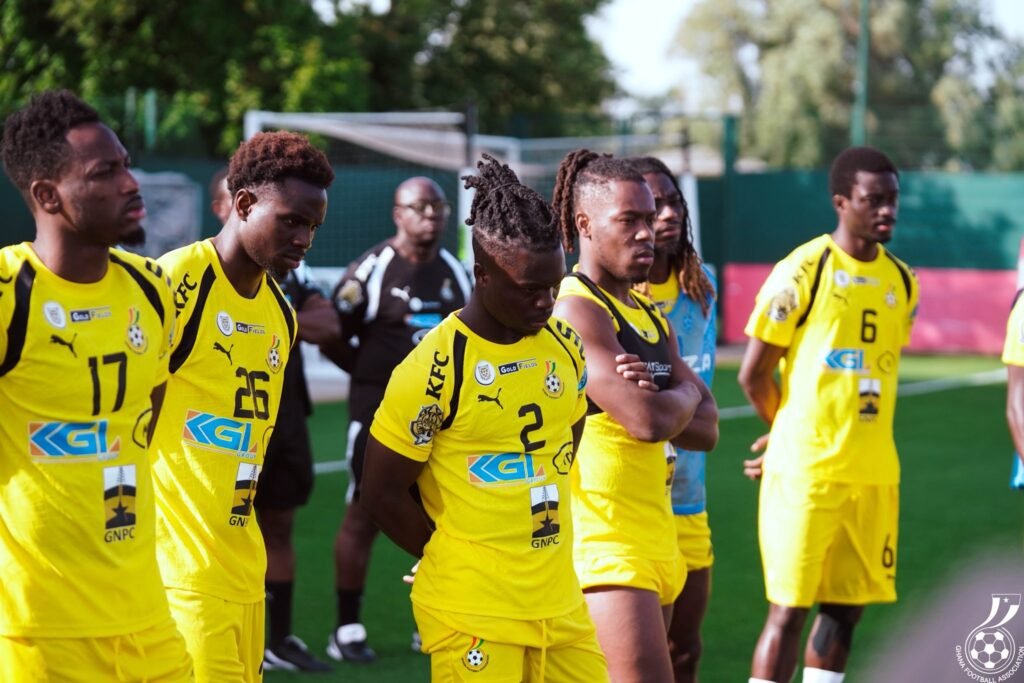
When the Black Stars step onto the pitch at the 2026 FIFA World Cup in North America, they will not be walking out to silence. Sports and Recreation Minister Kofi Adams is confident that a wave of Ghanaian supporters stretching from Toronto to Los Angeles will transform each match into a home-away-from-home fixture.
Speaking on JoyNews PM Express on Wednesday, the Buem MP painted a vivid picture of a diaspora mobilising en masse for the tournament, which will be jointly hosted across the United States, Canada and Mexico. His confidence is not unfounded. Early signs of enthusiasm have already surfaced wherever the team has appeared on North American soil.
“If you observe, even when the chief arrived in the United States at that late point, the number of Ghanaians who were at the airport and at the hotel to welcome them should tell you one thing, that Ghanaians in America are ready for the team,” Mr Adams said.
The minister’s remarks carry weight beyond mere optimism. The tournament draw has placed Ghana in cities with substantial Ghanaian populations, a coincidence that could prove strategically significant. Toronto alone is home to one of the largest West African communities in North America, and the minister was quick to highlight this advantage.
“If you go to Canada, you will all know that Toronto has a huge black population, Ghanaians are there. We didn’t choose it,” he noted, suggesting that the gravitational pull of diaspora communities could create an atmosphere akin to playing at Accra Sports Stadium.
The enthusiasm, Adams stressed, is not limited to those already living abroad. Ghanaians from Europe are reportedly making plans to travel across the Atlantic, while excitement continues to build at home. The government’s recent decision to secure free-to-air broadcast rights through GBC ensures that millions who cannot make the trip will still be able to follow every kick from their living rooms.
“In terms of preparation of funds, whether you are talking about Ghanaians in diaspora or Africans in diaspora generally, they are yearning to be behind Ghana, and so I must say that many things are falling in place for us,” the minister said.
What makes this World Cup cycle different from previous campaigns is the convergence of logistical advantages and emotional momentum. The 2006 tournament in Germany drew thousands of Ghanaian fans, but North America’s larger and more established African diaspora could dwarf that turnout. If Adams’ projections hold, the Black Stars may enjoy a support base that few other African nations can match.
The challenge, of course, remains on the pitch. Ghana’s current squad does not carry the star power of the Asamoah Gyan and Michael Essien era, and expectations among pundits are measured at best. But as any football observer knows, a roaring crowd can elevate a team beyond the sum of its parts.
For a nation that has twice reached the World Cup quarter-finals—and whose 2010 campaign remains one of African football’s most emotional chapters—the prospect of thousands of compatriots singing in unison across North American stadiums is not a small thing. It could, as the minister suggests, be the ingredient that takes the team further than anyone expects.
Image Source: MYJOYONLINE