The Le Pen Verdict: A Defining Moment for French Politics
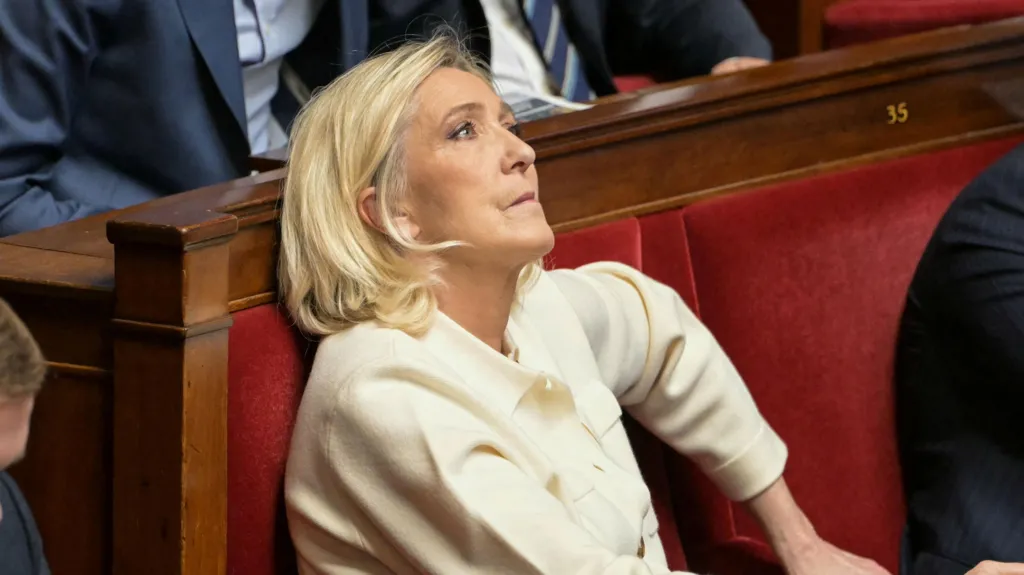
As France braces for Tuesday’s appellate court decision, the nation finds itself at a crossroads where legal proceedings and political destiny intertwine with unprecedented intensity. The verdict will determine not only Marine Le Pen’s personal freedom but also the immediate future of the National Rally’s presidential ambitions.
The stakes could scarcely be higher. Le Pen, the 57-year-old leader of the National Rally, currently leads opinion polls as the favored candidate for next year’s presidential election. Yet a confirmation of her March 2025 conviction for misusing European parliamentary funds would render her ineligible for public office for five years – a penalty that, crucially, takes effect immediately regardless of appeal.
This immediacy transforms what might otherwise be a routine legal appeal into a moment of profound political consequence. Should the court uphold the original sentence, Le Pen’s path to the Elysee Palace would be blocked, automatically elevating her 30-year-old lieutenant Jordan Bardella as the party’s standard-bearer.
The case itself stems from allegations that National Rally staffers in Paris were falsely registered as European parliamentary assistants in Brussels and Strasbourg, allowing the party to draw EU funds during a period of chronic financial strain. Prosecutors argue this constituted a systematic fraud; Le Pen maintains it was a legitimate, if unconventional, party structure.
What makes Tuesday’s decision particularly complex is the range of possible outcomes. While few expect complete acquittal, the court could opt for an intermediate penalty – perhaps reducing the ineligibility period or modifying the electronic monitoring requirement. Such a nuanced ruling would introduce fresh uncertainties, potentially triggering further appeals to France’s highest courts.
Le Pen’s legal team has framed the prosecution as politically motivated, characterizing the initial verdict as an attempt to derail her “fourth – and most promising” presidential bid. Yet even her most ardent supporters acknowledge the case raises legitimate questions about party financing practices that warrant scrutiny.
The human dimension adds another layer of intrigue. In recent television interviews, Le Pen has struck an unexpectedly philosophical tone, suggesting she might accept an unfavorable outcome with equanimity. “Whatever happens, I’ll still be alive. Whatever happens, I will continue the fight for my ideas,” she remarked, hinting at a potential willingness to pass the torch to Bardella.
Such sentiments fuel speculation about behind-the-scenes maneuvering within the National Rally hierarchy. Some analysts suggest Le Pen may already be contemplating a graceful step aside, recognizing that Bardella’s fresher profile could broaden the party’s appeal beyond its traditional working-class base toward more economically liberal voters.
Yet this interpretation overlooks the symbolic weight Le Pen carries as the movement’s enduring figurehead. For over a decade, she has detoxified the National Rally’s image, detoxifying its associations with extremism while maintaining its core nationalist message. Her potential absence from the ballot would represent not just a tactical shift but an ideological transition.
The party’s internal dynamics further complicate projections. Party insiders describe Le Pen and Bardella as “complementary” forces – she representing the movement’s traditional working-class heartland, he embodying its aspirational outreach to business communities and younger voters. Their combined strength, according to this view, could finally propel the National Rally past its historical electoral ceiling.
Conversely, critics warn that replacing Le Pen with Bardella would constitute a leap into the unknown. While the younger politician has demonstrated administrative competence and cultivated establishment connections, he lacks his mentor’s visceral connection to the electorate’s anxieties about globalization, immigration, and economic displacement.
As the court prepares to deliver its judgment, one certainty emerges amid the speculation: whatever the outcome, Tuesday’s decision will reshape France’s political landscape. A Le Pen candidacy offers continuity with the nationalist movement’s recent evolution; a Bardella-led ticket signifies potential transformation. Neither path guarantees electoral success, but each carries distinct implications for how France confronts the challenges of identity, sovereignty, and economic change in an increasingly fractured Europe.
The coming days will reveal whether French justice opts for legal consistency or political pragmatism – a choice that may ultimately determine not just the fate of two politicians, but the direction of an entire nation.
Image Source: MYJOYONLINE