Six Ghanaian Master's Students to Picket London High Commission Over Nearly Two Years of Unpaid Scholarship Fees
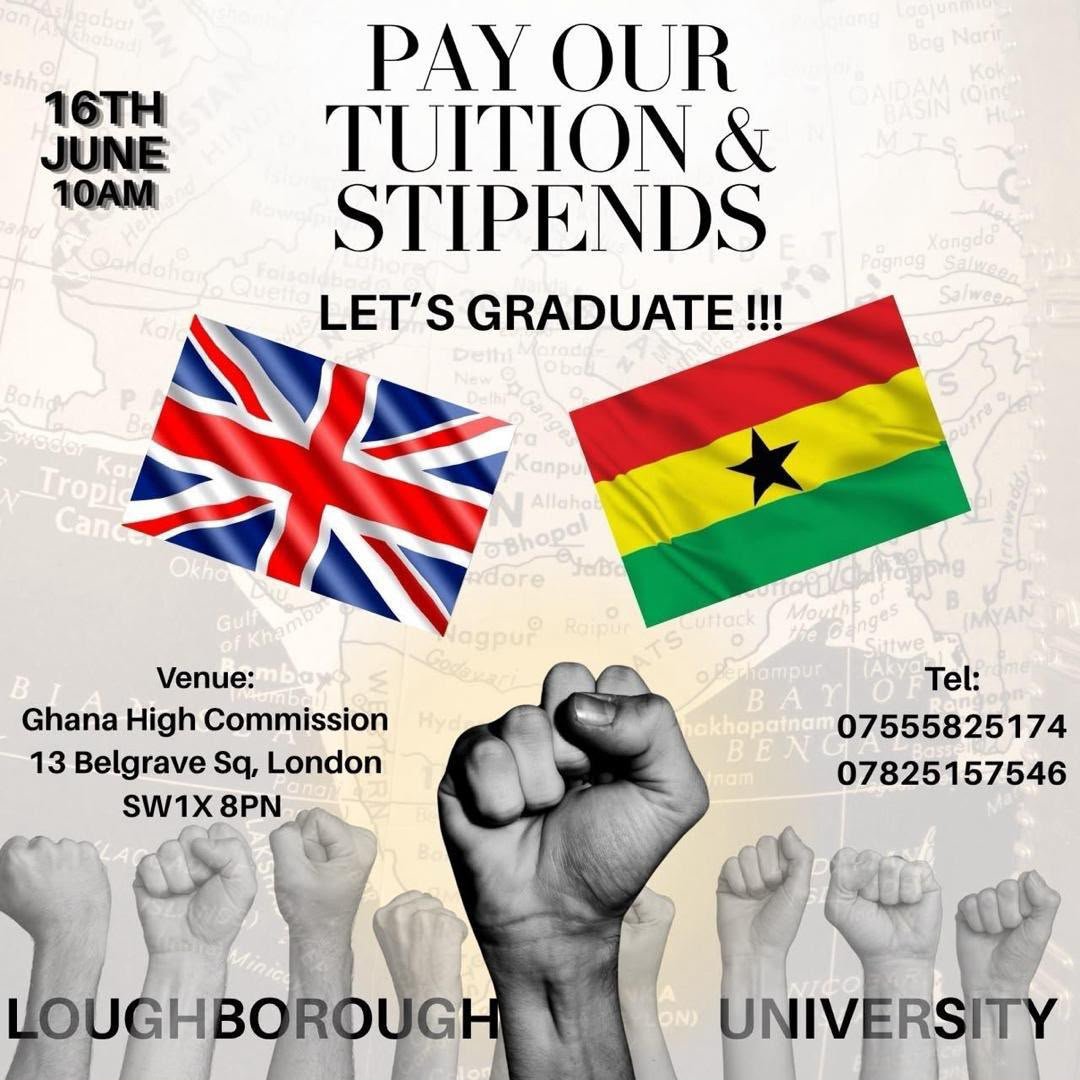
Six Ghanaian postgraduate students at Loughborough University in the United Kingdom are set to stage a protest at the Ghana High Commission in London on Tuesday, June 16, over what they describe as nearly two years of unpaid tuition fees and living stipends from the Ghanaian government.
The students — Noah Krah, Emmanuel Boakye, George Osei Buabeng, Abena Fosuaa Gyasi, Irene Pomaa Kumi, and Dwomoh Evelyn — say they have been left in financial limbo since arriving in the UK in September 2024, with no disbursement of the government-sponsored funding they were promised.
The total amount owed to the six students stands at GHC3,420,360.00, a sum that covers tuition fees and monthly living stipends that the government committed to paying as part of its scholarship programme for Ghanaian students pursuing postgraduate education abroad.
“The Government of Ghana is committed to paying full tuition fees and monthly living stipends. However, since we arrived in the United Kingdom in September 2024, the Government has not paid any tuition fees or stipends,” the students said in a statement ahead of the protest.
The students say they have pursued every available channel to resolve the matter, including submitting multiple petitions, attending meetings with officials, and receiving repeated assurances that payment would be forthcoming. None of those promises, they say, have materialised.
The protest, which they describe as a last resort, comes at a particularly fraught time. The students face the prospect of being unable to graduate at Loughborough University’s ceremony on July 7, 2026 — just three weeks away — unless the outstanding fees are settled. For students who have spent nearly two years abroad pursuing advanced degrees, the threat of being unable to complete their studies owing to bureaucratic delays represents not only a personal crisis but a significant waste of national investment.
The situation raises uncomfortable questions about the government’s capacity to honour its scholarship commitments and the broader implications for Ghana’s human capital development strategy. Sending students abroad for postgraduate training is a deliberate policy choice, designed to build a cadre of highly skilled professionals who can contribute to national development. When the funding mechanism breaks down, the consequences are felt not only by the individual students but by the institutions and communities that stand to benefit from their training.
The picket at the Ghana High Commission is expected to draw attention from the Ghanaian diaspora in London and could put pressure on government officials to expedite the payment process. However, the students have expressed frustration that their concerns have not been treated with the urgency they deserve.
Their experience is not unique. Over the years, Ghanaian students on government scholarships abroad have frequently reported delays in the disbursement of funds, forcing many to take on debt, seek emergency employment, or rely on the goodwill of friends and family to survive. Such experiences undermine the credibility of scholarship programmes and can deter future applicants from pursuing opportunities that require government sponsorship.
The broader pattern of financial neglect toward Ghanaian students abroad stands in stark contrast to the government’s stated commitment to education as a vehicle for national transformation. In a country where education is widely regarded as the most reliable path out of poverty, the failure to support students who have been sent overseas on government programmes sends a troubling signal about institutional reliability.
As the six students prepare to march to the High Commission, their plight serves as a stark reminder that policy commitments, however well-intentioned, mean little without the institutional machinery to deliver on them.
Image Source: GHANAMMA