Sentuo Oil Refinery expansion to create 1,500 jobs, boost energy security – John Jinapor
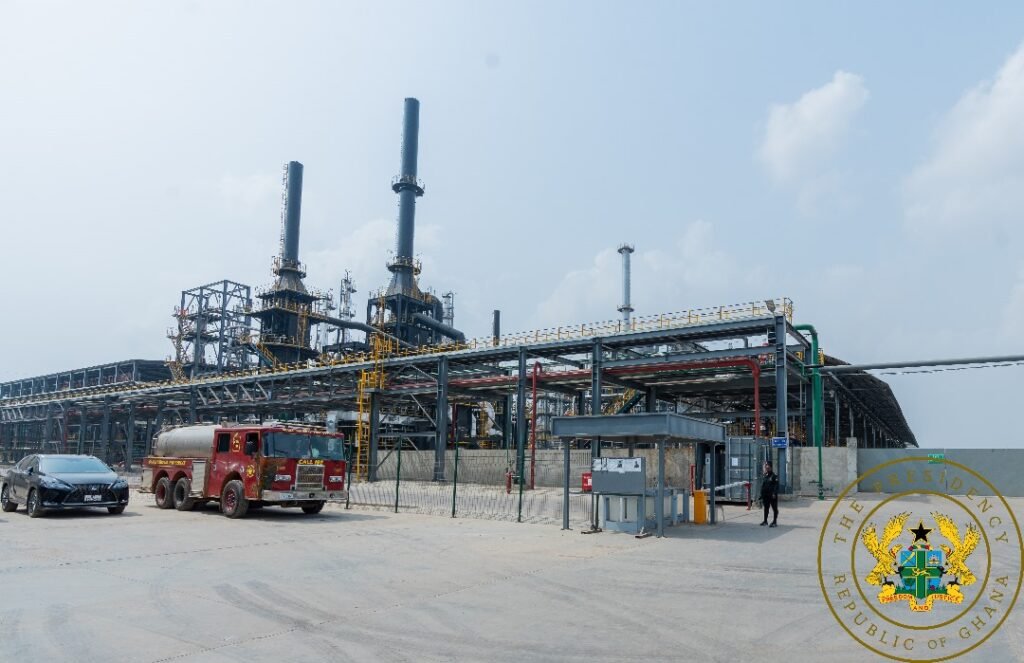
The Minister for Energy and Green Transition, John Jinapor, has announced that the expansion of the Sentuo Oil Refinery will significantly boost Ghana’s energy security while creating hundreds of additional jobs for Ghanaians.
Speaking at the commissioning and sod-cutting ceremony for Phase II of the Sentuo Oil Refinery on Thursday, June 25, 2026, Mr. Jinapor said the project represents a major milestone in the country’s efforts to add value to its petroleum resources, create employment opportunities and strengthen economic resilience.
“More importantly, we are creating jobs. From my discussion with the chairman, the employment level will move from about 700 or 800 to 1,500 upon completion of this refinery,” he said.
Mr. Jinapor noted that beyond job creation, the project will help anchor Ghana’s economy by reducing dependence on imported refined petroleum products and insulating the country from external market shocks.
“We are conquering energy security, we are adding value to our own resources, and more importantly, we are creating jobs. We are also anchoring our economy, protecting ourselves from global shocks, and stabilising our currency,” he stated.
The Energy Minister further indicated that increased domestic refining capacity is expected to positively impact fuel prices and enhance the country’s ability to meet local demand.
He commended the management, board and staff of the Sentuo Oil Refinery for their commitment to the project and described it as a testament to the growing economic cooperation between Ghana and China.
Mr. Jinapor also praised President John Dramani Mahama for providing the leadership needed to drive the country’s industrial and energy transformation agenda.
“This shows that such cooperation can lead to economic development and mutual benefits for China-Ghana relations,” he added.
The Sentuo Oil Refinery, located in the Tema Industrial Area, is a joint venture between the Ghanaian government and Chinese investors. The existing facility, which commenced operations in 2017, has a refining capacity of 40,000 barrels per day. The ongoing Phase II expansion aims to increase this capacity to 100,000 barrels per day, more than doubling the current output.
This expansion is part of Ghana’s broader strategy to enhance its downstream petroleum sector and reduce the country’s reliance on imported refined products. Currently, Ghana imports a significant portion of its petroleum products despite being an oil-producing nation, a situation that has strained foreign exchange reserves and made the economy vulnerable to global price fluctuations.
By increasing local refining capacity, the Sentuo project aims to retain more value within the country, create skilled employment opportunities, and develop domestic expertise in petroleum refining and petrochemical production.
The project also aligns with Ghana’s Ghana Beyond Aid agenda, which seeks to reduce dependence on foreign aid by leveraging the country’s natural resources for sustainable economic development. Officials estimate that the expanded refinery could save the country hundreds of millions of dollars annually in import bills once operating at full capacity.
Environmental considerations have been incorporated into the expansion plans, with the company committing to implement advanced emission control systems and wastewater treatment facilities to minimize the project’s ecological footprint.
Local communities near the Tema Industrial Area have been engaged throughout the project planning process, with commitments to provide vocational training opportunities and support for small businesses that may benefit from the refinery’s operations.
The Sentuo Oil Refinery expansion is expected to be completed by the end of 2027, creating approximately 1,500 direct and indirect jobs during both the construction and operational phases.
Beyond the immediate employment opportunities, the project is expected to stimulate growth in ancillary industries such as logistics, maintenance, and chemical manufacturing. The increased availability of locally refined products could also attract downstream industries that rely on petroleum feedstocks, potentially creating a petrochemical hub in the Tema region.
Energy analysts project that the expanded refinery will contribute significantly to Ghana’s goal of achieving energy self-sufficiency, particularly for refined products such as gasoline, diesel, and jet fuel. This would enhance the country’s resilience to external shocks and improve its trade balance.
The project has also been framed as part of Ghana’s broader industrialization strategy, which aims to move up the value chain in natural resource extraction. By refining crude oil domestically rather than exporting it raw, Ghana can capture a larger share of the value generated from its hydrocarbon resources.
As the project progresses, stakeholders emphasize the importance of maintaining transparency and adhering to environmental best practices to ensure that the benefits of the expansion are shared equitably across Ghanaian society while minimizing any negative impacts.