Scapegoating Foreign Nationals Will Not Fix South Africa’s Deep-Seated Crisis

As Africa celebrates its unity and shared promise, South Africa finds itself at a crossroads — and the path it chooses will reverberate across the continent. The country is exhausted. Exhausted by unemployment, by drugs, by violent crime, by crumbling infrastructure, and by the sight of children sleeping on cold pavements. That exhaustion is real, and it demands answers. But the reflexive tendency to blame foreign nationals for these systemic failures is not only intellectually dishonest — it is dangerous.
The argument is familiar by now. Foreigners, so the narrative goes, are stealing jobs, flooding the drug trade, and burdening public services. Politicians and community leaders point the finger at immigrants — many of them from elsewhere on the continent — as the root cause of South Africa’s social and economic malaise. It is a seductive story because it offers a simple villain for complex problems.
But it is a lie.
South Africa’s unemployment crisis predates any wave of migration. The country’s jobless rate has hovered stubbornly around 30 per cent for years, driven by structural economic failures that no amount of xenophobic scapegoating can address: an education system that fails to equip young people with marketable skills, a rigid labour market that prices out entry-level workers, and an economy still grappling with the legacy of apartheid-era inequality.
The drug trade, similarly, is not an import problem. South Africa’s narcotics economy is deeply embedded in domestic networks, fuelled by local demand and facilitated by domestic corruption. Blaming foreign nationals for its existence is a convenient deflection from the uncomfortable truth that the state’s own institutions have failed to contain it.
And the crumbling infrastructure? That is the product of decades of underinvestment, mismanagement, and the hollowing out of municipal capacity — problems that are entirely homegrown.
The scapegoating of foreign nationals is not merely inaccurate. It has real, violent consequences. Waves of xenophobic attacks have swept through South African townships with depressing regularity, leaving foreign-owned businesses looted, communities displaced, and lives lost. The violence has strained diplomatic relations across the continent and tarnished South Africa’s image as the rainbow nation that once inspired the world.
Ghana, for its part, has felt the impact acutely. The recent evacuation of Ghanaian citizens from South Africa amid xenophobic unrest underscored the gravity of the situation, with hundreds registering at the country’s High Commission to leave. A pointed open letter to President Mahama has called for holding South African firms accountable — a remarkable step that reflects the depth of continental frustration.
Yet the answer is not retaliation or isolation. It is accountability. South Africa must confront the actual drivers of its crisis: the failure to create inclusive economic growth, the erosion of public institutions, and the political opportunism that encourages communities to direct their anger at the most vulnerable rather than at the systems that have failed them.
The continent, too, has a role to play. Africa’s leaders must insist that the principles of pan-African solidarity are not mere rhetoric but binding commitments. The free movement of people — enshrined in the African Union’s Agenda 2063 — cannot coexist with a tolerance for xenophobic violence.
South Africa’s problems are real. Its people’s frustration is justified. But the answer lies not in turning on neighbours who share the same struggles, but in demanding better governance, better institutions, and a political class willing to tell the truth: that the enemy is not the foreigner next door, but the systemic failures that have been allowed to fester for far too long.
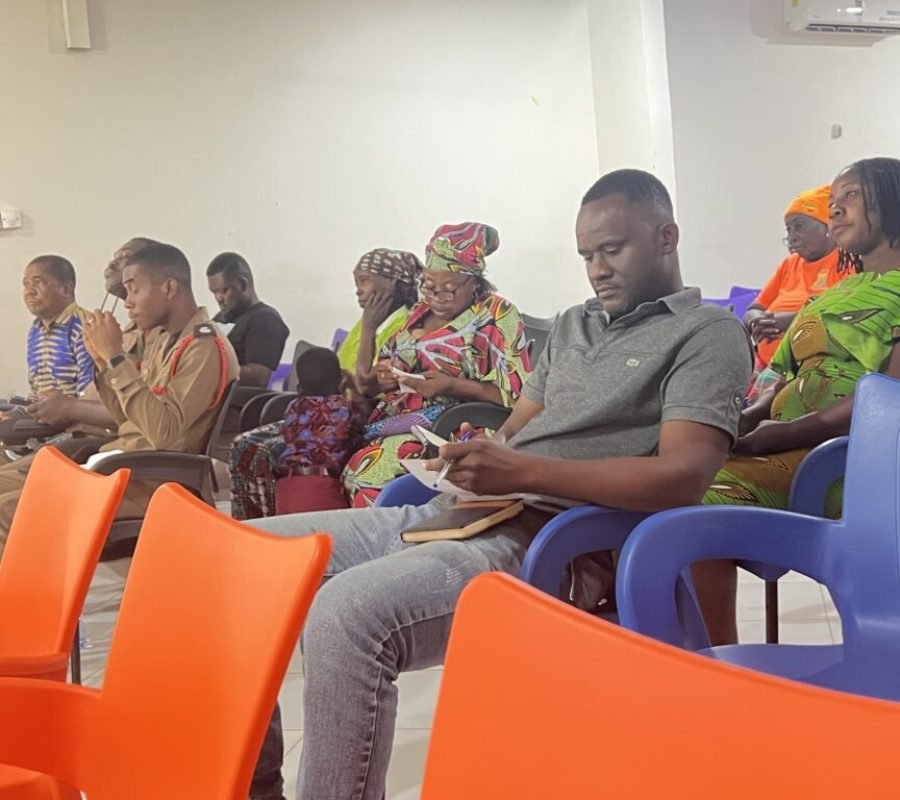
Image Source: GHANAMMA