Mahama's First Year in Office: Key Governance Lessons Learned
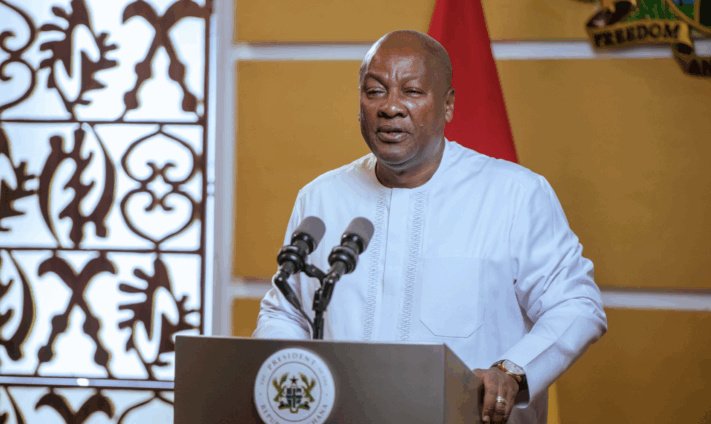
On 7th January 2026, Ghana marks exactly one year since President John Mahama assumed office amid high public expectations and widespread scepticism.
President Mahama’s political journey is unique and unparalleled in Ghana’s Fourth Republic. He has served in almost every major political position—Member of Parliament, Deputy Minister, Minister of State, Vice President, President by constitutional succession, President by election, and now a comeback President. This trajectory comes with immense political and governance experience.
His return to office is therefore historic, with profound implications for Ghana’s democracy. If successful, democracy is strengthened and vindicated; if unsuccessful, it raises difficult questions about democratic choice. Against this backdrop, and as President Mahama marks his first major milestone with relatively high approval ratings, it is timely to critically examine his governance style and draw lessons that can help shape a stronger governance model for future leaders.
This exercise is important for two reasons. First, it helps clarify what good governance means within Ghana’s own context rather than in abstract terms. Second, it equips citizens with practical insights to make informed judgments when choosing leaders in future elections.
In this article, I characterise President Mahama’s governance style based on personal observations, traditional and social media commentary, and public sentiments documented during his first year in office. I also reflect on the impact of his leadership on ordinary Ghanaians and the business community, and highlight key lessons for governance in Ghana.
Some signalling achievements have been made in the First Year. One of the most visible outcomes of President Mahama’s first year is the improvement in the economic lives of ordinary Ghanaians. Inflation has declined significantly, with direct effects on the prices of goods and services.
Equally important is the reduction in national indebtedness through deliberate policy interventions, including the establishment of the Gold Board to directly link Ghana’s gold resources to national development. Beyond these headline indicators, several other economic measures under his administration point to a renewed sense of economic direction.
On the social front, the enhancement of social interventions has brought considerable relief. The no-stress fee policy has eased the burden on first-year tertiary students and their families. Improvements in the Free Senior High School programme, which evident in the absence of public outcry over food quality, congestion, double tracking, and unpredictable academic calendars, signal better management.
The release of funds to District Assemblies and the National Health Insurance Scheme is making a tangible difference at the local level and in healthcare delivery. Although large-scale employment creation is still unfolding, policy initiatives such as the 24-Hour Economy and Nkk Nkitikiti have renewed optimism among the youth and job seekers.
President Mahama’s governance can best be described as open and listening, rather than we know it all. His administration has held numerous stakeholder consultations, including economic forums, education dialogues, and engagements with civil society on illegal mining.
Lastly, respect for the rule of law. Since assuming office, President Mahama has demonstrated consistent respect for the rule of law. Even in handling complex constitutional matters, including the removal of the Chief Justice, his actions have remained within legal and institutional boundaries.
President Mahama’s leadership demonstrates that Ghana can experience meaningful socio-economic improvement when the right governance is in place. Development, ultimately, begins and ends with leadership.
Good governance depends on the self-efficacy of the leader. Political skill alone is not enough; leaders must understand governance challenges broadly and provide clear direction.
Dr Redeemer Krah is a scholar in accounting and public sector governance and a strong advocate for democracy. He is a Senior Lecturer in Accounting at the University of Professional Studies, Accra and a consultant in public financial management and governance.
Image Source: MYJOYONLINE