People-centred healthcare begins with access, not policy – WHO to Ghana
The World Health Organization’s recent call for Ghana to prioritize community access over systemic reform in its healthcare journey represents a critical pivot in how we approach universal health coverage. Speaking at the 2026 Christian Health Association of Ghana Annual Conference in Koforidua, WHO Representative Dr. Fiona Braka challenged the nation to move beyond policy prescriptions and focus on the tangible realities of healthcare delivery at the community level.
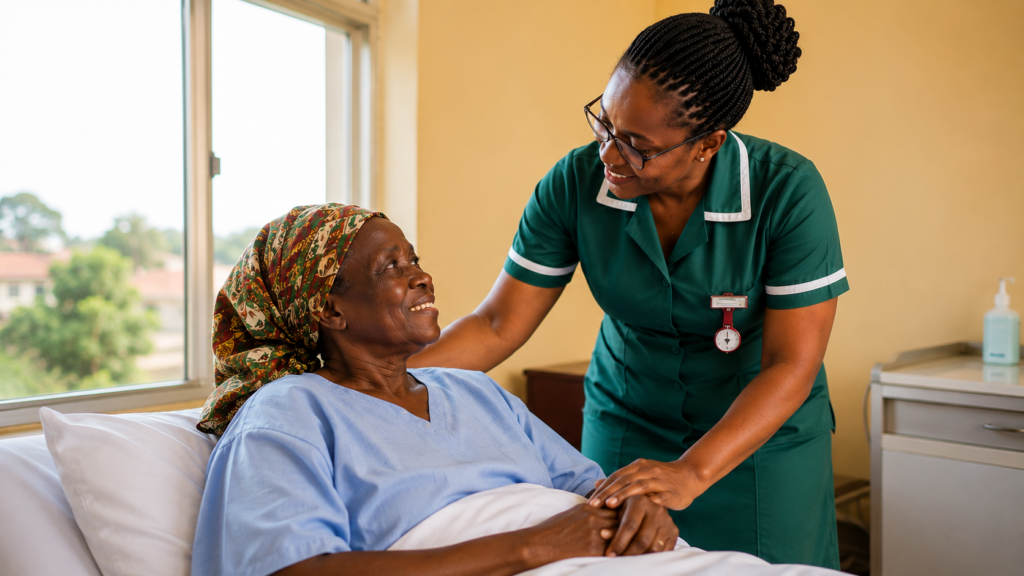
This perspective shift comes at a pivotal moment. Ghana’s Free Primary Healthcare programme presents an unprecedented opportunity to reset the relationship between citizens and their health system. Yet as Dr. Braka astutely observed, policy alone cannot bridge the gap between intention and impact. The true measure of progress will be whether a mother in a remote village can obtain timely treatment for her child’s malaria without undertaking a grueling journey, or whether an elderly man with hypertension can access his medication without depleting his savings.
The WHO’s emphasis on people-centered care cuts through the bureaucratic complexity that often obscures healthcare’s fundamental purpose. It is not merely about expanding facilities or increasing budgets, though these matter. It is about designing systems that bend to meet people where they live, work, and seek care. This means clinic hours that accommodate market schedules, transportation solutions for isolated communities, and culturally sensitive approaches that respect traditional healing practices while integrating them with evidence-based medicine.
Dr. Braka’s testimony highlighted CHAG’s indispensable role in this ecosystem. For decades, the organization has operated at the grassroots level, maintaining hospitals and clinics in areas where government presence remains sporadic. Their community-based services have not just filled gaps but have demonstrated models of care that are both effective and adaptable to local contexts. This embeddedness—earned through years of trust-building—represents precisely the kind of infrastructure that top-down reforms often overlook yet critically depend upon.
Indeed, when we speak about community-centred and people-centred healthcare in Ghana, it is impossible not to recognise the remarkable contribution of CHAG. For many decades, CHAG has been a pillar of Ghana’s health system. Through its network of hospitals, clinics, health training institutions and community-based services, CHAG has brought healthcare closer to millions of Ghanaians, particularly those living in rural, remote and underserved communities. This track record positions the association not merely as a service provider but as a vital partner in shaping how national reforms manifest on the ground.
As Ghana embarks on the implementation of Free Primary Healthcare, CHAG’s extensive presence, experience and trusted relationships with communities position it as a critical partner in ensuring that this reform translates into meaningful improvements in people’s lives. The organisation’s deep roots in communities often overlooked by centralized planning offer invaluable insights into the barriers that prevent access—whether geographical, financial, or cultural—and practical strategies for overcoming them.
Dr. Braka observed that despite progress in expanding healthcare, significant disparities remain across Ghana, with many families in rural communities still travelling long distances to access primary healthcare and treatment for non-communicable diseases. “Recent evidence reminds us that access to health services remains uneven across Ghana,” she noted. “In many districts, families still travel long distances to access basic primary healthcare services and treatment for non-communicable diseases.” This reality underscores that geographical accessibility remains a formidable barrier, particularly for populations concentrated in remote agricultural areas or scattered settlements where establishing fixed facilities proves economically challenging.
She explained that strong primary healthcare delivers multiple benefits beyond improving access to care. “Primary healthcare improves health outcomes, promotes equity, reduces avoidable hospital admissions, strengthens health system resilience and provides the most efficient pathway towards achieving Sustainable Development Goal Three on health and well-being,” Dr. Braka stated. These benefits create a virtuous cycle: healthier populations contribute more effectively to economic activity, reduced hospital burdens free up resources for preventive care, and resilient systems better withstand shocks from disease outbreaks or natural disasters—all critical considerations for a nation navigating the complex epidemiological transition facing many African countries, where infectious diseases coexist with rising rates of hypertension, diabetes, and cancer.
However, Dr. Braka was careful to stress that delivering effective primary healthcare cannot be the responsibility of government alone, nor can it fall solely to organizations like CHAG. Strong primary healthcare requires partnerships. It requires collaboration among public institutions, faith-based organisations, private healthcare providers, civil society, communities, academia and development partners. This holistic view recognizes that health outcomes are shaped by a complex web of factors: a child’s ability to recover from illness depends not only on access to medicine but also on clean water, adequate nutrition, and proper sanitation; an adult’s management of diabetes is influenced by food security, employment stability, and health literacy.
As the nation implements its Free Primary Healthcare policy, the challenge will be ensuring that reform translates into lived experience. This demands more than financial commitment; it requires reimagining supply chains to reach remote areas, strengthening referral systems between community clinics and district hospitals, and investing in the motivation and retention of community health workers through adequate training, supervision, and non-financial incentives. Most importantly, it necessitates mechanisms for continuous feedback from the communities being served, allowing the system to evolve based on real-world effectiveness rather than theoretical assumptions. Community health committees, scorecards, and participatory budgeting processes can help ensure that services remain responsive to local needs.
This approach becomes particularly crucial when considering seasonal health threats, as highlighted in recent warnings from the Ghana Health Service about escalating rainy-season dangers including cholera, typhoid, and snakebites, where timely access to primary care could significantly reduce morbidity and mortality. The link between robust primary care and effective outbreak response was further explored in our coverage of [Ghana Health Service warnings about rainy-season diseases](/cholera-typhoid-and-snakebites-ghana-health-service-warns-public-over-escalating-rainy-season-dangers).
The WHO’s message ultimately reframes the healthcare debate from what the system provides to what people actually receive. In doing so, it offers Ghana not just a pathway to universal coverage but an opportunity to build a health system that truly serves its people—wherever they may be, whatever their circumstances, and however they seek care. This people-centered approach, grounded in dignity and practicality, may well be the most promising route to achieving not just better health statistics, but a healthier, more equitable Ghana for all its citizens.
Image Source: MYJOYONLINE