Supreme Court Adjourns OSP Prosecutorial Powers Case Indefinitely
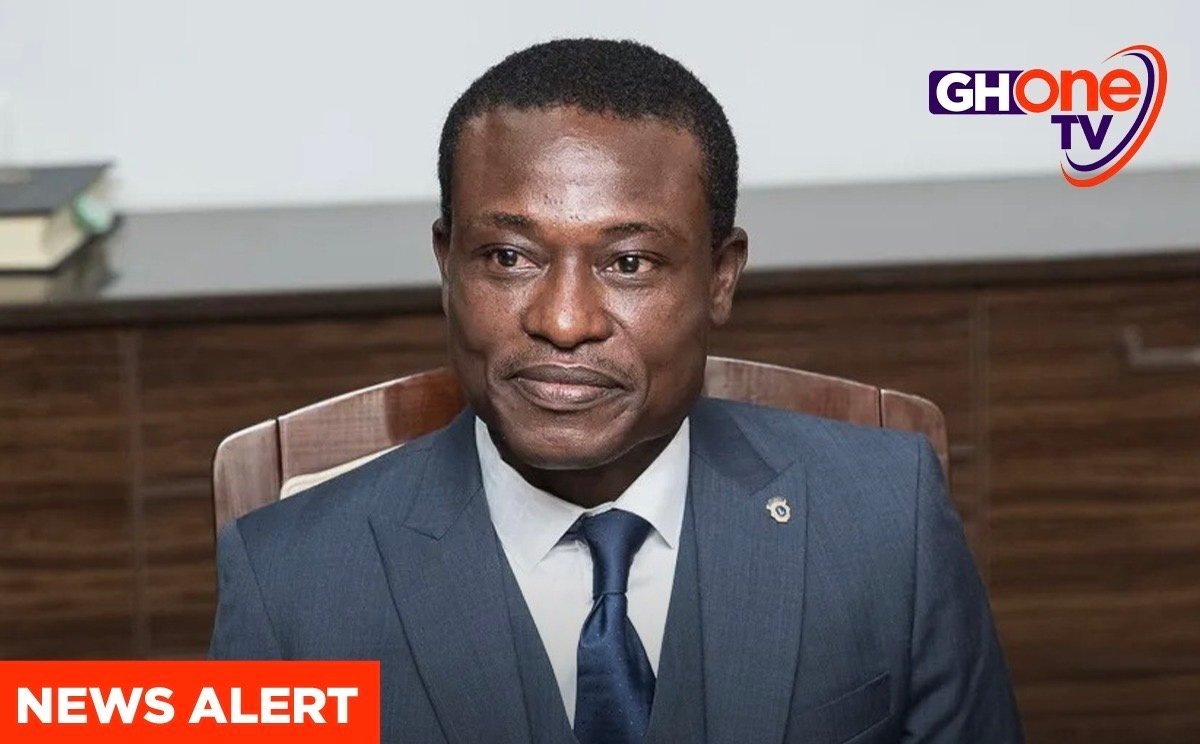
The Supreme Court has adjourned indefinitely the OSP prosecutorial powers case filed by the Office of the Special Prosecutor seeking to overturn a High Court ruling that stripped the anti-graft body of its authority to prosecute criminal offences in Ghana.
A five-member panel chaired by Justice Gabriel Pwamang on Tuesday, May 26, 2026, put the Certiorari application on hold after lawyers for the OSP acknowledged that court processes had not been served on interested parties in the matter.
Background of the OSP Prosecutorial Powers Dispute
The OSP prosecutorial powers challenge stems from a High Court ruling delivered on April 15, 2026, by Justice John Eugene Nyante Nyadu. The ruling followed an application for quo warranto filed by Emmanuel Achibod Hyde, an accused person in an ongoing criminal trial handled by the Office of the Special Prosecutor.
The High Court declared that the OSP could not exercise prosecutorial authority without explicit authorization from the Attorney General, as required under Article 88 of the 1992 Constitution. The court ordered the Attorney General to take over all pending cases the OSP was handling and further declared that any convictions previously secured by the OSP were void.
“Since by clause (3) of Article 88 of the Constitution the Attorney-General is responsible for the initiation and conduct of prosecution of all criminal offences in Ghana, I hereby order the Attorney-General to take over all prosecutions currently being handled by the respondent,” the High Court stated in its ruling.
Why the Supreme Court Adjourned the OSP Prosecutorial Powers Application
At the Supreme Court hearing on May 26, the OSP’s representative, Dr. Isidore Tufuor, Director of Prosecutions, conceded that the application documents had not reached all the necessary parties. Justice Pwamang noted the procedural shortcoming, stating, “Unfortunately, your application could not be served.”
Dr. Tufuor responded that his team would assist the court registry in completing the service of processes and accepted the indefinite adjournment. “In the circumstances, the court may adjourn indefinitely,” he told the panel.
Other members of the Supreme Court panel included Justices Samuel Asiedu, Richard Adjei-Frimpong, Janapare Bartels Kudzo, and Hafisata Amaleboba. No new date has been set for the hearing of the OSP prosecutorial powers application.
Impact of the OSP Prosecutorial Powers Ruling on Pending Cases
The High Court’s April ruling on OSP prosecutorial powers has had far-reaching consequences for several high-profile corruption cases in Ghana. Cases involving former National Petroleum Authority boss Mustapha Hamid, former Finance Minister Ken Ofori-Atta, and Charles Bissue have all been affected by the decision.
The OSP also filed a Stay of Execution at the High Court, which has been adjourned to June 2026. The stay application seeks to halt the enforcement of the original ruling while the Supreme Court considers the Certiorari application challenging the High Court’s interpretation of the OSP prosecutorial powers.
Legal analysts say the indefinite adjournment prolongs uncertainty over whether the Office of the Special Prosecutor can resume its independent prosecution of corruption cases or whether it must operate under the direction of the Attorney General’s office going forward.
What the OSP Prosecutorial Powers Case Means for Ghana’s Anti-Corruption Framework
The OSP prosecutorial powers dispute raises fundamental questions about the independence of Ghana’s anti-corruption institutions. The Office of the Special Prosecutor was established by an Act of Parliament to investigate and prosecute corruption-related offences independently of the Attorney General’s office.
However, the High Court’s interpretation of Article 88 of the Constitution suggests that all criminal prosecutions in Ghana must ultimately be conducted under the authority of the Attorney General. If the Supreme Court eventually upholds this interpretation, the OSP would need to obtain authorization from the Attorney General before pursuing any criminal case.
The original report by Starr FM noted that the OSP has also been directed to seek the Attorney General’s authorization through an Executive Instrument, a process that could fundamentally reshape how the office operates.
This case echoes broader debates about prosecutorial independence in Ghana, as the Attorney General has recently also engaged the Supreme Court on matters concerning political party primaries and constitutional interpretation.
For now, the indefinite adjournment of the OSP prosecutorial powers case means the status quo remains, with the Attorney General’s office holding authority over prosecutions that were previously under the OSP’s direct control.
Source: Starr FM